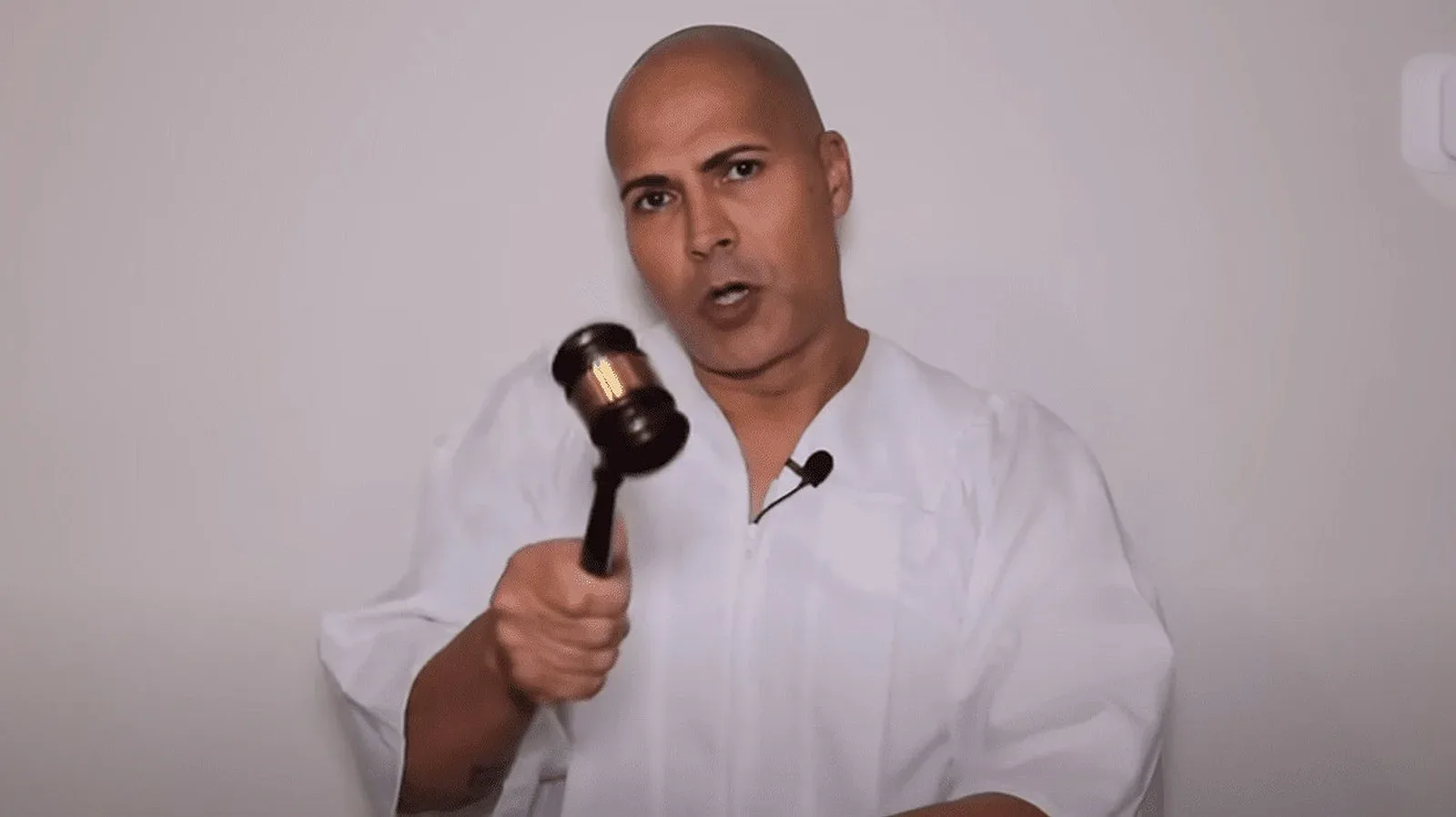
Maven’s WWE career may be remembered most vividly for one perfectly timed dropkick, but the former Tough Enough winner says another attempt at the move produced one of the most uncomfortable lessons of his time in the company.
Speaking on Rewind Recap Relive, Maven looked back on WrestleMania X8 and his match against Dustin Rhodes, who was performing as Goldust at the time. The bout included a planned spot involving a trash can, with Maven expected to drive the can into Rhodes with his trademark dropkick. Instead, Maven missed the target, forcing Rhodes to make a quick adjustment in the ring to keep the sequence from falling apart.
The missed move was especially frustrating because the dropkick had become such a defining part of Maven’s presentation. Just weeks earlier, at the 2002 Royal Rumble, Maven had used a dropkick to eliminate The Undertaker in one of the most startling moments in the match’s history. The Undertaker’s immediate retaliation, which saw Maven take a severe beating around ringside, only made that elimination more memorable. It gave a young performer, still very early in his WWE journey, a moment that has remained central to discussions of his career.
At WrestleMania X8, however, the same move did not land as intended. Maven described the mistake with humor in retrospect, joking that his athleticism caused him to clear the trash can rather than connect with it. The issue was not simply that a spot went wrong. On a WrestleMania card, where every segment is scrutinized and performers are expected to execute their assignments under pressure, a visibly missed signature move carried much greater weight.
For more background on this topic, read Nattie Says TJ Wilson Joined Her at NWA Tapings to Produce Matches and Work With Women’s Division.
A WrestleMania Error With Major Stakes
Maven said he knew immediately that he had missed the spot. He also felt the rest of the match had gone reasonably well, but the dropkick was the part that followed him backstage. There, he encountered an angry Vince McMahon.
McMahon’s criticism, as Maven recalled it, centered on the fact that the dropkick was the one move most associated with him. That was the sting of the situation: Maven had missed the maneuver WWE audiences had seen him use to great effect in the Royal Rumble confrontation with The Undertaker. In McMahon’s view, the failure was particularly glaring because it involved a familiar, featured part of Maven’s offense rather than a difficult or unusual sequence outside his typical repertoire.
The recollection offers another example of the unforgiving environment young WWE talent could face, especially on the industry’s biggest stage. Maven had entered WWE with a highly unusual path. He was the first winner of Tough Enough to transition into the WWE system, arriving with mainstream exposure and a built-in story attached to his development. That opportunity also came with expectations. Every televised match, backstage segment, and major-event appearance helped determine whether WWE saw a newcomer as someone worth investing in over the long term.
WrestleMania X8 was therefore not merely another date on the calendar. It was a showcase where performers had the chance to establish themselves before one of WWE’s largest annual audiences. For Maven, who had already made a major impression at the Royal Rumble, the match with Goldust represented another opportunity to demonstrate that he could handle a high-profile setting.
Instead, the trash-can spot became the detail McMahon focused on once Maven returned behind the curtain. The moment also underscored the value of an experienced opponent. Rhodes had to react in real time after the dropkick missed, making an adjustment intended to preserve the appearance of the planned spot as much as possible. Those types of split-second decisions are a fundamental part of professional wrestling, particularly when a weapon or prop is involved and the intended visual fails to materialize cleanly.
Goldust’s Adjustment Kept the Moment Moving
Goldust had long been regarded as a versatile in-ring performer, and Maven’s story highlights the responsibility often shared by both wrestlers when something does not go as planned. The audience may see only a quick sequence, but performers have to account for positioning, timing, movement, and the placement of any object being used. When one piece changes unexpectedly, there is little time to stop and reset.
In this case, Maven’s missed dropkick required Rhodes to compensate on the fly. Maven did not suggest the match completely unraveled, and he emphasized that he believed the rest of the contest went acceptably. Still, the botched moment was significant enough that it became the focal point of his subsequent conversation with McMahon.
Maven’s ability to revisit the incident with self-deprecating humor speaks to the distance between the event and the present, but it does not diminish how consequential it felt at the time. WWE’s creative and talent evaluations can turn on far more than one move, yet performers often understand that a mistake on a major show can affect how decision-makers view their reliability. That pressure becomes even sharper for wrestlers who are still trying to prove they belong.
For Maven, the anxiety did not end after the Goldust match. He still had another assignment later that night involving Christian. McMahon’s message, as Maven remembered it, was clear: after missing the earlier spot, Maven could not afford another visible error in the segment with Christian.
The Christian Segment Offered an Immediate Response
The later segment became Maven’s chance to answer the criticism without waiting for the next television taping. He explained that the pressure was tied to a basic question of opportunity. If he made another mistake that night, there would be little incentive for WWE to bring him back for the following night’s Monday Night Raw. For a developing wrestler, that is the practical reality behind a backstage reprimand. The concern is not limited to embarrassment over a botch; it is whether the company will continue to place trust in that talent on television.
Maven said the segment with Christian worked out. That successful follow-up mattered, because it allowed him to move forward from the WrestleMania X8 mishap rather than letting one missed dropkick define his standing within WWE. He remained with the company for approximately three more years before departing in 2005.
His WWE tenure lasted four years and included three reigns as Hardcore Champion. While the Hardcore Championship division often placed its participants in fast-moving, unpredictable situations, it also gave Maven consistent opportunities to gain experience in front of a national audience. Those title runs and his continued television appearances showed that WWE did not abandon him after the WrestleMania error.
Even so, Maven’s Royal Rumble moment with The Undertaker remains the image most closely connected to his career. The elimination was shocking because of the disparity between the competitors and the timing of the moment. Maven, a young wrestler with limited experience compared to the established main-event star, capitalized on an opening and knocked The Undertaker over the top rope. The angle that followed ensured the moment received even more attention, as The Undertaker responded with a punishing attack.
That successful dropkick became an enduring highlight. The WrestleMania X8 miss, by contrast, is an example of how thin the margin can be between a celebrated execution and an uncomfortable error. Maven’s story places both memories side by side: one dropkick created a career-defining Royal Rumble scene, while another prompted a furious backstage response from WWE’s chairman.
A Career Remembered for More Than One Moment
The broader takeaway from Maven’s recollection is not that one botched spot erased his accomplishments. His continued WWE run after WrestleMania X8 makes that clear. He was able to recover, successfully complete his later segment with Christian, and remain a featured part of the roster through 2005. But the incident illustrates the standards attached to WrestleMania and the direct nature of McMahon’s feedback when something did not meet expectations.
It also reflects the learning curve Maven faced as a pioneer of the Tough Enough format. Winning the competition opened the door to WWE, but it did not remove the need to develop under the same intense spotlight as every other wrestler on the roster. Maven had to navigate high-pressure matches, live television, major-event appearances, title opportunities, and the occasional mistake that comes with gaining experience at that level.
More than two decades after WrestleMania X8, Maven can look back on the missed trash-can dropkick with perspective. The moment was painful enough to draw McMahon’s anger, yet it did not end his career or prevent him from building a lasting connection with fans. If anything, the contrast between his WrestleMania mistake and his celebrated Royal Rumble elimination of The Undertaker captures the unpredictability of a WWE career: a performer can be one move away from a highlight, a reprimand, or a chance to prove himself all over again.
In pictures

Darryl Polo
Darryl Polo is a passionate wrestling fan covering WWE, AEW, TNA and beyond. He loves great rivalries, breakout stars and the moments that keep fans talking long after the bell. How we work.