
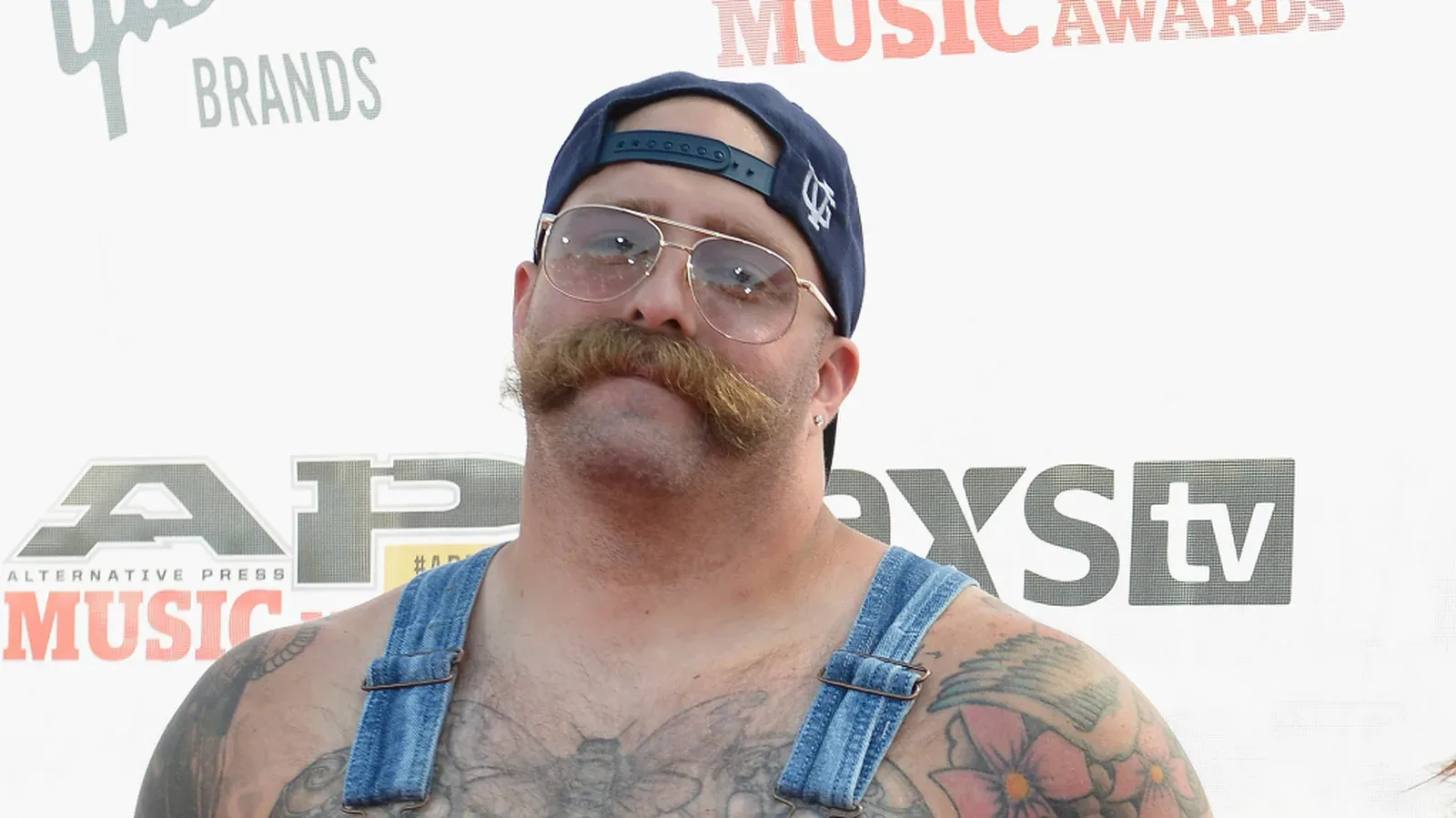
Matt Hardy has shared an emotional remembrance of Andy “The Butcher” Williams, describing the former AEW performer as a genuine person whose passion for professional wrestling was evident to everyone around him.
Williams’ passing has continued to weigh heavily on colleagues and fans in the days since his death. Speaking at the opening of The Extreme Life of Matt Hardy, Hardy said he was stunned by the news and struggled with the reality that someone he knew as both a fellow performer and friend is no longer here.
“It’s just crazy, because it’s someone who should still be here with us,” Hardy said. “It just feels so strange. And he was such a good dude.”
Hardy’s remarks centered not only on Williams’ work in wrestling, but on the character he showed away from the ring. Williams had already built a life in music before pursuing wrestling, yet Hardy said his enthusiasm for the industry never felt artificial. To Hardy, Williams was someone who truly loved the art form and was grateful for the opportunity to live out an ambition he had carried with him.
For more background on this topic, read Jim Ross Says Bayley Could Bring Leadership And Experience To AEW.
“He was... just a very genuine, very authentic, someone who loved pro wrestling in general,” Hardy said. “A guy who was already a rock star, and someone who just loved pro wrestling and really wanted to do it.”
That combination made Williams’ journey stand out. He entered the wrestling world with an established identity beyond the ring, but embraced the demands of the profession and pursued it with evident purpose. Hardy said Williams was “living his dream and riding that out,” making the loss all the more difficult for those who watched him chase that dream.
Williams was known in AEW as The Butcher, one half of the Butcher and The Blade tag team alongside The Blade. During their time in the company, Hardy and the duo were aligned as members of the Hardy Family Office. That shared association gave Hardy the chance to work closely with Williams, both in storylines and in the everyday setting of a wrestling locker room.
Their on-screen relationship was not limited to standing on the same side. Hardy noted that he was fortunate to be both a stablemate and a rival of Williams during their AEW runs. Those varied interactions gave him a close look at how seriously Williams took his development as a wrestler and how much he valued the experience of being in the ring with more seasoned performers.
Hardy Recalls a Message That Meant a Great Deal
Among the memories Hardy shared was an unsolicited text message from Williams. The message arrived without any immediate reason or major occasion, which is part of why it remained so meaningful to Hardy. Williams wanted to express what he had learned from working with him and to thank Hardy directly.
“One time, he just randomly texted me,” Hardy said. “He put ‘Dude, every time I’m in the ring with you, I understand the way this really works so much more. Thank you for being great to me.’”
For Hardy, the message reflected Williams’ humility and his willingness to recognize the people who helped him along the way. In an industry where performers often measure themselves against one another and compete for limited opportunities, Hardy remembered Williams as someone who openly showed appreciation rather than taking those opportunities for granted.
“I mean, just kind of things like that. Just out of the blue man,” Hardy said. “He was really appreciative and really grateful. And I feel like we need more good guys like that, you know what I mean?”
Those qualities are what Hardy said make Williams’ death especially painful. His recollection was not built around a single match, a particular segment, or a professional achievement. Instead, Hardy emphasized the small personal exchanges that often leave the most lasting impression after someone is gone: a message of thanks, a conversation, and the sense that Williams treated others with sincerity.
Hardy said he and Williams had both lighthearted and more serious conversations during their time together. While the professional-wrestling environment can be loud, fast-moving, and centered on the next show, Hardy’s comments painted Williams as someone who formed real connections within it. His gratitude toward Hardy was not simply a compliment about in-ring technique; it also conveyed the trust he had placed in a colleague who was helping him better understand the business.
A Reminder to Value Each Day
Hardy’s tribute also became a broader reflection on loss. He said Williams’ death felt wrong and deeply sad, then spoke about the difficult lesson that moments like this place in front of everyone. No one can assume there will always be another day to say thank you, have a conversation, or spend time with the people who matter.
“It’s sad. It’s sad he’s not with us. It just doesn’t feel right man,” Hardy said. “Actually, it’s a very painful reminder that no one is guaranteed tomorrow, and it’s something we all have to live by and remember. No one is guaranteed tomorrow. You treasure every single day you’re given.”
The statement carries particular weight in a wrestling community that is often tightly connected despite the competitive nature of the business. Wrestlers can share dressing rooms, travel, training, television time, and long stretches of their careers with people who become far more than co-workers. When a loss occurs, tributes frequently reveal the relationships behind the personas, alliances, rivalries, and matches seen by audiences.
Hardy’s words about Williams focused squarely on that human side. The Butcher was a distinctive presence in AEW as part of a hard-hitting tag team, but Hardy chose to remember the man behind that presentation: a performer who loved wrestling, wanted to improve, and took time to tell others when their guidance had mattered to him.
Williams’ Passion Extended Beyond His Ring Persona
Williams’ background as a musician was also central to Hardy’s description of him. Hardy noted that Williams had already achieved success as a rock star before embracing professional wrestling. Rather than viewing wrestling as something secondary, however, Hardy portrayed it as a dream Williams genuinely wanted to pursue.
That perspective helps explain the appreciation Williams expressed in his message to Hardy. For someone committed to learning the finer details of wrestling, each opportunity to work with an experienced peer could be a chance to gain a deeper understanding of the craft. Hardy’s memory suggests Williams approached those moments with attentiveness and respect.
It is also a reminder that professional wrestling has long drawn people from other creative and athletic worlds. What matters most is the commitment a performer brings once they step into the ring. In Hardy’s telling, Williams brought that commitment with him. He was not merely present for the experience; he wanted to learn how wrestling worked at a deeper level and to become better within it.
Hardy did not attempt to make the loss easier with simple answers. His comments acknowledged that it is painful, strange, and difficult to accept. But they also offered a clear picture of why Williams made an impact on those around him: he was authentic, appreciative, and passionate about the profession he had chosen to pursue.
As the wrestling world continues to mourn Andy “The Butcher” Williams, Hardy’s memories stand as a personal testament to the qualities that may not always be visible under the lights. He remembered a colleague who valued the ring, valued learning, and valued the people who helped him along the way. Above all, Hardy remembered a good person whose absence is being felt deeply.
In pictures
Darryl Polo
Darryl Polo is a passionate wrestling fan covering WWE, AEW, TNA and beyond. He loves great rivalries, breakout stars and the moments that keep fans talking long after the bell. How we work.