
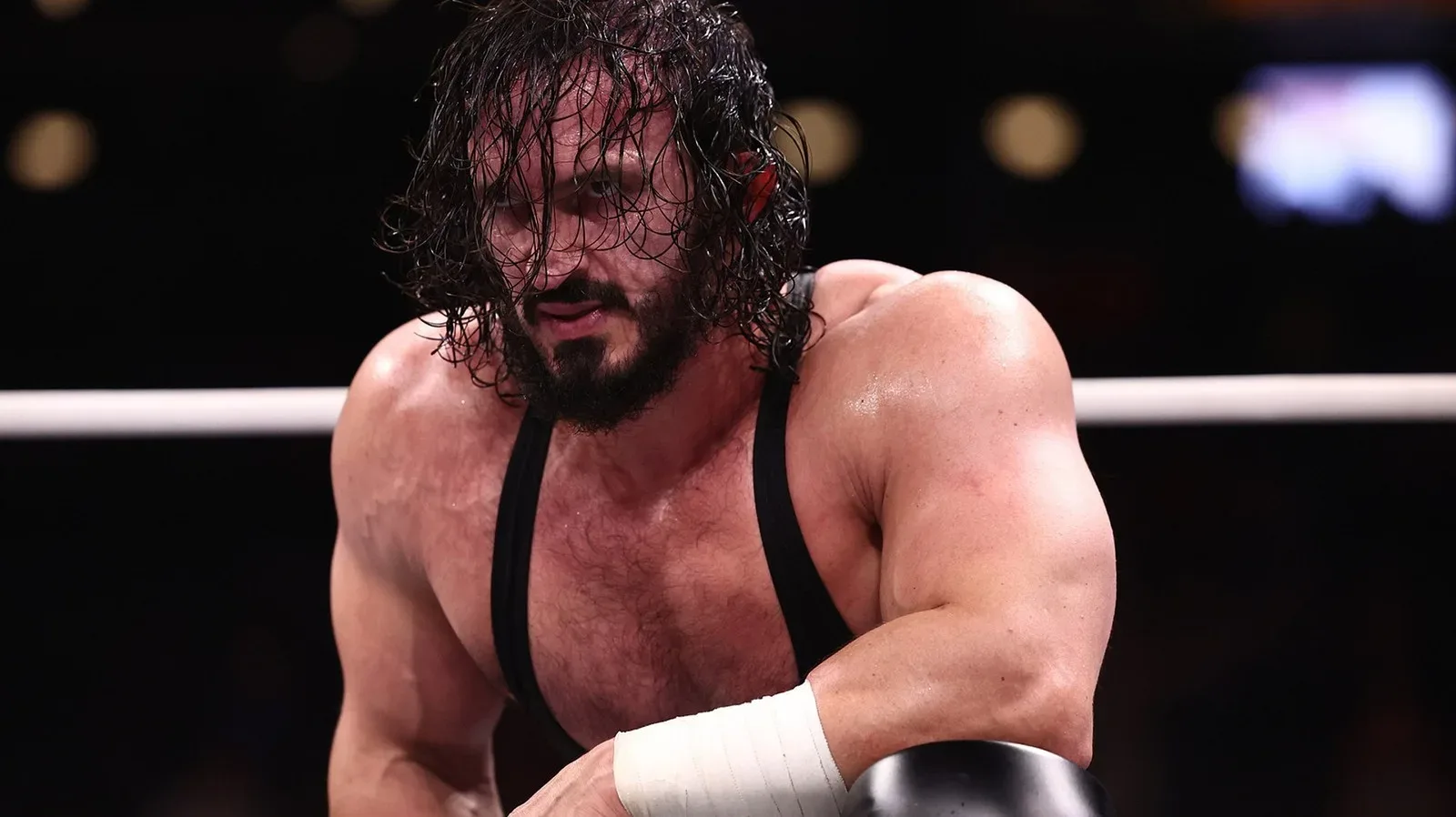
Matt Hardy has praised AEW’s tribute to PAC, describing the company’s response to the wrestler’s sudden passing as emotional, respectful, and centered on honoring a performer whose presence had meant so much to the locker room and audience.
PAC died suddenly in late September. On the following edition of AEW Dynamite, AEW dedicated significant attention to celebrating his life and legacy. The show was widely discussed for its emotional tone, a video package looking back at PAC’s career, and a 5-on-5 tag team main event that featured the Death Riders and a one-night return by Bryan Danielson.
Speaking on The Extreme Life of Matt Hardy, Hardy said he was impressed by what he watched from the broadcast, even while noting that he had only seen its opening portion.
“I liked everything I saw. I thought it was very classy. I thought it was well done. It was very emotional,” Hardy said on The Extreme Life of Matt Hardy.
For more background on this topic, read Yota Tsuji Calls for Potential NJPW vs. AEW Showcase at the Tokyo Dome.
Hardy said the first 30 minutes he watched made a strong impression, particularly because AEW made PAC the focus of the episode rather than treating the tribute as a brief segment before moving immediately into normal programming. For Hardy, that approach helped the show feel like a meaningful response to an enormous loss.
AEW put PAC at the center of the night
Tribute programming can be difficult for any wrestling company to navigate. Wrestling is built around heightened drama, rivalries, and athletic competition, but a memorial episode asks performers and viewers to engage with real grief in public. The balance between remembrance and presentation is especially delicate when the person being honored was an active, familiar part of the product.
In Hardy’s view, AEW found that balance. He singled out the video tribute to PAC’s life as a particularly effective part of the show, while also pointing to the emotional moments involving Danielson, Jon Moxley, and the rest of the wrestlers present.
“They really made the show about him in so many ways; it had a lot of feel-good moments, Bryan Danielson coming back and everyone hugging Moxley was a feel-good moment,” Hardy said on The Extreme Life of Matt Hardy.
The return of Danielson added an additional layer to the main event’s significance. The match was not simply a major attraction placed at the end of a special episode; it became part of a larger gathering of wrestlers connected by shared history, personal loss, and the task of continuing a show under painful circumstances.
The embrace around Moxley was among the images that resonated most strongly with viewers. Moxley has long been presented as a hard-edged and uncompromising figure in AEW, particularly through his association with the Death Riders. On this occasion, the tone was understandably different. The moment offered a visible release of emotion and a reminder that the people who portray wrestling characters are also colleagues processing grief.
A show that gave fans and wrestlers room to grieve
Hardy said the tribute was needed not only for PAC’s fellow wrestlers but for the fans who had followed him throughout his career. PAC’s work had made him one of the most distinctive performers of his generation: a gifted high flyer, an intense technical wrestler, and a character whose intensity could command a screen without needing lengthy speeches.
His AEW run included major matches, championships, and prominent alliances, but the response to his passing showed that his impact extended beyond any individual accomplishment. A tribute episode gave those who knew him personally, as well as those who knew him through his work, a shared place to acknowledge what had happened.
Hardy framed the show as a source of hope during an exceptionally difficult moment. He felt it could help people begin to process the loss while demonstrating that PAC’s memory would remain present among those he worked with and those who supported him.
That is often the purpose of the most effective wrestling tributes. They do not attempt to erase sadness or force a quick return to normal. Instead, they allow the emotion to be visible. They recognize that a wrestling audience is a community as much as it is a collection of viewers, and that wrestlers themselves can need the same chance to mourn as the fans watching at home.
AEW’s decision to make PAC a central part of the broadcast, rather than limiting the acknowledgment to a short opening statement, clearly stood out to Hardy. The video package, Danielson’s appearance, the main event, and the post-match emotion all contributed to a night designed around remembrance.
Moxley’s All Out promo takes on a different meaning
Hardy also discussed an earlier Jon Moxley promo that has taken on a far more haunting tone in the aftermath of PAC’s death. Following AEW All Out, Moxley addressed Will Ospreay after losing to him at the event. The promo dealt with themes that went beyond conventional wrestling rivalries, touching on loss, missed opportunities, eulogies, death, and the need to keep moving forward regardless of the circumstances surrounding someone.
At the time, it was a forceful statement from Moxley after a major defeat. In hindsight, however, viewers have noted the eerie nature of its language and imagery. PAC appeared as the final person in the shot at the end of the segment, a detail that now carries a much heavier emotional weight.
“He was talking about a lot of things that are just outside the wrestling ring, and you know, kind of really relating them to life,” Hardy said on The Extreme Life of Matt Hardy. “And then the last person in that shot was PAC in that last scene. It was a great promo, but in some ways it was very eerie...”
Hardy’s comments reflect the way real-life events can transform the meaning of wrestling television. Promos are frequently designed to explore broad themes through the language of competition: perseverance, pain, defeat, redemption, and mortality. When tragedy follows, words that were initially heard as part of a storyline can suddenly feel more personal than anyone intended.
Moxley’s message about continuing in the face of hardship is now being viewed through that lens. The promo was not created as a response to PAC’s death, but its focus on life outside the ring and the final visual of PAC have made it an especially difficult segment to revisit.
Remembering a performer whose impact reached beyond the ring
Hardy’s reaction was not an attempt to analyze every part of the tribute in detail. He was clear that he had watched only the beginning of the program. Still, his assessment was emphatic: what he saw felt sincere, emotionally appropriate, and respectful toward PAC.
For AEW, the tribute episode represented a moment where competition, storylines, and rivalries necessarily took a back seat. The company’s focus was on recognizing PAC’s life and giving the people closest to the situation an opportunity to honor him together. Danielson’s return, the Death Riders’ involvement, and the emotion around Moxley all served that larger purpose.
The lasting images from the night will likely be the ones Hardy identified: PAC’s life being remembered on screen, wrestlers coming together, and a main event that became about far more than a result. In wrestling, a match can tell a story. On this occasion, the stories were grief, support, remembrance, and the difficult effort to find hope after loss.
Hardy’s description of the episode as “very classy” and “well done” captures why the broadcast connected with so many. AEW did not present PAC’s memory as an obligation to be checked off during a television show. It made the night about him, allowing the wrestling world to pause, mourn, and remember a singular talent.
In pictures

Darryl Polo
Darryl Polo is a passionate wrestling fan covering WWE, AEW, TNA and beyond. He loves great rivalries, breakout stars and the moments that keep fans talking long after the bell. How we work.