
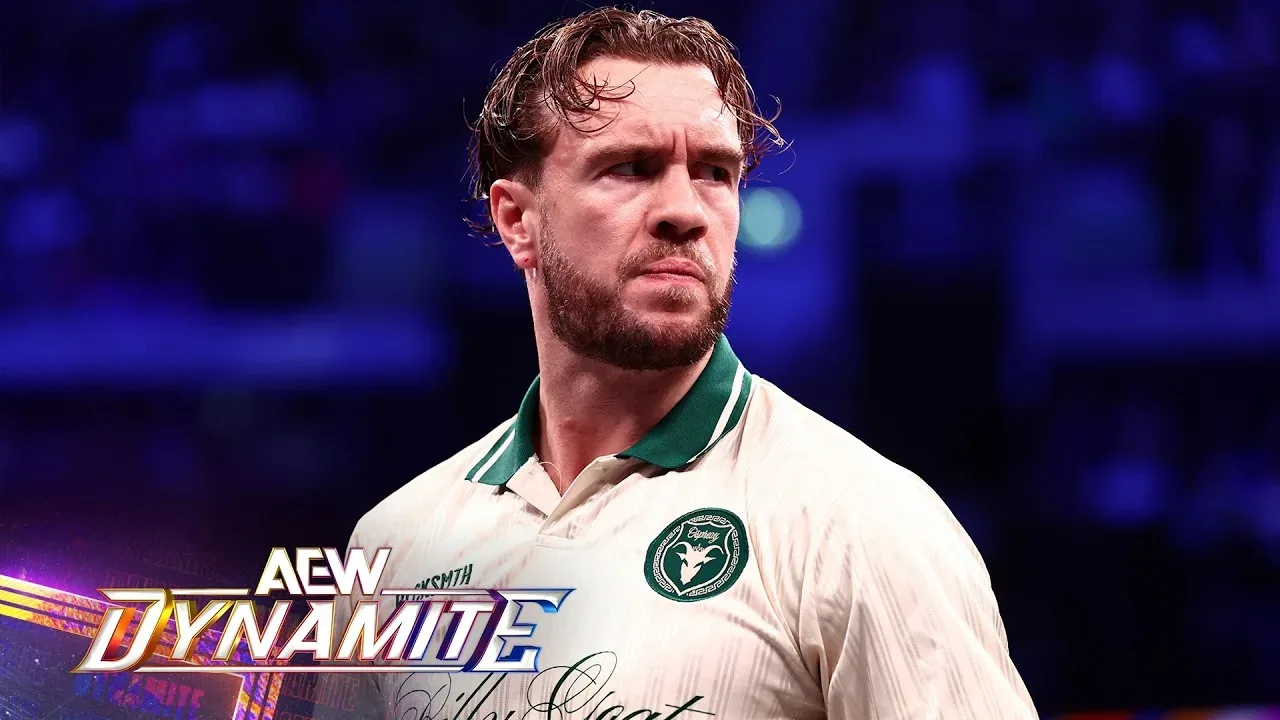
Will Ospreay is open to testing himself outside of professional wrestling.
During a recent interview with Real Radio Monsters, Ospreay was asked about filmmaker Guy Ritchie and whether a move into acting could be something he would consider. The AEW star made clear that he is a fan of Ritchie’s work and believes he could potentially adapt to acting, even while candidly identifying a hurdle that could make the process more difficult for him.
“Of course I know Guy Ritchie. I’ve never met him, but I’m a massive fan of The Gentleman, and I would love to put my… I feel like I’d be okay at acting, but I’m not very good at reading. I’ll be honest with you. I’m very bad at reading scripts. It would be a difficult thing for me, but for Guy Ritchie, I’ll do it, bro. I’ll put my mind to it.”
It was not a confirmation that Ospreay is pursuing a film role, nor did he indicate that he has met Ritchie or has an acting project lined up. Still, his answer showed genuine interest in the possibility. Ospreay’s response was less about presenting acting as an immediate career plan and more about expressing confidence that he could rise to the challenge if the right opportunity appeared.
For more background on this topic, read Report: Dralistico’s AEW Deal Set To Expire In December.
Ospreay sees a challenge in the script process
The most notable part of Ospreay’s answer was his honesty about scripts. Wrestling performers are routinely asked to communicate stories, emotions and character motivations in front of live crowds and cameras, but film and television productions demand a different kind of preparation. Memorizing dialogue, studying scenes, understanding the technical requirements of a shoot and performing in a setting without a live audience are all distinct skills.
Ospreay did not minimize that difference. Instead, he explained that reading scripts is an area in which he would need to work harder. His comment that he would “put my mind to it” for Ritchie suggests that his enthusiasm for the director’s work could provide the motivation needed to take on a task he finds difficult.
That degree of self-awareness matters. Professional wrestling has long required performers to be versatile, but the abilities that make a wrestler effective do not automatically eliminate the learning curve involved in another medium. Ospreay’s answer recognized both sides of that equation: he feels he has the presence to be effective on screen, while also understanding that acting would require preparation beyond what he does in the ring.
Why the wrestling-to-acting path remains appealing
The idea of wrestlers crossing into movies and television is hardly new, but it remains a prominent part of the industry’s connection to wider pop culture. Dwayne “The Rock” Johnson, Dave Bautista and John Cena stand among the best-known examples of wrestlers who became major presences in film. Their success has helped reinforce the notion that a performer who is already comfortable with physical storytelling, camera work and larger-than-life presentation may have tools that translate beyond wrestling.
There are also active wrestling names continuing to explore projects outside the ring. Roman Reigns and Cody Rhodes are among the wrestlers attached to the upcoming Street Fighter film, demonstrating that Hollywood interest in wrestling personalities remains strong. Such casting does not mean every wrestler will make the same transition, and wrestling itself is not simply acting in another form. However, the overlap between the two worlds is real enough that it continues to create opportunities.
For performers, the appeal can be obvious. Acting provides a chance to develop different creative muscles and reach audiences who may not regularly watch wrestling. For filmmakers, wrestlers can offer athletic credibility, an ability to work physically, extensive experience performing under pressure and a familiarity with selling emotion to a camera.
Ospreay has built his reputation on athleticism, urgency and an unusually expressive in-ring style. Whether he is competing in a high-speed match or reacting to a major moment in a story, his work is designed to make the audience understand the stakes. Those strengths do not guarantee success in a film role, but they help explain why he sees acting as something he could potentially do well.
A Guy Ritchie collaboration would be a specific ambition
Ospreay’s mention of Ritchie was not a generic reference to entering Hollywood. He specifically named the filmmaker and described himself as a major fan of The Gentleman. That makes the answer feel like a targeted creative wish rather than a broad declaration that he wants any acting role available.
Ritchie’s films are often associated with sharp dialogue, heightened personalities, crime stories, action and distinctive ensemble casts. Those elements can make the director’s work a natural point of interest for someone from professional wrestling, where character definition and physical credibility are central to performance. At the same time, Ospreay’s acknowledgement that scripts are difficult for him is especially relevant when discussing a filmmaker whose projects can be heavily driven by dialogue and rhythm.
There is no indication that Ritchie has expressed interest in casting Ospreay, and no collaboration has been announced. Ospreay’s comments should therefore be viewed as an expression of interest, not as movement toward a confirmed role. But the willingness to identify a dream collaborator gives fans a clearer idea of the kind of project that could entice him to make the leap.
Wrestling remains the foundation
Ospreay’s acting comments come while he remains identified first and foremost as an active professional wrestler. Any potential work outside the industry would exist alongside the career that made him a recognizable figure to a global audience.
The interview also included a separate discussion about PAC’s tribute show and what it meant within the locker room for Ospreay to perform The Black Arrow. That subject reflects the other side of Ospreay’s career: the connection he has formed through wrestling, the importance of tribute and respect, and the emotional weight that certain in-ring moments can carry among performers.
Those experiences may also be part of why wrestlers can be interested in acting. Wrestling asks performers to convey stories in an immediate setting, often with little room to redo a moment once it has happened. Film and television use a different process, but both forms rely on the ability to communicate something believable to an audience.
For now, Ospreay has only said that he would be willing to give acting a serious effort. He did not present it as a departure from wrestling or attach a timetable to any possible move. His remarks instead leave the door open to a future opportunity—particularly one involving a filmmaker whose work he already admires.
What comes next for Ospreay
Until a role is announced, the acting conversation remains hypothetical. There is no confirmed Guy Ritchie project involving Ospreay, and there is no indication that Ospreay has begun work on a film or television production. His comments nevertheless add him to the growing list of wrestling stars willing to consider opportunities in entertainment beyond the ring.
For Ospreay, the key takeaway is simple: he believes he could be capable in an acting setting, even if he knows scripts would demand focused work. That combination of confidence and candor made his answer stand out. If the right offer arrives, especially from a director such as Ritchie, Ospreay sounds prepared to take the challenge seriously.
In an era when wrestling performers are increasingly visible in movies, television and other mainstream entertainment spaces, Ospreay has made it clear that he would not automatically rule himself out of that conversation. The opportunity is not currently confirmed, but the interest is there—and so is a specific creative ambition.

Darryl Polo
Darryl Polo is a passionate wrestling fan covering WWE, AEW, TNA and beyond. He loves great rivalries, breakout stars and the moments that keep fans talking long after the bell. How we work.