
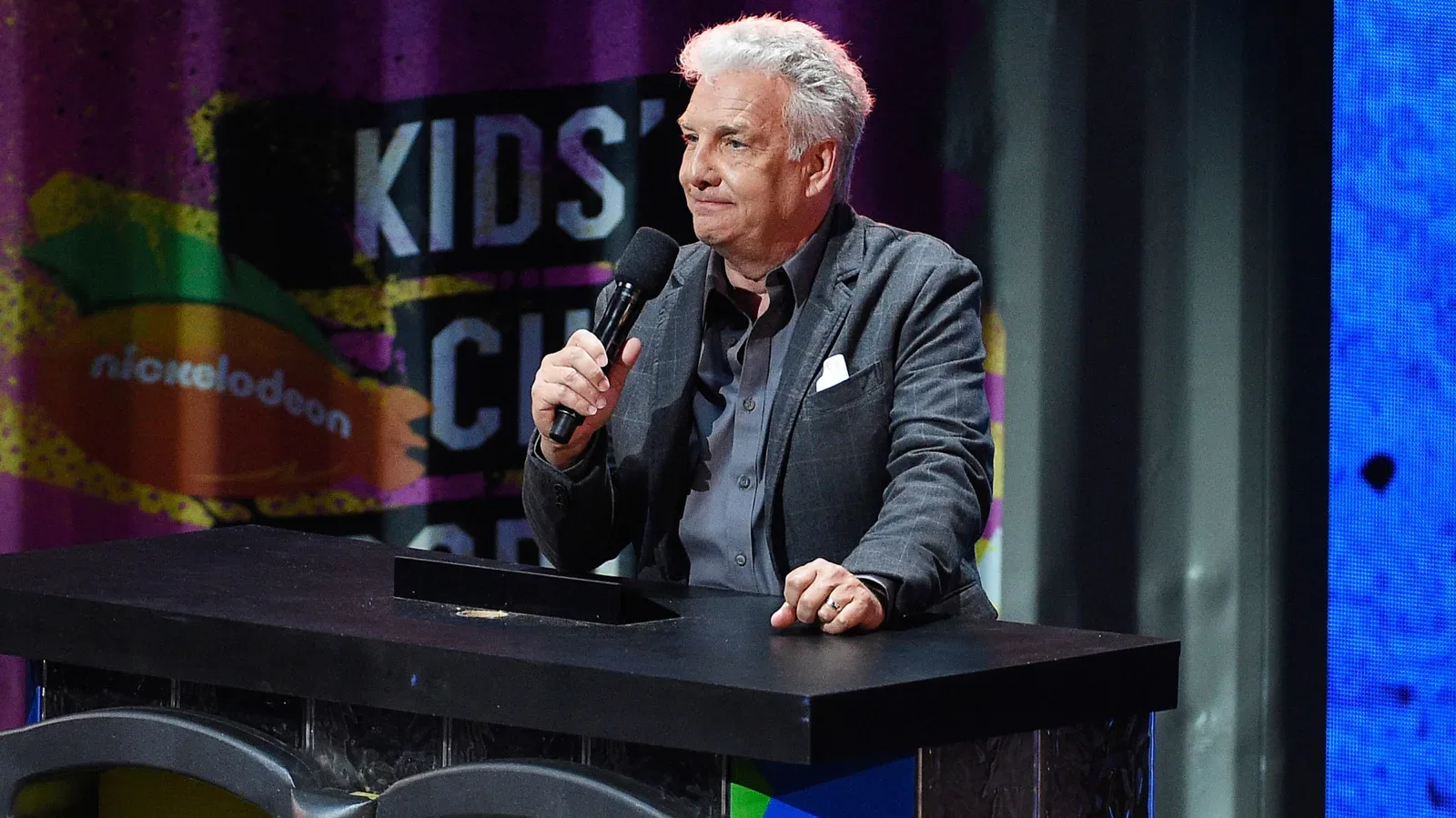
Marc Summers is forever associated with Nickelodeon’s Double Dare, a game-show institution built around physical challenges, trivia, messy stunts and the kind of brightly colored chaos that became unforgettable for an entire generation of viewers. But Summers says there was a point during the original run of the series when the then-WWF attempted to pull him away from the network and place him behind a microphone in professional wrestling.
Summers discussed the possibility while looking back on Double Dare ahead of a 40-year reunion special that will stream through his website. In a teaser shared by Anthony Maurizio on X, Summers revisited the program’s WWF-connected “Super-Slop-a-Mania” episodes and revealed that one of them led to an unexpected employment pitch from what is now WWE.
“Gorilla Monsoon against Bobby ‘The Brain’ Heenan, okay? Wrestling could not have been bigger,” Summers said in the teaser. “In fact, WWE back in the day wanted to hire me away from Nickelodeon and put me on as an announcer on that show, but they offered me zero money, so I wasn’t going to do it.”
The company was still known as the World Wrestling Federation at the time of the original Double Dare run, which aired from 1986 through 1993. Summers’ recollection offers a fascinating glimpse at a crossover that never happened: one of children’s television’s most recognizable hosts potentially becoming part of wrestling programming during one of the industry’s most visible mainstream periods.
For more background on this topic, read Matt Hardy Reflects On Watching WWE’s First Hell In A Cell Match At Badd Blood 1997.
Super-Slop-a-Mania Brought WWF Personalities Into Double Dare’s World
Double Dare was already a major force in youth-oriented television, while the WWF was expanding its own reach as a pop-culture attraction. The two brands came together for two “Super-Slop-a-Mania” editions, bringing wrestling figures into the show’s distinctive environment of obstacle courses, gags and, naturally, slime.
For Summers, the first of those themed episodes stands above the rest of the program’s extensive history. His choice was rooted in the personalities involved, especially the pairing of Gorilla Monsoon and Bobby “The Brain” Heenan. Both men were iconic television presences in the wrestling world, though they occupied sharply different roles. Monsoon was a commanding announcer and authority figure, while Heenan’s gift for comedic villainy made him one of the most celebrated managers and performers in industry history.
Summers called that initial Super-Slop-a-Mania episode his favorite episode of Double Dare. It was not simply a matter of wrestling’s popularity at the time. Summers had a personal connection to Heenan that went back well before their Nickelodeon appearance.
He explained that he knew Heenan from his own teenage years in Indianapolis, when both worked at Starlight Musicals. Summers said he was only 16 when he and the future wrestling legend handled refreshments and helped guide patrons to their seats. The shared work history gave their later television interaction another layer of familiarity.
“Heenan was great,” Summers said. “Gorilla had like two degrees from insane colleges and they were both brilliant and fun and funny and that was my favorite episode of all time.”
Summers also described Heenan as “the nicest guy in the world,” a notably warm remembrance of a man audiences frequently knew as one of wrestling’s great antagonists. Heenan’s on-screen identity was built around arrogance, scheming and relentless verbal shots at opponents and announcers alike. Yet the people who worked with him have often emphasized the contrast between that character and the person away from the camera. Summers’ recollection adds another personal example from outside the wrestling business itself.
A Wrestling Announcing Job That Never Materialized
Summers did not provide further details about when the WWF offer was made, which program the role would have involved, or how deeply discussions progressed. What he did make clear was that the proposed arrangement did not present a financial reason for him to leave Nickelodeon. In his telling, the offer included no money, ending any chance that he would depart his established television home for a wrestling announcing assignment.
The anecdote is especially interesting because Summers had skills that could have translated naturally to wrestling television. A successful wrestling announcer needs to communicate quickly, maintain energy, manage unexpected developments and work with colorful personalities in front of a live audience. Those are not identical to the demands of hosting a children’s game show, but Summers had already demonstrated comfort in a fast-moving format where timing and audience engagement mattered constantly.
At the same time, Double Dare was not merely another hosting job. Summers was one of the show’s defining elements. His presence, alongside the show’s format and its famous messiness, helped make it a lasting part of Nickelodeon’s identity. Leaving that role for an unpaid wrestling position would have been a dramatically different career move, and Summers’ response makes clear that it was never a realistic proposition under those terms.
The WWF’s interest also illustrates how much crossover potential wrestling possessed in that era. Its performers routinely moved beyond conventional wrestling broadcasts and entered broader entertainment spaces, including talk shows, music, film, television and promotional appearances aimed at audiences far outside the usual wrestling fan base. A well-known host such as Summers appearing in a WWF announcer role could have been another example of that strategy.
Instead, Summers remained on the path that made him a television fixture in multiple formats. Beyond Double Dare, he went on to host a show on Food Network. He later returned to Nickelodeon when the network revived Double Dare in 2018, reconnecting him with a franchise that had remained deeply familiar to viewers long after its first run ended.
A Career With Lasting Cultural Reach
Summers’ life and career have also been explored through the off-Broadway musical The Life and Slimes of Marc Summers. The title itself reflects the enduring connection between Summers and the messy visual identity of Double Dare, but it also underscores the unusual longevity of his public career. He has remained recognizable across decades of changing television, while the series that made him famous continues to inspire nostalgia among viewers who grew up watching it.
The forthcoming 40-year reunion gives Summers an opportunity to revisit that history, including the WWF collaborations that placed Monsoon and Heenan in a setting unlike their usual wrestling presentations. The memory is clearly meaningful to him, not only because of the scope of wrestling’s popularity at the time, but because it involved two performers he remembered as brilliant, entertaining and, in Heenan’s case, personally familiar from long before they shared a television set.
There is an appealing what-if element to Summers’ story. Wrestling audiences never saw him take the proposed announcing role, and the WWF ultimately continued with the broadcasters and personalities who helped define its programming in that era. Summers, meanwhile, stayed in the entertainment lane where he had already become a central figure.
Still, the fact that the conversation apparently happened adds an unexpected footnote to both careers. The host of one of Nickelodeon’s defining game shows was, at least briefly, seen by the WWF as someone who could fit into its television presentation. For Summers, however, the offer did not meet the most basic requirement of a job: it needed to pay.
That decision preserved the path that audiences know today. Summers remained synonymous with Double Dare, while his favorite episode of the series remains the one that united his world with the oversized personalities of Gorilla Monsoon and Bobby Heenan. Decades later, that crossover is still memorable enough to bring back a story of an announcer role that might have been, but never was.
In pictures

Darryl Polo
Darryl Polo is a passionate wrestling fan covering WWE, AEW, TNA and beyond. He loves great rivalries, breakout stars and the moments that keep fans talking long after the bell. How we work.