
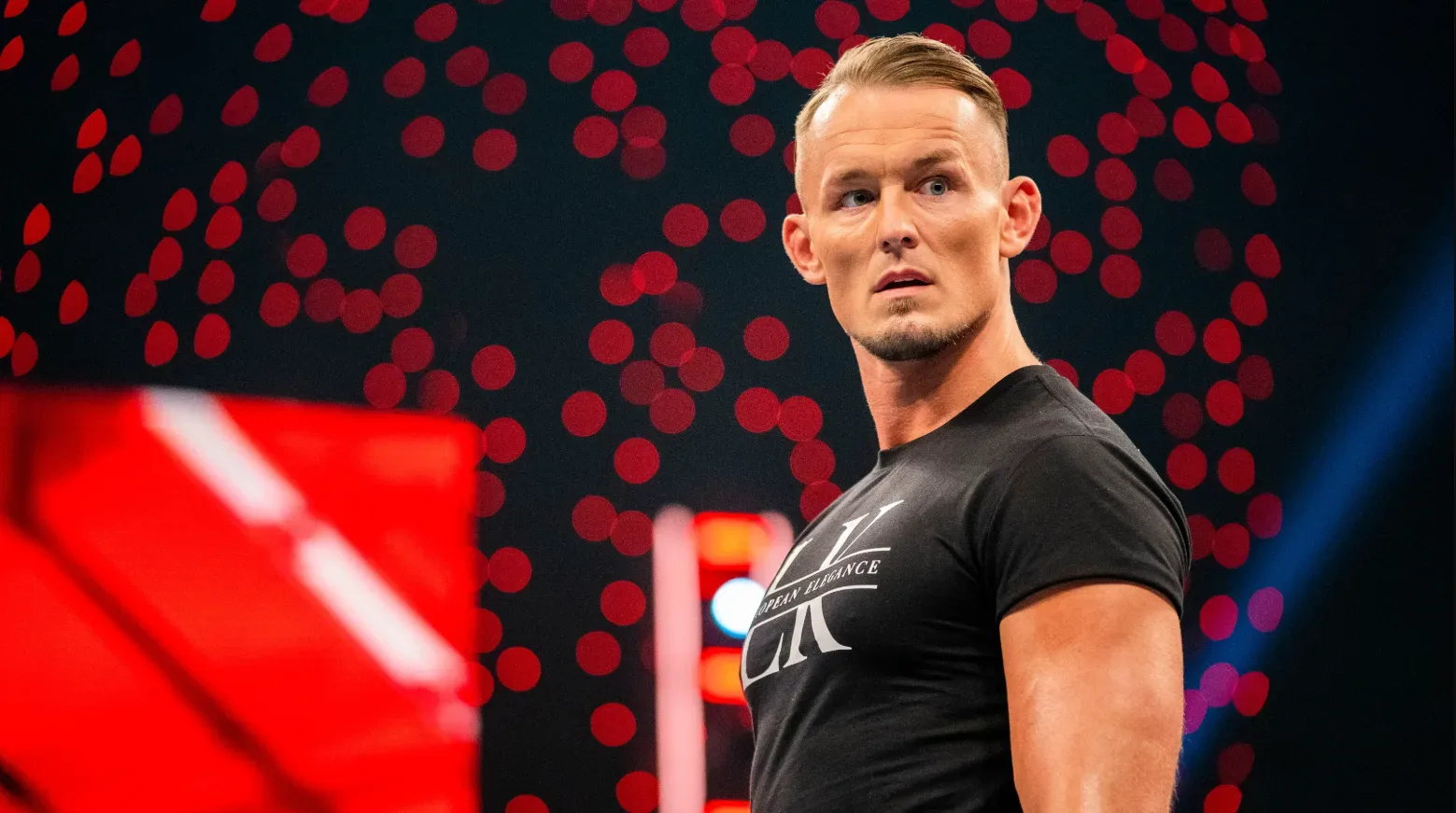
Ludwig Kaiser’s attempt to have his pending misdemeanor battery case dismissed has been denied, leaving the WWE performer’s criminal case active as it moves toward a pre-trial conference on December 17.
Court records show that the hearing on Kaiser’s motion was held on Monday, October 19. The defense had sought dismissal under Florida’s Stand Your Ground law, arguing that Kaiser’s use of force was justified under the circumstances alleged in the case. The motion was denied, meaning the charge will not be removed at this stage through that defense request.
Kaiser was arrested in May on a battery charge connected to an alleged April incident in an elevator. He is accused of punching a man during that encounter. As with any pending criminal matter, the allegation remains unproven, and the denial of a motion to dismiss is not a finding of guilt.
Defense Cited Self-Defense And Protection Of Another Person
The defense position centered on Florida’s Stand Your Ground statute. Kaiser’s legal team argued that he was justified in using the level of force alleged because he reasonably believed it was needed to protect himself and his girlfriend, Andre Bazarte, from what was described as the imminent use of unlawful force.
For more background on this topic, read Chad Gable Details How El Grande Americano Began as a Lucha Libre Rivalry Idea.
Stand Your Ground laws can permit a defendant to seek immunity from prosecution when the legal requirements for justified force are met. In this case, Kaiser’s defense argued that the conduct at issue fell within those protections. The court’s denial means that argument did not result in dismissal of the misdemeanor battery charge at the October 19 hearing.
That procedural ruling does not resolve every issue in the underlying case. A denial of a dismissal motion does not itself establish that the alleged conduct occurred exactly as claimed, nor does it determine that Kaiser lacked a self-defense argument at every later stage of the proceedings. It does mean, however, that the case remains on the court’s schedule and will continue through the ordinary pre-trial process unless it is otherwise resolved.
December 17 Pre-Trial Conference Is Next
The next listed date is a pre-trial conference on December 17. Pre-trial conferences are typically used to address the status of a case before any potential trial, including outstanding legal issues, the readiness of the parties, and whether there is a path to a resolution short of trial. The scheduled conference does not guarantee that the case will go to trial, but it keeps the matter moving forward after the unsuccessful dismissal request.
The available information establishes the core timeline: an alleged elevator incident took place in April, Kaiser was arrested in May, and the defense pursued dismissal under the state’s Stand Your Ground law before the court denied that motion on October 19. The December conference will be the next formal point in a case that remains unresolved.
Because the charge is a misdemeanor battery allegation, the legal case should be viewed separately from the public discussion that often surrounds a high-profile wrestling name. Court proceedings determine the legal questions at issue, while WWE’s creative and talent decisions are matters for the company. No outcome beyond the denied motion and the upcoming conference has been established.
Kaiser Has Continued Wrestling During The Case
Despite the ongoing legal matter, Kaiser has continued to wrestle while the case proceeds. On WWE television, he portrays El Grande Americano. There has been no indicated interruption to his in-ring activity in the information surrounding the court development.
That continued presence is notable because legal cases involving active performers can create uncertainty around television plans, live-event appearances, and long-term character direction. At present, though, the record is straightforward: Kaiser remains active, the misdemeanor charge remains pending, and the court has set the next pre-trial conference for December 17.
For WWE audiences, the situation places a real-world legal development alongside a performer who remains visible in the company’s programming environment. It is important not to blur the two. Kaiser’s wrestling role and his pending legal case are separate matters, and the latter still requires further proceedings before any final legal disposition is known.
What The Ruling Does — And Does Not — Decide
The October 19 ruling is significant because it rejects the defense’s immediate effort to end the case through a Stand Your Ground dismissal. It is not, however, equivalent to a conviction. The court has not reached a final verdict through this procedural decision, and Kaiser continues to face a pending allegation rather than an adjudicated result.
The defense had contended that Kaiser reasonably believed force was necessary to defend both himself and Bazarte from an imminent unlawful use of force. The court’s refusal to dismiss means the charge survives that challenge. The prosecution may continue pursuing the case, while Kaiser retains the ability to respond through the remaining legal process.
In matters involving claims of self-defense, the surrounding circumstances are central. The legal question is not simply whether force was used, but whether the use of force was legally justified under the applicable standard. Kaiser’s motion put that issue before the court in an effort to obtain dismissal before trial. With the motion denied, the parties now proceed to the next scheduled stage.
Kaiser’s defense argued that he reasonably believed force was necessary to protect himself and Andre Bazarte from an imminent use of unlawful force.
The exact path from the December 17 conference remains uncertain. Cases can continue toward trial, be resolved through other legal avenues, or involve additional motions and scheduling decisions. No final outcome should be assumed from the current status.
A Developing Matter For The WWE Performer
Kaiser’s case will remain a developing situation as the December date approaches. The denial of the Stand Your Ground motion is the clearest legal development to date in the matter, but it is one step in a process rather than its conclusion.
The key facts presently known are limited and should be treated carefully. Kaiser was arrested in May after an alleged April elevator incident in which he allegedly punched a man. He sought dismissal of the resulting misdemeanor battery charge by asserting a self-defense-based argument under Florida law. That request was denied on October 19. A pre-trial conference is scheduled for December 17, and Kaiser has continued wrestling for WWE while the case remains pending.
Until further court action takes place, there is no final legal determination to report. The upcoming pre-trial conference will provide the next opportunity for the status of the case to be addressed, while Kaiser’s WWE activity continues alongside the unresolved proceedings.
In pictures


Darryl Polo
Darryl Polo is a passionate wrestling fan covering WWE, AEW, TNA and beyond. He loves great rivalries, breakout stars and the moments that keep fans talking long after the bell. How we work.