
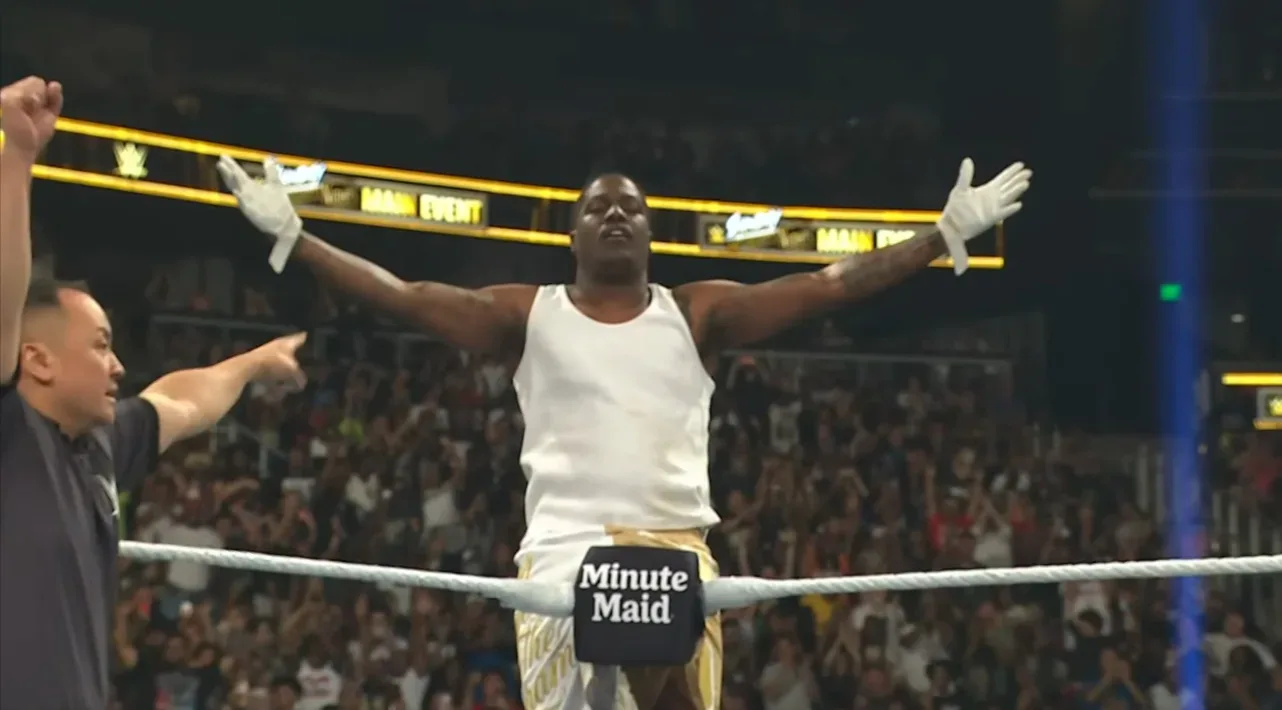
Lil Yachty has addressed one of the louder points of debate surrounding his extended WWE presence: the assumption that the recording artist is being paid an enormous amount of money while WWE talent lose their jobs.
Speaking on Insight with Chris Van Vliet, Yachty made it clear that he does not view his current wrestling involvement as a financial windfall. In fact, he said his decision to prioritize WWE over other professional opportunities has come at a personal cost.
“I never tried to make anyone believe how invested and how much I love this because it’s not for the money,” Yachty said. “I don’t want anyone to think I’m getting some crazy check. I’m losing money. I’m losing money doing this. I love it. I love everything about this shit.”
The comments offer a direct response to an understandably skeptical segment of the wrestling audience. Celebrity involvement has long brought questions about whether a major outside name is taking up valuable television time, attention, or resources that could otherwise go to full-time wrestlers. That conversation has followed Yachty throughout his WWE run, which began before WrestleMania when he started appearing alongside Trick Williams.
For more background on this topic, read Sol Ruca Addresses the Sol Snatcher’s Challenge as a Match-Defining WWE Finish.
Yachty is already an established figure in music, and he acknowledged that his WWE schedule has meant putting wrestling ahead of recording and touring commitments. His explanation was not that the arrangement is without value to him professionally, but that money is not the reason he has committed so heavily to it. He framed the opportunity as something he is pursuing because he has a real passion for the industry and the work that goes into it.
Yachty Responds To Roster-Cut Speculation
Among the more pointed reactions Yachty has seen online are claims that WWE could be releasing wrestlers in order to afford him. He rejected that idea emphatically, saying that no performer is being cut to cover his compensation.
“They also assume that wrestlers are getting cut to pay me. That’s not happening,” Yachty said. “They’re not cutting wrestlers to pay my bills. I promise. I’m not getting paid that much. I don’t want anyone to think all these fantastic wrestlers are getting cut to pay my salary. That’s not the case.”
It is a significant clarification because roster movement always produces strong emotions among WWE fans. Releases, departures, and decisions not to renew contracts can become part of a larger conversation about how the company uses television time and manages its talent pool. When a recognizable celebrity appears regularly on programming, it is easy for viewers to connect unrelated developments and assume there is a direct financial tradeoff.
Yachty’s message is that such a connection should not be made in this instance. While he understands the criticism that comes with being featured in a wrestling environment, he said the idea that talent cuts are funding his role is simply untrue. He also went out of his way to describe WWE’s wrestlers as “fantastic,” a notable choice of words from someone who has become a visible on-screen participant rather than merely a guest dropping in for a single appearance.
That distinction is central to the response. A one-night celebrity cameo often exists outside the weekly rhythm of a wrestling product. Yachty’s involvement has been more sustained, and that has naturally invited closer scrutiny. Viewers have had time to form opinions about his place on television, his connection to Trick Williams, and whether his appearances are contributing to the stories around him.
For Yachty, however, the answer begins with investment. He does not present himself as someone treating WWE as a quick promotional stop between music releases. He has stressed that he loves wrestling, and his willingness to devote time that could be used for other elements of his career has become the core of his defense.
A Celebrity Presence With A Wrestling Priority
WWE has regularly utilized performers from outside wrestling, particularly when those names can bring additional eyes to major events or ongoing storylines. Such appearances can create buzz, but they also face a higher standard with longtime fans. Wrestling audiences frequently want celebrity guests to show that they understand the product, respect the wrestlers, and are not simply collecting a paycheck.
Yachty directly addressed the paycheck portion of that criticism. His claim that he is losing money through the commitment does not mean the WWE role lacks career importance. Instead, it underlines the opportunity cost he sees in the work. As one of the most prominent recording artists in the world, time spent preparing for and participating in wrestling is time that could be allocated to recording, touring, and other music-related business.
That context gives his remarks additional weight. The public conversation around celebrity wrestling appearances often assumes that the celebrity is receiving an exceptional fee because of their fame outside the ring. Yachty says that assumption does not match his situation. He wants the audience to judge his WWE involvement through the lens of enthusiasm and commitment, not through a belief that he is receiving a salary large enough to affect decisions involving the roster.
It is also worth noting that Yachty did not dismiss the frustration some fans feel when television time goes to a non-wrestler. He specifically repeated a version of the criticism he sees online: “This is who you’re wasting TV time on?” Rather than argue that fans have no reason to care about WWE’s allocation of attention, he focused on correcting the financial claim attached to that criticism.
In other words, he understands that people can question his role. What he does not accept is the narrative that WWE is sacrificing wrestlers’ livelihoods to maintain it.
Ilja Dragunov Mentioned In The Conversation
During the discussion, Yachty also spoke highly of Ilja Dragunov. Dragunov was brought up in the broader conversation about wrestlers leaving WWE, though Yachty clarified that Dragunov was not cut. Instead, he said Dragunov made the decision not to renew his contract.
Yachty’s praise for Dragunov fits with the larger theme of his comments. He clearly does not want his own role to be viewed as dismissive of the people who have built their careers inside the ring. By highlighting his admiration for Dragunov, he reinforced that he is approaching WWE as a fan of its performers as well as an on-screen personality.
That does not automatically end debates about how celebrity participation should be used, nor should it. Wrestling fans are invested in emerging talent, established stars, and the limited amount of time available on any given broadcast. Those are normal discussions to have around a weekly product. But Yachty has now drawn a firm line between those creative debates and the notion that he is personally responsible for roster reductions.
From Trick Williams Association To An In-Ring Debut
Yachty’s relationship with WWE has developed over a number of months. His involvement dates back to the period before WrestleMania, when he began working alongside Trick Williams. The association helped move him beyond the usual celebrity-guest role, making him part of an ongoing wrestling presentation rather than a name appearing solely for a brief promotional moment.
Elsewhere in the interview, Yachty discussed his in-ring debut at WWE Sunday Night’s Main Event. That is another indication that his WWE participation has continued to evolve. Entering the ring is a different level of commitment from standing at ringside or appearing in a backstage segment, particularly for someone whose primary career was built outside professional wrestling.
The details of his comments point to a celebrity who wants audiences to understand that he is not treating that step lightly. Training, preparation, travel, and television obligations all demand significant time. Whether every fan ultimately enjoys his role is a separate question, but Yachty’s explanation is that he has willingly taken on those demands because he values the experience.
His message is therefore straightforward: WWE is not paying him a life-changing amount that comes at the expense of its wrestlers, and he is not participating because he needs the money. He says he is making the commitment because he loves professional wrestling.
As Yachty continues to be connected with WWE programming following his work alongside Trick Williams and his Sunday Night’s Main Event in-ring debut, that passion will likely remain under the microscope. Celebrity involvement nearly always creates divided opinions. Still, Yachty has made his position clear: fans are free to debate his television time, but he does not want WWE roster cuts falsely attributed to his salary.
Darryl Polo
Darryl Polo is a passionate wrestling fan covering WWE, AEW, TNA and beyond. He loves great rivalries, breakout stars and the moments that keep fans talking long after the bell. How we work.