
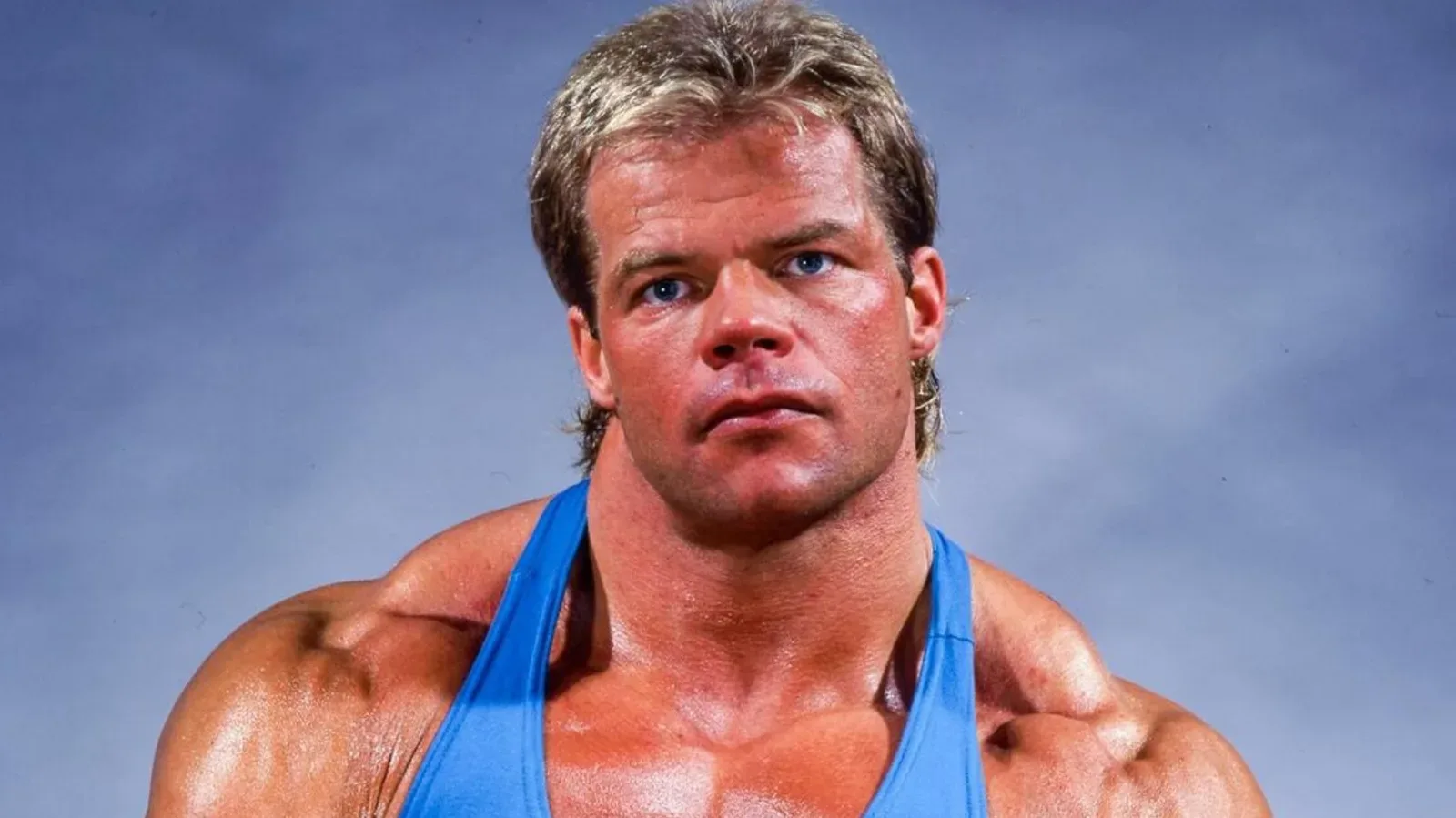
Lex Luger’s rise into one of the biggest stars of the late 1980s and early 1990s came with major championship pursuits, memorable rivalries and a series of high-profile matches opposite Ric Flair. Before their rivalry became one of the defining programs of the National Wrestling Alliance era, however, Luger was still learning the fundamentals of professional wrestling.
That inexperience made one early assignment particularly daunting. During their time in Championship Wrestling From Florida and the NWA, Luger and Flair worked a non-televised 60-minute time-limit draw, known in wrestling as a Broadway. Flair was already an accomplished, deeply experienced main-event performer. Luger, by comparison, had been in the ring for only a matter of months.
Speaking with Going Ringside, Luger recalled being told that he would need to wrestle for an hour and immediately wondering how he could possibly manage it at that point in his development. His recollection underscored both the steep learning curve he faced and the confidence veteran wrestlers had in Flair’s ability to direct a match from bell to bell.
“I’d only been wrestling for a few months and they told me I had to wrestle for an hour. I go, ‘How am I going to do that?’ Ric called a Sunset Flip, is a very basic move in wrestling during the match. I said, ‘What’s that?’ Ric went, ‘Oh my gosh.’ But he got me through an hour.”
For more background on this topic, read WWE Raw Preview: The Bloodline Addresses Solo Sikoa Situation, LA Knight Talks Roman Reigns.
A sunset flip is among the most elementary pinning exchanges in wrestling, which made Luger’s unfamiliarity with the move a striking detail in the story. The rookie was being asked to work a full hour with one of the industry’s most established champions while still building a basic vocabulary of in-ring maneuvers. Yet Flair’s reputation was built not only on his own athleticism and charisma, but also on his ability to structure matches around opponents at vastly different stages of their careers.
Luger said the task was an enormous undertaking for someone who was not yet fully equipped with the experience normally associated with lengthy main-event matches. In his view, Flair’s command of the ring was the deciding factor in making the Broadway possible.
“But yeah, an hour Broadway, that’s a lot of wrestling. For a guy who didn’t know how to wrestle yet. That was a lot. Only Flair could have gotten a guy like me through an hour match like that. Crazy. That’s how good he is in the ring.”
Flair and Luger’s Early Foundation
The story offers a revealing look at the beginning of a pairing that would become much more significant as Luger developed. Flair was one of the NWA’s central figures and a proven World Heavyweight Champion, while Luger was an imposing newcomer still finding his footing after entering the business in the mid-1980s. Their early meetings in Championship Wrestling From Florida and the NWA placed Luger opposite a performer capable of testing him in front of audiences while also helping him gain experience at a rapid pace.
That type of veteran-rookie matchup has long been central to wrestling’s development system. A younger performer can learn timing, pacing, positioning and crowd awareness through repetition, especially when paired with an opponent capable of adapting to mistakes and maintaining the flow of a contest. A 60-minute draw magnifies all of those demands. It requires sustained pacing, a logical progression of offense and a finish that leaves the audience with a reason to view the match as significant even without a decisive winner.
For Luger, the Broadway was not merely an endurance test. It was a practical education in the ring with Flair serving as the guide. The bout was non-televised, but the experience clearly remained vivid for Luger decades later, particularly the moment when Flair called for a move Luger did not yet recognize.
Flair’s reaction, as recalled by Luger, also captures the unusual reality of putting a newcomer in such an ambitious situation. The veteran could not simply rely on a rehearsed sequence with a polished peer. He had to lead an inexperienced opponent through an hour of action and adjust in real time. Luger’s assessment that Flair was uniquely qualified to do it reflects the esteem in which he holds his longtime rival.
From Rookie Test To Championship Rivalry
Their work together did not end with that early non-televised draw. As Luger became a larger presence in the NWA, Flair and Luger went on to meet in Steel Cage matches, championship contests and other major encounters. Their history eventually produced several bouts remembered as standout performances from the period.
Among the most notable was their clash at NWA Starrcade 1988, where Flair defended the NWA World Heavyweight Championship against Luger. The match represented a much different stage in Luger’s career from the rookie Broadway. By that point, Luger was positioned as a serious challenger on one of the NWA’s grandest stages, facing Flair in a contest that became an iconic chapter in their shared history.
They returned to the NWA World Heavyweight Championship picture again at NWA WrestleWar 1990. That match further demonstrated the longevity of the Flair-Luger program and the value the promotion saw in their rivalry. The pairing could be revisited because its foundation had been established over years: Flair as the established standard-bearer and Luger as the powerful challenger who had grown into a major star.
Their legacy also included more than one time-limit encounter. Luger’s first televised opportunity at Flair’s NWA World Heavyweight Championship came at NWA Battle of the Belts in September 1986. That bout went 30 minutes and ended in a time-limit draw. While it was shorter than the earlier 60-minute Broadway Luger discussed, it carried the larger stakes of a televised World Heavyweight Title challenge.
In the context of Luger’s recollection, that September 1986 draw takes on added meaning. The earlier hour-long assignment had forced him to confront the demands of long-form wrestling at a time when he was still new to the craft. The Battle of the Belts match then provided a public showcase against the same opponent, with championship stakes and a 30-minute limit. Both matches illustrate how quickly Luger was being tested against elite competition.
The Value Of A Broadway
A Broadway is one of wrestling’s most demanding formats. The term commonly refers to a match that reaches its time limit without a winner, and a 60-minute Broadway has traditionally been associated with title bouts, major main events and occasions where the promotion wants to establish parity between two competitors. The format can elevate a challenger by showing that he was able to survive or match a champion for an extended period.
For a rookie, though, a one-hour draw presents a different kind of challenge. The physical toll is obvious, but the greater issue is experience. Wrestlers must know how to vary the action, respond to the crowd, manage momentum swings and protect the importance of the final minutes. They must also be able to communicate under pressure. Luger’s anecdote about not knowing a sunset flip shows just how early he was in that process.
Flair’s role in the match reflects a skill that has often been associated with the “Nature Boy” throughout his career. Flair worked with a broad range of opponents and styles, frequently in long championship matches where he had to make challengers look credible while maintaining the drama around the title. Luger’s account does not diminish his own growth; instead, it identifies the veteran leadership that helped him get through a formative moment before he had acquired the seasoning that later defined his own career.
There is also a clear contrast between the Luger who entered that early Broadway and the Luger who later stood across the ring from Flair at Starrcade and WrestleWar. The later bouts were built around an established rivalry between two recognizable stars. The earlier match, by Luger’s description, was about survival and learning. He had the physical tools that would make him a major attraction, but he was still developing the in-ring knowledge needed to operate at a main-event level.
A Lasting Appreciation For Flair
Luger’s comments ultimately serve as a strong tribute to Flair’s ability as an in-ring general. Rather than focusing only on their better-known championship matches, Luger pointed to a lesser-seen early contest as evidence of Flair’s talent. A rookie who did not know a basic called move was able to complete an hour-long draw with one of the era’s top stars guiding the action.
That match was not the most famous chapter of the Flair-Luger rivalry, and it did not have the visibility of their televised title bouts. Still, it helped form the base of a relationship that produced major NWA matches over the following years. Luger’s story places the celebrated rivalry in perspective: before he could become a credible opponent for Ric Flair on wrestling’s biggest cards, he first had to make it through an hour in the ring with him.
For Luger, the memory remains simple and emphatic. The assignment felt overwhelming, the experience exposed how much he still had to learn, and Flair got him through it. The future WWE Hall of Famer’s praise makes clear that he views that early Broadway as proof of exactly why Ric Flair earned his standing as one of professional wrestling’s all-time great in-ring performers.
In pictures

Darryl Polo
Darryl Polo is a passionate wrestling fan covering WWE, AEW, TNA and beyond. He loves great rivalries, breakout stars and the moments that keep fans talking long after the bell. How we work.