
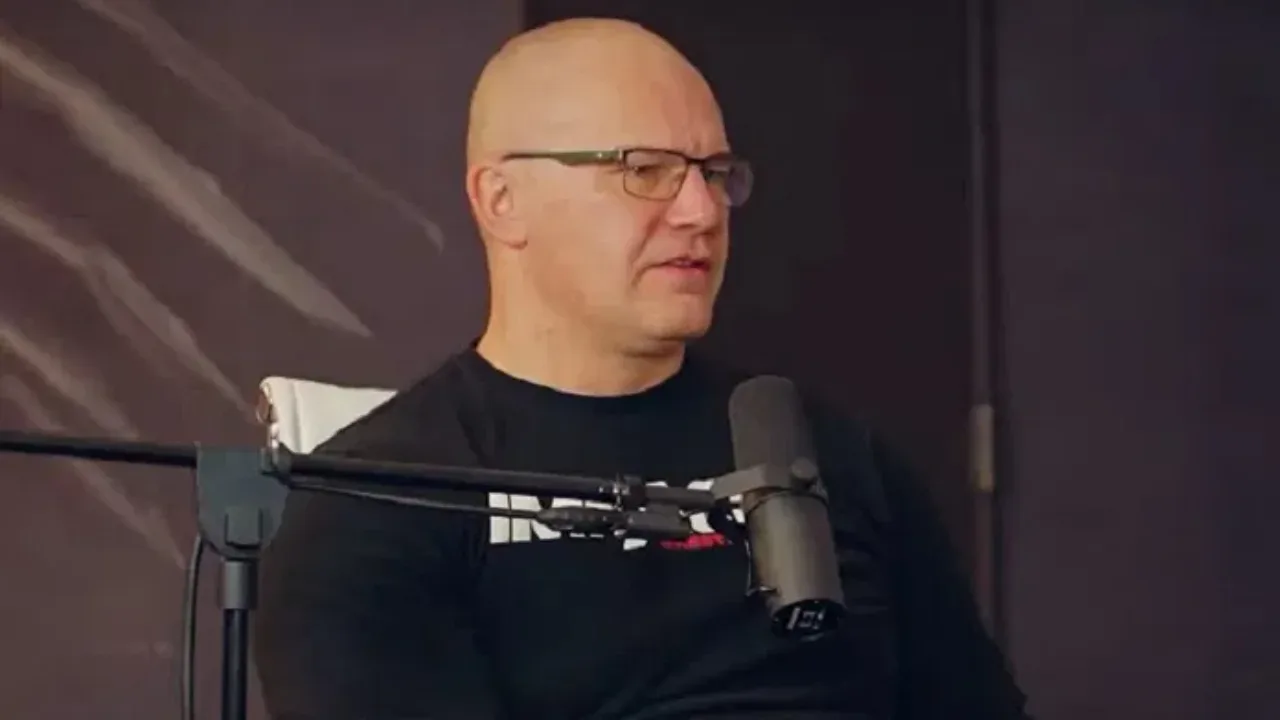
Lance Storm has identified unselfishness as the most important quality he looks for when evaluating young professional wrestlers.
Storm, whose career has evolved from accomplished in-ring performer to coach and TNA producer, explained that the most promising talent is not always defined by how impressive they look when the audience’s attention is centered on them. Instead, he pays close attention to whether a wrestler is actively helping an opponent succeed, including through the small decisions that may not be immediately obvious to viewers.
For Storm, that is the dividing line between a performer focused solely on personal advancement and one who recognizes that wrestling works best as a collaborative form of storytelling. A wrestler can have athletic ability, creative offense and ambition, but Storm believes a broader understanding of the match, the opponent and the company is what shows that someone truly “gets it.”
“I think the biggest things are those that you can tell also put a lot of effort into making their opponent look good, and it’s that hidden quality of the, what they’re doing while the crowd is looking and cheering at the other guy,” Storm said.
For more background on this topic, read Lance Storm Reflects on Ultimate X: ‘Part of Me Is Glad I Never Had To’.
Looking Beyond the Highlight Reel
Young wrestlers entering the business naturally want to stand out. They are trying to earn bookings, create opportunities and establish an identity in a crowded field. Storm acknowledged that the early stage of a career can create an understandable mindset centered on individual success. A performer may feel that every match is an audition and every moment needs to demonstrate what they can do.
But Storm’s comments underline why the best wrestling is rarely built around one person trying to seize every available second of attention. The match is a shared performance. Its effectiveness depends on timing, selling, reactions, positioning and the ability of both wrestlers to guide an audience through changing emotions. The audience may remember a major move or a dramatic finish, but those moments only reach their full potential when the wrestlers involved have created the conditions for them to matter.
That is why Storm emphasized what happens when the spotlight is elsewhere. A wrestler who knows how to react while the opponent is receiving cheers, or who can make sure the camera remains on the other performer at the right time, is contributing to the overall presentation rather than fighting against it. Those details are less flashy than a signature maneuver, but they can make a major difference in how a match is received.
Storm described this as a “hidden quality,” and it is one that speaks to awareness. The work done outside the obvious focal point can preserve an opponent’s momentum, make a comeback feel stronger and help the crowd understand exactly where its emotional investment should be placed. In a medium built on directing attention, knowing when not to demand it is a valuable skill.
Rob Van Dam as Storm’s Example
To illustrate his point, Storm pointed to Rob Van Dam, a wrestler widely recognized for his inventive offense, athleticism and memorable high-impact style. Van Dam’s most celebrated highlights have long been easy to identify: the agility, the striking, the aerial attacks and the creativity that made his offense distinctive.
Storm, however, urged viewers to consider the other side of Van Dam’s work. He noted the “insane, amazing bumps” Van Dam took to make opponents’ offense look effective. It is a useful example because it shifts the focus from the moves a wrestler delivers to the generosity and commitment shown when receiving them.
“Everybody knows all the great, amazing, creative offense that Rob had,” Storm said. “But go back and look at all the insane, amazing bumps he took to make other guys’ stuff look good, and I noticed that.”
In wrestling, taking an opponent’s move is not simply a passive responsibility. The manner in which a wrestler sells, falls, reacts and recovers can determine whether a move looks routine or devastating. A strong bump can increase the perceived impact of an opponent’s offense. A convincing reaction can persuade an audience that a shift in the match matters. When done well, that work makes the other wrestler appear more dangerous, more resilient or more credible.
Storm’s Van Dam example also reinforces that selfless work does not diminish a performer’s own identity. Van Dam remained known for his unique offense and individual appeal, yet Storm’s recollection highlights the value of everything he contributed to the wrestlers across the ring from him. That combination is a model for developing talent: build a recognizable style, but learn how to elevate the people sharing the match with you.
The Importance of Crowd Emotion
Storm also stressed the importance of affecting the crowd even when viewers are not actively watching the wrestler doing the work. That is a sophisticated aspect of performance, because a wrestler must remain engaged with the match at all times rather than treating it as a sequence of isolated turns.
A crowd response can change because of an expression, a reaction, a well-timed movement or the way a wrestler feeds into an opponent’s comeback. Those contributions may happen at the edge of the frame or while the audience is focused on another wrestler’s moment. Yet they help sustain the rhythm of the contest.
Storm said he notices performers who can influence those emotions without needing the recognition for every contribution. He also specifically mentioned allowing the camera to stay on the other wrestler when that person’s moment calls for it. That awareness of presentation is especially meaningful in a televised environment, where the camera’s focus helps shape the story being told to viewers at home.
“You notice the guy that changes the crowd emotion when you’re not even looking at him, or allows the camera to stay on the other guy because it’s the other guy’s time,” Storm said.
That approach reflects an understanding that professional wrestling is not a collection of individual clips. It is a complete presentation involving wrestlers, production personnel, commentators and the promotion itself. A performer who works with that reality instead of against it is more likely to make every part of a match feel connected.
From “I” to “We”
The central theme of Storm’s assessment is perspective. He described the early-career mentality as one driven by “I” concerns: the need to succeed, the need to move ahead and the urgency of proving oneself. Those motivations are familiar to anyone pursuing a competitive profession, and Storm did not suggest that ambition is inherently negative.
His point was that wrestlers ultimately need to expand that perspective. They must recognize what the company needs, what the opponent needs and what the match needs. In other words, growth comes when personal ambition is balanced by a responsibility to the larger picture.
“When you realize that it’s not all eyes and we need the we’s and the us, and this is needed for the company, this is needed for my opponent,” Storm said. “That’s when you know, okay, these guys really get it.”
For a TNA producer, that outlook carries practical weight. Wrestling promotions depend on performers who can help create stars, maintain stories and deliver matches that serve the broader direction of a show. A wrestler may be asked to make an opponent look strong, protect a particular moment, support a developing character or execute a match structure that does not place them at the center. Being able to perform those roles effectively is part of becoming dependable.
Storm’s view also offers a clear lesson for wrestlers seeking to improve: the most meaningful evaluation may not come from the loudest reaction to one spectacular move. Coaches and producers can see the less obvious choices. They can see whether someone is listening, whether they are reacting honestly, whether they are helping a partner and whether they understand the purpose behind a sequence.
A Standard for Developing Talent
Storm’s criteria do not discount athleticism or charisma. Those traits can be essential, and they often help young wrestlers get noticed. But his comments make clear that he sees them as incomplete without an unselfish approach to the craft.
The wrestler who can make an opponent’s offense look meaningful, help guide the audience through the intended emotions and yield attention when the story demands it is demonstrating maturity beyond the highlight reel. That person is not only trying to have a strong performance; they are helping ensure that the match itself succeeds.
For Storm, that is the quality worth watching most closely. The ability to think beyond oneself, he suggests, is not a secondary trait. It is a sign that a young wrestler understands the teamwork at the heart of professional wrestling—and the difference between being talented and being truly valuable to a promotion.

Darryl Polo
Darryl Polo is a passionate wrestling fan covering WWE, AEW, TNA and beyond. He loves great rivalries, breakout stars and the moments that keep fans talking long after the bell. How we work.