
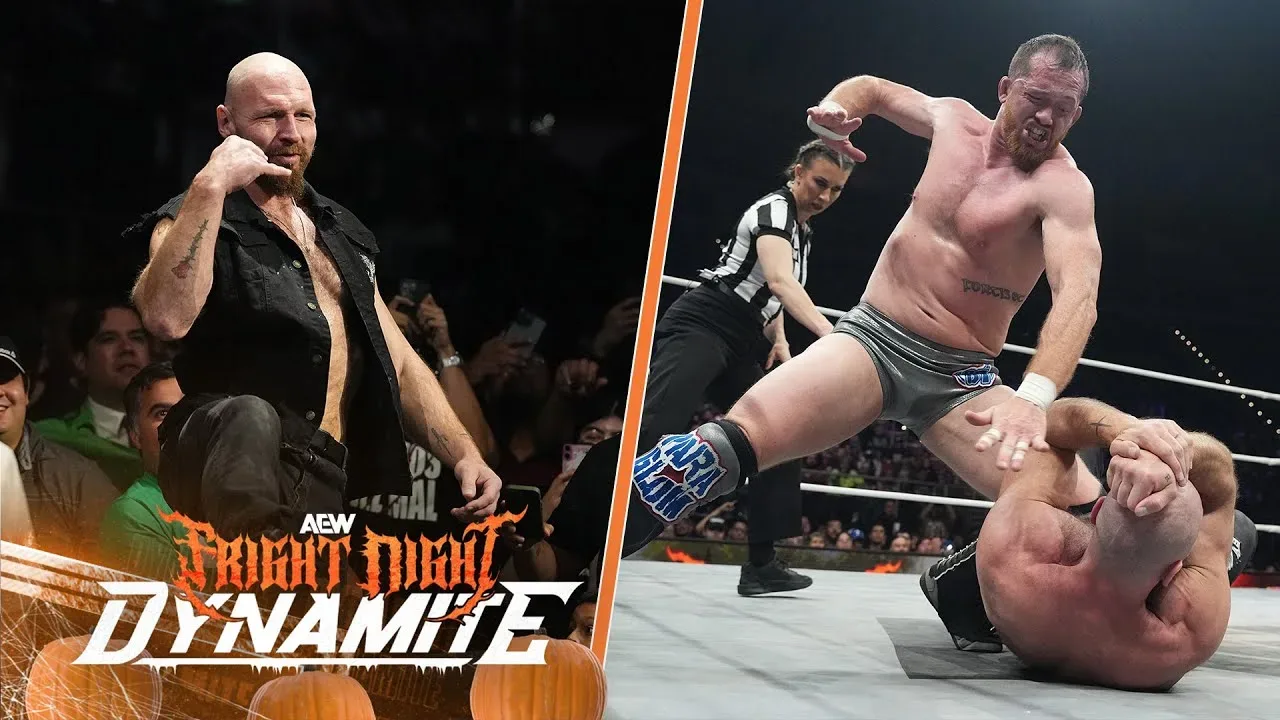
Kyle O’Reilly has offered emphatic praise for Jon Moxley’s standing behind the scenes in AEW, calling him the company’s locker room leader and highlighting the example he sets through his daily approach to work.
During an appearance with Tony Schiavone and Conrad Thompson, O’Reilly was asked about Moxley’s place within AEW. The response centered less on Moxley’s accomplishments in the ring and more on the habits and leadership qualities O’Reilly has observed while working alongside him.
“He’s certainly the locker room leader. Has and commands everyone’s respect. He’s such a lead-by-example kind of guy. He’s always there. He’s always working hard. He’s always one of the last to leave. Always willing and open to offer advice. I’ve gotten so much out of working with him and being around him and watching the way he conducts himself. He’s a real gem. I’m really glad we have him.”
The comments provide a clear view of why Moxley is frequently viewed as one of AEW’s central figures. O’Reilly did not merely describe him as a prominent performer or an important name on television. He specifically framed Moxley as someone who has earned authority through consistency, preparation and a willingness to help the people around him.
For more background on this topic, read Tony Schiavone Calls Swerve Strickland Drinking Hangman Page’s Blood at AEW Full Gear ‘Pretty Gross’.
O’Reilly Highlights a Lead-by-Example Approach
In a wrestling locker room, leadership can take many forms. Some veterans provide guidance through direct instruction, while others establish standards by the way they prepare, perform and carry themselves. O’Reilly’s description of Moxley emphasizes the latter, while also making clear that Moxley is available to offer advice when it is wanted.
The details O’Reilly chose are notable. He pointed to Moxley being present, working hard and staying late, presenting a picture of a wrestler whose influence is based on visible effort rather than just reputation. That type of reliability can be especially meaningful in a promotion built around a wide range of experienced names and emerging talent, where the example set by top-level performers can shape the broader environment.
O’Reilly also said that Moxley “commands everyone’s respect.” That wording suggests respect that has been established through action and sustained conduct. Moxley has long been identified by fans as “The Ace” of AEW, and O’Reilly’s remarks echo the perception that Moxley holds a significant place among his peers as well as in front of the audience.
For O’Reilly, the value of Moxley’s presence has been personal as well as professional. He said he has gotten “so much” from sharing space with Moxley, working with him and watching how he handles himself. That encompasses more than any single match, rivalry or advice session. It speaks to the ongoing benefit of having an established performer whose work habits are consistently visible to others in the company.
A History of Competitive Encounters
O’Reilly’s appreciation for Moxley is particularly interesting given their competitive history. The two have had several battles over the years, including multiple occasions on which O’Reilly made Moxley submit. Those results underline O’Reilly’s own credibility as a submission specialist and demonstrate that their shared history has not been one-sided.
That history also gives O’Reilly a perspective that extends beyond observing Moxley from afar. Wrestlers often learn a great deal from opponents with whom they share the ring, particularly when those matches demand technical precision, toughness and a strong understanding of pacing. O’Reilly did not identify any one encounter as the basis for his view, but his comments make clear that working with Moxley has left a lasting impression.
They have also been on the same side. O’Reilly and Moxley teamed together at AEW Full Gear in Anarchy in the Arena, adding another layer to a relationship that has included both direct competition and cooperation. In an environment as physically demanding and unpredictable as Anarchy in the Arena, trust between teammates is vital. Their ability to work together after previous clashes speaks to the professional respect that can develop between competitors.
The contrast is central to professional wrestling’s unique environment. Rivalries can be intense, physical and deeply personal on screen, while the performers involved can simultaneously recognize each other’s value as teammates, colleagues and leaders away from the camera. O’Reilly’s remarks about Moxley fit squarely within that reality.
Why Moxley’s Role Matters in AEW
AEW has regularly positioned Moxley as one of its defining competitors. His profile has been shaped by high-level matches, major moments and a style that projects intensity and conviction. Yet O’Reilly’s comments focus on a different measure of importance: what Moxley contributes when there is no spotlight on him.
Being viewed as a locker room leader carries responsibilities that do not come with a championship belt or a match graphic. It means being someone others can watch for an example of effort. It means being available when a colleague seeks input. It also means maintaining a standard of professionalism that reinforces the culture a promotion wants to cultivate.
O’Reilly’s praise indicates that Moxley fulfills those responsibilities through a straightforward approach. There is no elaborate claim attached to the assessment. Instead, O’Reilly described someone who puts in the work, remains engaged and takes the time to share what he has learned. The simplicity of that description is part of what makes it substantial.
Veteran guidance can be particularly valuable in a company where performers are constantly asked to develop their identities, adapt to different opponents and find ways to connect with audiences. Advice from a colleague can help, but the example of a respected wrestler consistently doing the work can be just as influential. O’Reilly’s comments suggest Moxley provides both.
Respect Beyond Storylines and Results
Professional wrestling is often evaluated through wins, losses, championships and memorable promos. Those markers remain important, but they do not always capture the full measure of a performer’s contribution. O’Reilly’s comments bring attention to the less visible side of Moxley’s place in AEW.
There is also a distinction between being respected because of a résumé and being respected because of one’s daily conduct. O’Reilly mentioned Moxley’s effort, longevity at the workplace and openness to giving advice before concluding that he is “a real gem.” The praise is warm, direct and rooted in firsthand observation.
O’Reilly’s final sentiment — that he is glad AEW has Moxley — sums up the broader point. A promotion benefits from star power, but it also benefits from dependable figures who can set a tone for the rest of the roster. In O’Reilly’s view, Moxley is one of those people.
As AEW continues to feature a roster filled with accomplished and distinct performers, the influence of trusted veterans remains significant. O’Reilly’s assessment reinforces Moxley’s reputation not only as a major in-ring presence, but as a worker whose impact reaches beyond the bell. Their past matches, their time as teammates and their shared experience in AEW have given O’Reilly a close look at that impact.
For O’Reilly, the conclusion is uncomplicated: Moxley has the respect of the locker room, leads through his actions and remains a valuable resource for those around him. That is the kind of endorsement that speaks to a role far larger than any single match or storyline.

Darryl Polo
Darryl Polo is a passionate wrestling fan covering WWE, AEW, TNA and beyond. He loves great rivalries, breakout stars and the moments that keep fans talking long after the bell. How we work.