
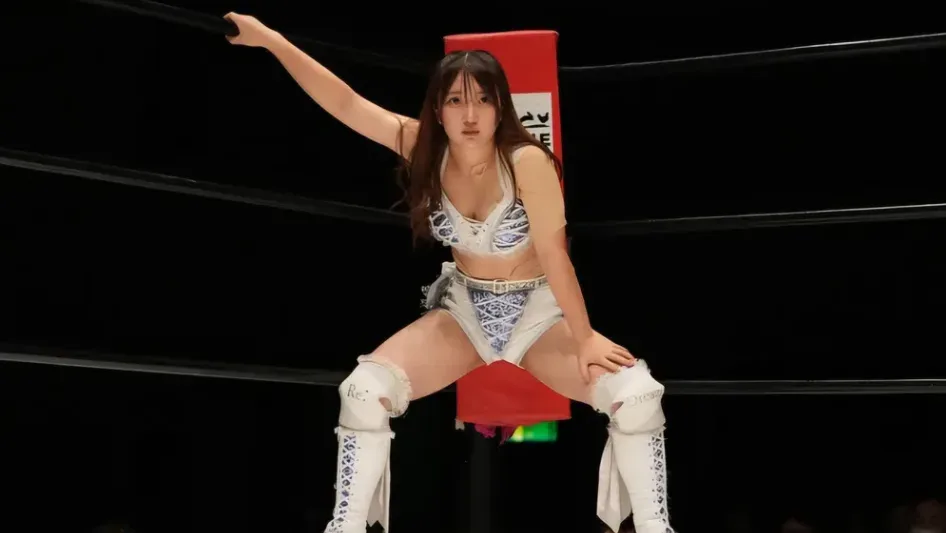
Kizuna Tanaka has opened up about the severity of the ankle injury that took her out of action earlier this year, describing a frightening fracture and dislocation that required three separate surgeries.
The Dream Star Fighting Marigold talent was sidelined in January after suffering the injury in a match. Tanaka has since returned to the mix, but her recollection of the immediate aftermath underscores just how serious the situation was. She said that, after being taken to the hospital, she was told the bone in her ankle had fully dislocated and had come extremely close to piercing through her skin.
“I went to the hospital right after the match, but the bone in my ankle had completely dislocated… and it was very close to going all the way through my skin. As a result, I ended up having three surgeries.”
An ankle fracture and dislocation is a significant injury under any circumstances, and Tanaka’s description makes clear that this was not a routine absence. The danger of the bone breaking through the skin added another alarming element to an already major injury, while the need for three procedures illustrates the extent of the medical treatment required.
For more background on this topic, read Josh Bishop Says Johnny Gargano’s Best Wrestling Advice Was Simply To Be A Good Person.
Tanaka recalls little of the immediate surgical process
Tanaka also explained that the experience was disorienting from the moment she was injured. She said her mind went blank in the immediate aftermath and that she does not remember the point at which she was given general anesthesia for surgery.
“Actually, right after the injury, my mind went completely blank, and I don’t remember when I was given general anesthesia and had surgery.”
That account offers a sobering look at the physical and emotional shock that can accompany a severe in-ring injury. Wrestlers are accustomed to the demands and risks of a physical profession, but an incident requiring urgent hospital treatment and multiple surgeries is a different level of disruption. In Tanaka’s case, the injury did not simply mean missing scheduled appearances; it meant going through a substantial medical recovery process after a moment she can only partly recall.
For performers in the early stages of their careers, lengthy layoffs can be especially difficult. Momentum, ring time and opportunities to establish themselves all matter, and time away can feel enormous when a wrestler is still building experience. Tanaka, however, has now resumed her place in the wider wrestling scene after the January setback.
A major setback during a formative stage of her career
Tanaka is 21 years old, placing her among the younger members of Japan’s current women’s wrestling landscape. That context makes the injury’s timing particularly unfortunate. A young wrestler’s development depends heavily on consistent training and match repetition, and an extended recovery from an ankle injury can interrupt both.
At the same time, Tanaka’s comments emphasize the scale of what she had to overcome before getting back into the mix. Three surgeries are a substantial hurdle, particularly following a fracture-dislocation serious enough that doctors warned the bone was nearly exposed through the skin. Her return therefore carries added weight beyond a standard comeback following time away.
There is no need to overstate what Tanaka’s future holds from here. A wrestler’s post-injury path is shaped by many factors, including medical clearance, conditioning, confidence and the demands of competition. What is clear from her own description is that she faced a severe injury, underwent extensive treatment and has been able to move forward following a difficult stretch.
Last documented match came in Kanagawa
Tanaka’s last documented bout took place on November 3 at an independent wrestling show in Kanagawa, Japan. That appearance marked a notable point in her continued return to competition following the injury and surgeries earlier in the year.
The November 3 match also demonstrates that Tanaka’s presence has extended beyond one setting. While she is identified with Dream Star Fighting Marigold, working an independent event in Kanagawa gave her another opportunity to compete as she continues to re-establish rhythm after the layoff.
No additional details about that match result were provided. The key development is simply that Tanaka has been back in the ring after an absence caused by an injury she now describes in stark terms.
The reality behind a wrestling comeback
In professional wrestling, returns from injury are often celebrated for their emotional impact. A wrestler’s music hits, the crowd reacts and the focus quickly shifts to the next rivalry, match or championship pursuit. Tanaka’s comments are a reminder that the process before that return can be far more difficult than the public moment itself.
Her account contains several details that stand out: the ankle bone was completely dislocated, it nearly came through the skin, she underwent three surgeries and the shock of the incident left her unable to remember the transition into anesthesia. Taken together, those points paint a clear picture of a serious medical emergency rather than a minor injury that only required a short period away.
It is also notable that Tanaka spoke directly about the experience. Wrestlers do not always publicly detail the most painful moments of their recoveries, especially when those memories involve fear, confusion or the frightening uncertainty of an emergency hospital visit. By explaining what happened, Tanaka has provided supporters with a fuller understanding of the challenge behind her absence and eventual return.
The recovery itself is often invisible to audiences. Surgery, rehabilitation and the gradual work of preparing the body for wrestling again happen away from the ring and outside of show-day excitement. For an ankle injury, the road back can be especially important for a wrestler because balance, movement, impact absorption and ring positioning are fundamental parts of performing safely and effectively.
Tanaka did not offer a detailed timeline of each operation or the full rehabilitation process. She also did not provide further medical specifics beyond the fracture, dislocation, proximity of the bone to the skin and the three surgeries. Those facts alone, however, make the seriousness of the setback unmistakable.
Tanaka moving forward after January injury
Tanaka’s story now has two defining points: the traumatic January injury and her return to activity later in the year. The first explains why she was absent; the second reflects the determination required to resume a career after such a difficult medical ordeal.
As a 21-year-old wrestler, Tanaka still has significant time ahead of her in the sport. The January injury represented a major interruption, but it has not ended her involvement in wrestling. Her documented November appearance in Kanagawa and her re-entry into the mix indicate that she has been able to take an important step forward.
For now, the most meaningful takeaway is Tanaka’s own perspective. She was hurt badly enough to require three surgeries after an ankle fracture and dislocation, and she remembers the incident as a blur caused by the shock of what happened. Yet she is back competing after a recovery that demanded considerable resilience.
That makes Tanaka’s return more than a simple note on a wrestler coming off the injured list. It is the continuation of a career after one of the most difficult kinds of obstacles a performer can face: a sudden, severe injury that required immediate treatment, repeated surgery and months of work before a return to the ring became possible.

Darryl Polo
Darryl Polo is a passionate wrestling fan covering WWE, AEW, TNA and beyond. He loves great rivalries, breakout stars and the moments that keep fans talking long after the bell. How we work.