
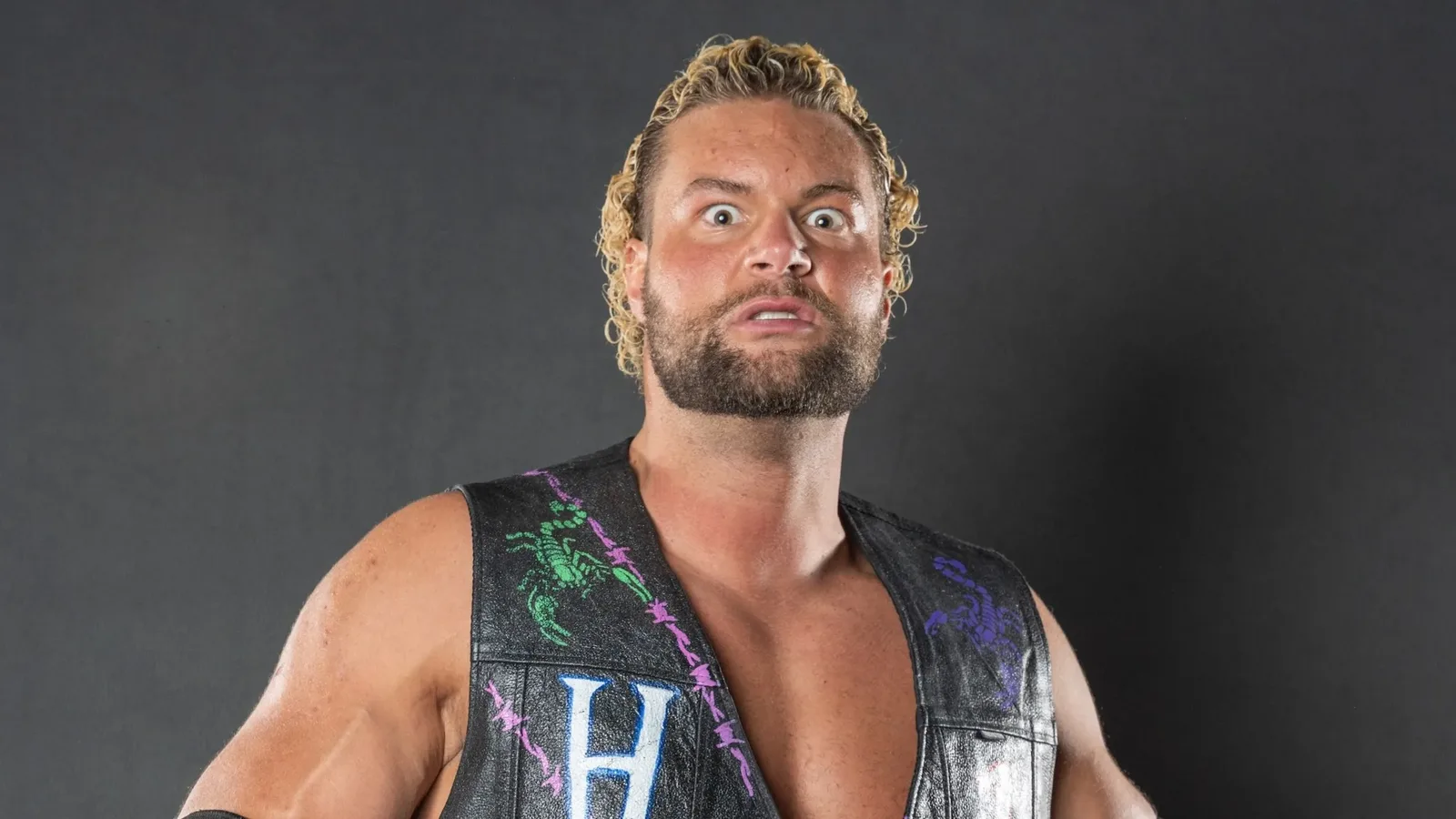
For Josh Bishop, the most valuable wrestling advice he has received did not concern a particular hold, a training drill, a match structure, or a strategy for getting noticed. Instead, Bishop says the lesson that has served him best came from Johnny Gargano and was remarkably simple: be a good person.
Bishop, who is 29 years old, has encountered a wide range of voices during his time in professional wrestling. That experience has made him especially conscious of the difference between advice that can genuinely help a performer grow and unsolicited direction that can send someone down the wrong path. In discussing the subject, Bishop did not present every piece of veteran-sounding wisdom as equally valuable.
His message to wrestlers who are still finding their footing was clear: listen carefully, consider the experience behind the advice, and do not assume that every person offering an opinion is in a position to direct someone else’s career.
Bishop Warns Against Taking Every Piece Of Advice
Professional wrestling is a business built on shared experience. Training schools, locker rooms, independent events, seminars, and travel all create opportunities for younger wrestlers to hear feedback from a broad assortment of people. That can be an enormous benefit when the feedback is thoughtful and comes from someone who understands the work. Bishop also knows there can be a downside when a developing talent feels compelled to absorb every suggestion they hear.
For more background on this topic, read Zack Sabre Jr. Teams With Tatsumi Fujinami in Dradition Main Event at Korakuen Hall.
When asked about the worst advice in wrestling, Bishop said there were too many possibilities to narrow down easily. He described an environment in which people who have not accomplished much in the profession can still be quick to pull aside a younger wrestler and tell them what they should do.
“The worst advice, there’s a trillion things I could say about that. I don’t even know where to begin with that because when you’re coming up, everybody that has never done anything ever in wrestling will pull you aside at every horrible show and tell you what to do,” Bishop said.
That observation speaks to one of the challenges facing talent at the start of a wrestling career. Feedback is constant, and it often arrives in a setting where a performer may not yet have the confidence or experience to evaluate it. A wrestler can be told to change their look, style, character, pacing, ring approach, social presence, or career priorities by any number of people. The availability of opinions does not automatically make all of those opinions useful.
Bishop’s advice is not that young wrestlers should reject coaching or disregard constructive criticism. Rather, he stressed the importance of discernment. There is a meaningful difference between learning from trusted trainers and accomplished peers and treating every comment as a command.
“If you’re a young and upcoming wrestler, don’t listen to every advice because some people tell you the dumbest things to do possibly,” Bishop said.
For someone entering a creative and highly competitive field, that distinction matters. Wrestling demands that performers remain open to improvement, but it also requires them to develop judgment. The ability to identify reliable guidance can be just as important as the willingness to receive it. Bishop’s comments offer a reminder that a young performer does not need to let every outside voice determine their direction.
Johnny Gargano’s Advice Stood Apart
While Bishop was frank about the bad advice that can circulate in wrestling, he was equally definitive when asked about the best guidance he has received. He credited Gargano, whom Bishop called his “OG trainer,” for providing the advice that has had the greatest impact on his career and his approach to the profession.
Gargano’s message was not complicated. Bishop said the advice was simply to be a good person. On its face, it is a basic principle that could apply to any workplace. Bishop’s point, though, is that the wrestling world makes that principle especially meaningful. The industry relies heavily on personal interactions: working with opponents, communicating with promoters, earning the trust of trainers, sharing long drives, navigating locker rooms, and representing oneself professionally in public and private settings.
“Best advice, I would say the advice that has gotten me the furthest is from Johnny Gargano, my OG trainer. It would be, just be a good dude,” Bishop said.
Bishop acknowledged that the answer may sound almost unusually obvious. Yet he emphasized that kindness, dependability, and basic respect are not qualities that can be taken for granted. In his view, the simplicity of Gargano’s advice is precisely what makes it so powerful.
“That has gotten me so much farther. Just be a good dude, which I know sounds like an insane concept. But you would not believe how many people are not actually good dudes. So if you just are a good dude, it will get you pretty far in wrestling,” Bishop said.
The comment is not a claim that being respectful replaces the hard work required to become a successful wrestler. Bishop’s own framing instead places character alongside the fundamentals. In an industry where professional reputations travel quickly, how a wrestler treats others can affect the opportunities available to them over time. A talent still needs the conditioning, timing, presence, discipline, and ability to deliver in the ring. But being easy to work with and treating people properly can help ensure that strong work is not undermined by poor conduct.
Why Simple Professionalism Can Matter So Much
Bishop’s praise for Gargano’s message highlights a reality that extends beyond wrestling: the advice with the most lasting value is not always the most elaborate. There are countless technical lessons a wrestler can study, from selling and footwork to promo delivery and crowd engagement. Those skills are essential, and no amount of good intentions can substitute for developing them.
At the same time, wrestling is not performed in isolation. Every match involves collaboration. Every show depends on people meeting their responsibilities. Every career is shaped, in some measure, by the impressions left on the people encountered along the way. A wrestler who communicates well, arrives prepared, respects their colleagues, and maintains perspective is likely to create a more positive working environment than one who does not.
Bishop did not attach a checklist to Gargano’s advice, nor did he need to. His description made the broader meaning clear. “Be a good dude” is a concise way of describing an approach that values decency in an environment where egos, pressure, and competing ambitions can easily complicate relationships.
He said that he has made the most of the guidance, adding that its effectiveness can seem striking because of how frequently the opposite behavior can be seen.
“It’s insane that it’s the best advice because so many people are not in those regards, but thanks Johnny. That is definitely the best advice, I’ve made the most out of that,” Bishop said.
Gargano has long been associated with a generation of wrestlers who built significant reputations through their work and connections across the independent wrestling landscape before reaching larger stages. For Bishop, the value of the lesson is not tied to a single moment or a particular match. It is a principle he believes has helped him move forward in wrestling generally.
A Useful Perspective For Wrestlers Still Learning
Bishop’s comments offer two connected takeaways for aspiring wrestlers. First, they should seek feedback without becoming captive to every opinion around them. Good coaching is valuable, but the person delivering the advice and the context in which it is given both matter. Young talent can benefit from asking questions, listening closely, and learning from those with proven experience while still maintaining the ability to think critically.
Second, Bishop’s experience suggests that a wrestler’s conduct should be treated as part of their development, not as an afterthought. Respect and professionalism may be simple concepts, but they can influence relationships throughout a career. In Bishop’s telling, Gargano’s advice has endured because it is practical in every setting, whether a wrestler is training, performing, traveling, or building trust with others in the business.
There will always be plenty of wrestling advice available. Some of it will be insightful, some of it will be irrelevant, and some of it may be actively unhelpful. Bishop’s perspective is that the ability to separate those categories is vital. Among all the directions he could have received, the one he values most is also the most direct: treat people well.

Darryl Polo
Darryl Polo is a passionate wrestling fan covering WWE, AEW, TNA and beyond. He loves great rivalries, breakout stars and the moments that keep fans talking long after the bell. How we work.