
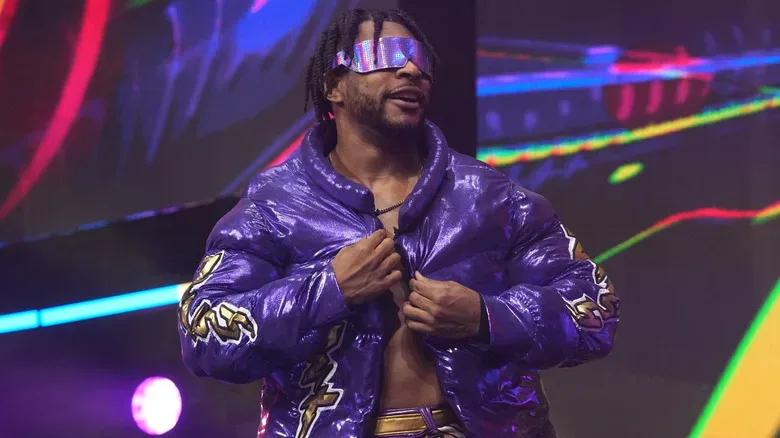
Kevin Knight has made his pick for the AEW locker room’s least appealing music taste, though he was careful to make it clear there was no real hostility behind the answer.
During a recent interview with Hot 100.9, Knight was asked which AEW wrestler has the worst taste in music. The high-flying competitor named Will Ospreay first, then added Gabe Kidd to the answer because of the pair’s connection to English grime rap. Knight explained that the choice comes down to personal preference and a difference in background rather than any issue with either wrestler.
“Imma go Ospreay. Imma say that out of love, I think it’s because it’s a background difference, you know what I mean? He from Essex, UK, I’m not a fan of the grime rap. It’s very different, it’s not me. Since he’s another countryman, another Englishman, Gabe Kidd. Just not my type, you know what I mean? I’m going to go with them two.”
Knight’s response was a lighthearted assessment rather than a serious criticism of either man. His comments also underline how differently performers can connect with music depending on where they grew up, the scenes that influenced them, and the styles they identify with outside of wrestling.
For more background on this topic, read Kevin Knight Reflects On Swerve Strickland And Lio Rush As Key Early Inspirations.
Knight’s Answer Comes Down To Grime Rap
Rather than criticizing Ospreay or Kidd as people, Knight specifically pointed to grime as the musical style that does not work for him. Grime emerged in the United Kingdom and has been closely associated with British urban culture, making it a natural point of identification for wrestlers such as Ospreay and Kidd. For Knight, however, it is simply not the sound he gravitates toward.
That distinction mattered in the way Knight framed his answer. He said he was choosing Ospreay “out of love,” immediately making clear that he was offering a playful locker-room opinion. The comments fit the kind of question that often produces friendly debate among wrestlers: music is deeply personal, and differing tastes can create easy material for jokes without reflecting genuine tension.
Ospreay, who is from Essex, England, has long carried a distinctly British identity in his presentation and public persona. Kidd is also English, and Knight grouped the two together as “another countryman” and “another Englishman.” Their shared connection to the UK made them an easy pairing in Knight’s answer, especially once he explained that the grime sound associated with that cultural space is not for him.
The exchange does not indicate any professional dispute involving Knight, Ospreay, or Kidd. Instead, it offers a brief look at the casual personalities and preferences that exist away from matches, rivalries, and championship pursuits. Wrestling audiences generally see performers through the heightened lens of television, but interviews like this can show how quickly the discussion can turn to everyday subjects such as playlists and musical influences.
A Lighthearted AEW Locker Room Debate
Questions about music taste have become a useful way for wrestlers to show personality beyond standard wrestling talking points. The answers may not alter a match card or change a storyline, but they can reveal the generational, regional, and cultural differences among performers who work in the same company.
Knight’s choice also reflects the international nature of AEW’s talent pool. The company features wrestlers with backgrounds across North America, the United Kingdom, Japan, Mexico, Australia, and many other regions. Those varied experiences naturally extend into music, fashion, language, humor, and the details that shape an individual’s character.
In this case, Knight’s perspective differs from that of Ospreay and Kidd. He did not argue that grime is objectively bad; he emphasized that it was “not me” and “not my type.” That is an important distinction in a conversation built around taste. What one person considers an essential part of their musical identity can be a genre another person rarely chooses to hear.
For fans, the answer may also be amusing because Ospreay and Kidd are both personalities who have never lacked confidence or strong opinions. Knight’s willingness to name them gives the response some extra edge, while the friendly wording keeps it grounded in humor rather than confrontation.
There is also a practical reality to wrestlers sharing travel, locker rooms, training spaces, and event-day preparation. Music can become part of the rhythm of those environments. Different tastes can create conversation, compromise, and, occasionally, playful complaints. Knight’s answer presents Ospreay and Kidd as the colleagues whose selections would be least likely to make it onto his own playlist.
Lio Rush And Swerve Strickland Among Knight’s Inspirations
Elsewhere in the interview, Knight named Lio Rush and Swerve Strickland as early inspirations. That answer provides another window into the influences that helped shape Knight’s own path in professional wrestling.
Both Rush and Strickland have been notable figures for audiences who value athleticism, speed, charisma, and an ability to stand apart in a crowded wrestling landscape. Knight has developed a reputation as an explosive, agile performer, so naming Rush and Strickland as inspirations offers a fitting reflection of the type of wrestling and presentation that resonated with him early on.
Inspirations can matter significantly in wrestling because performers often study far more than moves. They observe timing, crowd interaction, confidence, ring gear, promotional ability, entrances, and the way a wrestler carries themselves through different stages of a career. For an emerging talent, seeing wrestlers with styles or backgrounds that feel relatable can be especially meaningful.
Knight’s mention of Rush and Strickland complements his remarks about music. Together, the answers show a performer willing to speak openly about the things that have influenced his tastes while also recognizing that not every influence is going to connect with every person. His wrestling inspirations align with the parts of the industry that helped motivate him, while his musical preferences lead him away from the grime sound enjoyed by Ospreay and Kidd.
Personality Beyond The Ring
Professional wrestling is built on competition, but it is also built on connection. Fans often follow wrestlers not only for matches and results, but for the small details that make performers feel distinctive. A comment about music can be memorable precisely because it is so ordinary. It places larger-than-life wrestlers into a familiar setting: friends and colleagues debating what should be playing in the background.
Knight handled the question with a mixture of honesty and diplomacy. He gave a direct answer, explained why he felt that way, and repeatedly softened it with the context that it was based on his own preferences. There was no attempt to turn it into a manufactured conflict. Instead, he made it clear that the difference comes from taste and cultural background.
Ospreay and Kidd may have a musical lane that does not appeal to Knight, but the remarks appear to be part of the normal teasing that can exist among wrestlers. The bigger takeaway is not that one genre has won an argument; it is that AEW’s roster contains a broad range of personalities with their own influences, inspirations, and ways of expressing themselves.
For Knight, the answer is simple: grime rap is not the soundtrack he prefers, and Ospreay and Kidd are the two names he associates most with that sound. Still, his phrasing left little doubt that the criticism was delivered with affection.
As AEW continues to feature performers from a variety of wrestling traditions and international backgrounds, those differences will remain part of what gives its roster texture. In this particular locker-room music debate, Knight has made his position known: Ospreay and Kidd can keep the grime tracks, while he looks elsewhere for his playlist.

Darryl Polo
Darryl Polo is a passionate wrestling fan covering WWE, AEW, TNA and beyond. He loves great rivalries, breakout stars and the moments that keep fans talking long after the bell. How we work.