
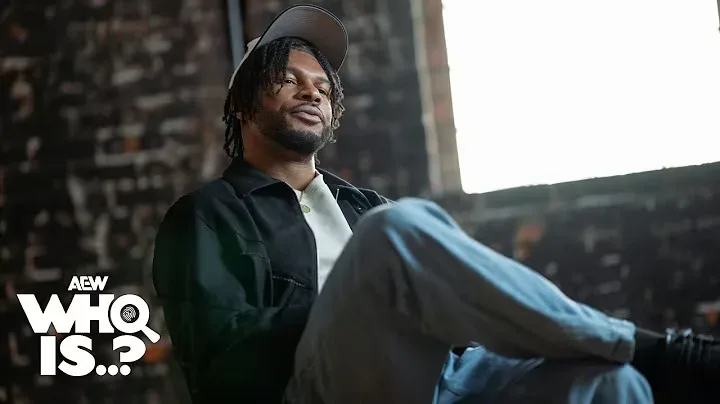
Kevin Knight entered professional wrestling with a clear personal mission: to become the kind of performer he felt had been missing from the wrestling he watched growing up.
Speaking with Hot 100.9, Knight discussed the motivation behind his decision to pursue the industry and the importance of being able to present himself authentically. He explained that, while there were notable Black wrestlers visible during his childhood, he often felt those performers were restricted by narrow expectations or were not consistently treated with the seriousness their abilities warranted.
For Knight, wrestling was not simply an opportunity to perform. It was a chance to help broaden what audiences could see in the ring, particularly when it came to Black wrestlers being positioned as complete, credible athletes and major-match competitors.
“I feel like I wanted to create what I wanted to see in wrestling,” Knight said.
For more background on this topic, read Orange Cassidy Explains Why Roderick Strong And Kyle O’Reilly Bring A Different Kind Of Trust To AEW.
That goal has remained central to the way Knight views his career. Rather than trying to fit into a predefined role, he said his intention was to be himself while also being regarded as a serious performer. It is a straightforward objective, but one with significant weight in an industry where presentation, opportunity, and perception can all shape a wrestler’s path.
Knight Wanted To Be Seen As Himself
Knight said that growing up, he saw Black wrestlers who were prominent but did not always receive the kind of well-rounded portrayal he hoped to see. In his view, they could be placed into a particular box, asked to conform to a specific identity, or simply not afforded the same level of credibility as other wrestlers.
His answer was not to reject the sport, but to participate in it with a purpose. Knight wanted to add his own voice and presence to the landscape. He wanted to show that he could be himself and still be taken seriously as a wrestler capable of competing at a high level.
“I just wanted to be myself as well as just being taken serious,” Knight said. “That was my whole goal getting into it.”
That distinction matters. A wrestler’s persona can be an important part of connecting with an audience, but Knight’s comments emphasize the difference between self-expression and being confined to an outside expectation. His stated aim was to bring his own identity into wrestling without sacrificing the competitive stature that comes with being viewed as a top-level talent.
In that respect, Knight’s perspective is tied to representation as much as it is to individual ambition. He was looking for examples that demonstrated a Black wrestler could headline shows, carry major stories, and do so without abandoning the individuality that made them distinctive.
Swerve Strickland And Lio Rush Provided A Blueprint
When Knight began his journey in wrestling, two names stood above the rest as inspirations: Swerve Strickland and Lio Rush.
Knight said he watched both men on the independent scene and saw wrestlers who were being presented as significant attractions. More importantly, he saw them performing as main-event-level talents while remaining true to themselves.
“Swerve Strickland and Lio Rush were like my two biggest inspirations right when I got in,” Knight said.
Knight’s admiration was rooted in what Strickland and Rush represented to him at that point in his career. He described seeing them receive serious treatment on independent wrestling cards and succeed as Black men without having to dilute their personalities. That visibility made an impression on him because it answered a question he had been asking as a fan: what could wrestling look like when performers were allowed to be fully themselves and were also trusted in prominent spots?
Strickland and Rush have each developed highly individual identities during their careers. Knight’s comments do not suggest he sought to imitate either man. Instead, their success offered encouragement that there was room in wrestling for performers to build credibility on their own terms.
That is why Knight described their example as something that was not readily available to him when he was younger. Seeing both wrestlers operate at a main-event level gave him a model of possibility. It helped convince him that he could contribute to that same progression rather than merely observe it from the outside.
Knight said he felt that type of representation was something fans “didn’t get much” while he was growing up, adding, “Let me add to the fire.”
From Watching Them To Sharing The Ring With Them
The significance of those early inspirations has grown as Knight’s own career has advanced. He is no longer only watching Strickland and Rush from a distance. He has now worked with both men in meaningful situations.
Knight noted that he had his first main event of the year with Strickland. For someone who identified Strickland as one of the defining influences from his earliest time in the business, sharing a main-event setting carries obvious personal importance.
Main events are often treated as a measure of confidence in a wrestler. They place competitors in the featured position on a card and ask them to deliver in a setting that may carry heightened expectations from a live audience. Knight’s comments make clear that being in that spot opposite Strickland was more than another match on his schedule. It was a milestone connected directly to the inspiration that helped launch his own career ambitions.
Knight also pointed to a title defense against Rush. That match carried a different kind of significance: not only was he working with another wrestler he admired, but he was doing so with championship stakes attached. A title defense inherently places emphasis on the champion’s ability to represent the prize and perform under pressure. Being able to do that against Rush made the moment particularly meaningful to Knight.
“Just being able to work with those guys is a dream come true in itself,” Knight said.
The statement captures the full circle element of Knight’s recent experiences. Strickland and Rush were not distant inspirations from his days as a new wrestler anymore. They became opponents and peers in matches that Knight singled out as important markers in his year.
A Personal Goal With A Wider Meaning
Knight’s comments are ultimately about more than two matches or two individual influences. They outline the reason he wanted to become a wrestler in the first place.
He wanted to create something he believed was missing. He wanted to be a Black wrestler presented with seriousness, freedom, and competitive legitimacy. And he wanted to do that without separating himself from the person he is.
That aspiration can resonate beyond one performer’s career. Every wrestler who reaches a visible position can become a point of reference for viewers and younger talent who are searching for proof that they can belong in the industry as themselves. Knight experienced that through Strickland and Rush. Their presence on independent wrestling shows showed him a path that felt real and attainable.
Now, Knight is adding his own chapter to that ongoing story. His first main event of the year with Strickland and his title defense against Rush are professional accomplishments, but they also carry the emotional value of sharing the ring with wrestlers who helped him see a future for himself.
There is a notable continuity in that journey. Knight saw performers he admired being treated as main-event wrestlers. He set out to build a career where he could receive that same level of respect while remaining authentic. He then found himself competing alongside those very inspirations in notable matches of his own.
For Knight, the objective has been consistent from the beginning: represent himself honestly, contribute to a broader image of what a top wrestler can be, and earn recognition through his work. His reflections on Strickland and Rush show how meaningful it has been to pursue that goal alongside two performers who helped inspire it.
As Knight continues forward, those experiences stand as reminders of both the progress he has made and the purpose that brought him into professional wrestling. He wanted to add to the fire. By reaching major moments with Strickland and Rush, he has already had the opportunity to do exactly that.
Darryl Polo
Darryl Polo is a passionate wrestling fan covering WWE, AEW, TNA and beyond. He loves great rivalries, breakout stars and the moments that keep fans talking long after the bell. How we work.