
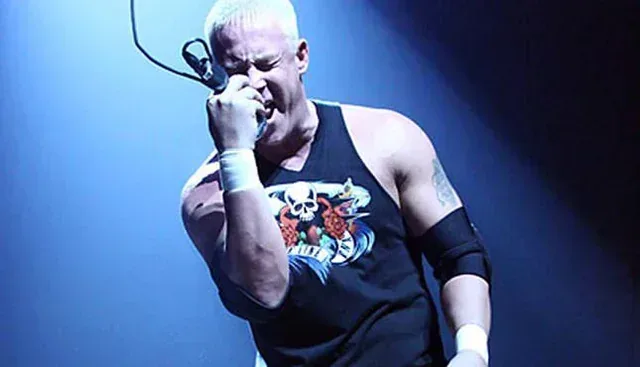
Ken Anderson’s WWE run as Mr. Kennedy remains closely associated with one sound above all else: the wrestler himself declaring his name before a match. The self-introduction was a major part of the character’s presentation, combining Anderson’s confidence on the microphone with an entrance routine that immediately told audiences what kind of personality was headed to the ring.
Anderson has now identified Paul Heyman as the person who set that idea in motion. Speaking with Going Ringside, the former WWE star recalled being instructed to interrupt the ring announcer while working in Ohio Valley Wrestling, then take over the introduction himself. What began as a developmental assignment ultimately became a defining feature of his televised WWE act.
Anderson worked for WWE as Mr. Kennedy from 2005 until 2009. During that period, his promos and pre-match delivery were among the central elements of the gimmick. Before competing, he would often seize control of the microphone and announce himself, most notably punctuating the name with a repeated “Kennedy.” The presentation made the entrance feel less like a standard introduction and more like a statement from the wrestler.
Heyman’s OVW Direction Helped Shape the Presentation
In recounting how the concept formed, Anderson described several influences coming together at the right time. The immediate creative prompt came while Heyman was overseeing creative matters in OVW, WWE’s developmental territory at the time.
For more background on this topic, read Ken Anderson Reflects On His Six-Year Road To WWE: ‘It Felt Like Forever’.
“So it’s funny because it was a bunch of different things that all sort of rolled into one. Paul Heyman, I was at OVW. Paul Heyman had taken over the pencil. Paul says, ‘tonight go out and cut the ring announcer off.’ It was Dean Hill at OVW was the ring announcer. He was like, ‘cut him off, take the mic from him, and then you do your own introduction,’ and then he sort of like did a variation of what I do today, and so I’m doing that.”
The instruction was simple, but it gave Anderson an opportunity to create a distinctive moment before the bell rang. Rather than waiting to be introduced, the performer could establish his character’s arrogance, volume, and command of the environment. It also made the wrestler’s voice part of the entrance in a way that was instantly recognizable.
Heyman has long been associated with giving wrestlers a clear character hook and encouraging performers to lean into traits that can connect with an audience. In this case, Anderson’s comfort with speaking and his background as an announcer gave the idea a natural foundation. The self-introduction did not feel detached from the performer; it drew directly from a skill Anderson had developed long before joining WWE.
A High School Announcing Habit Became the “Kennedy” Call
Anderson explained that another part of the routine came from his time announcing high school basketball games. He would repeat the final name of players during introductions. When he was put in the live wrestling setting and took the microphone, that instinct resurfaced.
“Also when I was in high school, I used to announce basketball games and I used to say the last name twice for our people, and just in that moment, I was like, you know, I’m live in front of the crowd and I’m like, I just hit my last name twice, and I came back through the curtain and everybody was like, ‘Keep doing that. That was awesome.’ Everybody popped for it, and you know when the boys pop for something, there’s a pretty good chance that the people are going to take to it, and then get to WWE. Five weeks later, I’m on TV.”
That memory helps explain why the Mr. Kennedy entrance was more than a line written for a character. Anderson took a familiar announcing cadence and adapted it for a wrestling persona. Repeating the surname gave the presentation rhythm, while the drawn-out delivery made the name itself the point of the segment. It was boastful by design, but it was also a practical way of ensuring that the crowd heard and remembered who was entering the arena.
The reaction behind the curtain reinforced that the approach had potential. Anderson noted that people immediately encouraged him to continue with it. In wrestling, an idea can be tested quickly by the response from both an internal audience and the live crowd. Anderson’s account suggests the self-introduction worked on both levels from the beginning.
From Developmental Experiment to WWE Television
Anderson said he reached WWE television just five weeks after that OVW moment. The quick transition meant the presentation could be carried from developmental into a much larger setting without losing the core of what made it effective. WWE audiences were introduced to a character who did not simply wait for a ring announcer to identify him. Mr. Kennedy wanted to control that part of the show himself.
That detail fit the persona especially well. A wrestler taking the microphone away from the expected process immediately communicates a degree of ego and entitlement. The act can also create anticipation before a match, as the crowd is invited to react to the performer before any physical confrontation begins. For Anderson, who was known for his verbal work as well as his in-ring ability, it created an entrance built around a genuine strength.
The routine also gave Mr. Kennedy a level of flexibility. The self-announcement could serve as a brief flourish, or it could lead into a longer promo depending on the situation. That made it useful within the broader WWE television format, where entrances, interviews, and matches often need to establish a wrestler’s personality efficiently.
Anderson’s comments underline how wrestling personas frequently develop through a mixture of creative direction, personal experience, and immediate crowd feedback. Heyman provided the initial suggestion to interrupt Dean Hill and take the microphone. Anderson supplied the announcing instincts, including the decision to repeat his surname. The positive response then gave the act a reason to continue.
The Value of a Clear Entrance Identity
For a wrestler arriving on national television, having a recognizable introduction can be just as valuable as having a memorable name, theme, or visual style. The Mr. Kennedy entrance achieved that by making Anderson’s voice impossible to ignore. It made the character feel like someone who expected the spotlight and intended to make sure it stayed on him.
There is also a difference between a wrestler being introduced and a wrestler introducing himself. The former is part of the usual structure of a match. The latter can turn a standard procedural moment into character work. Anderson’s recollection of the OVW instruction demonstrates that this was the essential creative shift: take an existing function of the presentation and let the performer claim it as his own.
That approach is particularly suited to an act centered on microphone confidence. A performer who can deliver a line with authority can establish an emotional reaction before wrestling even begins. In Anderson’s case, the delivery of “Kennedy” became the hook. Fans could respond to it, anticipate it, and associate it with the wrestler immediately.
It is notable, too, that Anderson remembers the process as a convergence of “different things” rather than a single fully formed idea. The origin was not merely a directive from a creative figure, nor solely a personal habit from school announcing. It was the combination of Heyman’s challenge, a live performance opportunity, Anderson’s own instinct, and the reaction afterward that turned it into something lasting.
Anderson Reflects on the Road to WWE
Elsewhere in the same conversation, Anderson discussed the six years it took him to reach WWE. That perspective adds context to how quickly the Mr. Kennedy presentation took shape once the opportunity arrived. The road to a major WWE role was lengthy, but the signature entrance element emerged rapidly after the OVW experiment.
For Anderson, the story behind the introduction is a reminder that some of wrestling’s most enduring details are born from direct instruction and immediate improvisation. A creative suggestion can open the door, but the performer’s ability to make it feel authentic is what allows it to endure.
The Mr. Kennedy self-introduction did exactly that. It gave Anderson a trademark that showcased his speaking ability, translated an old announcer’s habit into wrestling character work, and gave WWE viewers a clear first impression every time he headed to the ring. As Anderson now tells it, the crucial first push came from Heyman in OVW, with Dean Hill’s interrupted announcement serving as the moment the familiar “Kennedy” call began to take form.

Darryl Polo
Darryl Polo is a passionate wrestling fan covering WWE, AEW, TNA and beyond. He loves great rivalries, breakout stars and the moments that keep fans talking long after the bell. How we work.