
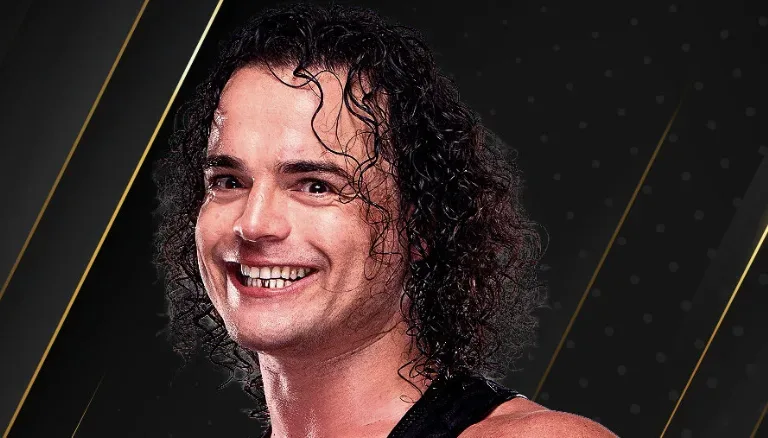
Juice Robinson’s clean-shaven appearance upon his return at AEW All In 2025 was not simply a planned style change. The AEW wrestler has revealed that a frustrating and painful gym accident involving a lat pulldown machine was the moment that convinced him to get rid of the long beard fans had associated with him.
Speaking with Tony Schiavone on What Happened When, Robinson detailed how his beard became caught in the cable apparatus while he was trying to train during his recovery from a leg injury. What began as an ordinary workout quickly became an unpleasant experience, with several beard hairs being pulled out during the middle of a set.
“The real reason is, I got it caught in a lat pulldown cable, and it ripped like four out. I got angry, went home from the gym, and shaved it all off,” Robinson said.
Robinson’s eventual return featured a significantly different presentation. Rather than arriving with the lengthy beard that had been part of his established look, he appeared clean-shaven. The change was immediately noticeable, and Robinson said he recognized that removing the beard could create the kind of visual shock he wanted when he came back.
For more background on this topic, read Bryan Keith Is Pushing to Bring ‘Still Tippin’’ Back for AEW and ROH Entrances.
“When I saw it, I was like, ‘Whoa.’ I knew when I was coming back, I was like, ‘I’m taking this bitch down to the skin. I’m going to make it look shocking.’ I just wanted it to be a huge change.”
A Blank Slate Following Injury Recovery
Beyond the initial irritation caused by the machine, Robinson viewed the new appearance as an opportunity to reset. Returning from an injury can be a pivotal point for any wrestler, whether it involves an adjustment to in-ring approach, character presentation, gear, attitude, or simply the visual details audiences first notice when the performer walks back through the entrance.
For Robinson, shaving the beard provided that reset. He explained that he intended to return in black attire and adopt a somewhat more subdued feel while he determined where the new phase of his presentation would lead.
“My thought was coming back with all black and being a little more subdued just to see how I felt and where the wind took me. I knew I would eventually find myself back to where I am now, but I kind of wanted a blank slate.”
The approach illustrates how an unplanned real-life incident can become part of a performer’s broader creative decision-making. Robinson did not describe the clean-shaven look as a permanent departure from the image he had built. Instead, it was a deliberate temporary change that allowed his comeback to stand apart from what viewers had previously seen from him.
Visual reinvention has long been an important tool in professional wrestling. A different hairstyle, facial-hair change, ring jacket, color scheme, or demeanor can signal that a wrestler is entering a new chapter before a word is spoken. In Robinson’s case, the contrast was particularly apparent because the long beard had been such a recognizable feature of his appearance.
The Workout Mishap That Started It
Robinson gave a more detailed account of the incident and described why it was especially frustrating in the context of his recovery. He was attempting to get in a workout after being sidelined by a leg injury when the lengthy beard got into the path of the pulley mechanism.
“I’m pulling it down to my chest, and my beard was long and it’s going to through my beard. I’m coming off the leg injury so I’m just trying to get a lift in. I got it caught in the pulley, and it ripped like six long-ass hairs out midset. I was pissed. I was embarrassed. ‘What am I doing? Get rid of this shit.’”
Robinson initially recalled that the cable ripped out around four hairs, then described the moment in more colorful terms as six long hairs being yanked out while he was in the set. Regardless of the exact number, the result was the same: the experience immediately changed how he felt about maintaining the beard.
His comments also reflect the combination of annoyance and embarrassment that can follow an unexpected gym mishap. Robinson was not merely making a casual grooming choice. He was training as he worked toward returning from a leg injury, only for his beard to interfere with the equipment. That made shaving it off a practical response as well as an emotional one.
The decision then became something bigger than a reaction to a few pulled hairs. Once Robinson saw himself without the beard, he saw a chance to make the return feel distinct. He could use the clean-shaven look, darker colors, and more restrained presentation as a way to establish a fresh visual starting point.
A Temporary Departure From a Familiar Look
Robinson did not remain clean-shaven indefinitely. He has since grown his beard back, although it is not as long as it was before his injury and before the lat pulldown incident changed his plans.
That outcome aligns with Robinson’s explanation that he expected to find his way back toward the look audiences were accustomed to seeing. The shaved face was designed to create contrast at a specific time, not necessarily to erase an aspect of his identity as a performer. By growing the beard back out, Robinson has reintroduced a familiar element while still carrying the experience of that comeback period.
His story is also a reminder that the details around a wrestler’s presentation are not always the result of a major creative meeting or a carefully mapped long-term plan. Sometimes an appearance change begins with a personal impulse, a practical need, or—in this case—a piece of gym equipment catching hair at exactly the wrong moment.
Professional wrestlers routinely balance physical training, injury rehabilitation, travel, television demands, and the need to keep their on-screen personas visually memorable. For someone returning from injury, that balance can be even more demanding. Robinson’s account makes clear that he was focused on getting back into training, only for an ordinary exercise to produce an unexpected problem that he ultimately turned into a creative opportunity.
The Value of a Noticeable Return
For a wrestler coming back from time away, being immediately recognizable can be valuable, but looking different can be valuable too. A dramatic change gives an audience a reason to pause and register that something has shifted. Robinson embraced that principle when he decided to shave down to the skin and make the difference as striking as possible.
His explanation suggests that the visual adjustment also gave him room to evaluate how he wanted to feel in his return. Rather than locking himself into a final version of the character or presentation right away, he wanted the freedom of a blank slate. The all-black aesthetic and subdued approach were part of that process.
There is a practical lesson in Robinson’s story as well, even if it came through a particularly inconvenient situation. Long hair and facial hair can become part of a wrestler’s signature image, but training equipment does not account for a performer’s presentation. Robinson’s beard had grown long enough that it could enter the path of the pulldown cable, and the painful result convinced him it was time for a change.
Ultimately, the story behind Robinson’s clean-shaven AEW All In 2025 return is both simple and unusually memorable. A beard caught in a gym pulley led to several hairs being ripped out. Robinson went home angry, decided to remove the beard entirely, and then recognized that the result could help make his return from a leg injury feel more dramatic.
What might have remained an embarrassing workout story instead became part of the explanation for a notable visual shift. Robinson has since returned to wearing a beard, though not at its previous length, but the clean-shaven chapter remains tied to one very specific lat pulldown set—and to his effort to make a fresh start when he returned to AEW action.

Darryl Polo
Darryl Polo is a passionate wrestling fan covering WWE, AEW, TNA and beyond. He loves great rivalries, breakout stars and the moments that keep fans talking long after the bell. How we work.