
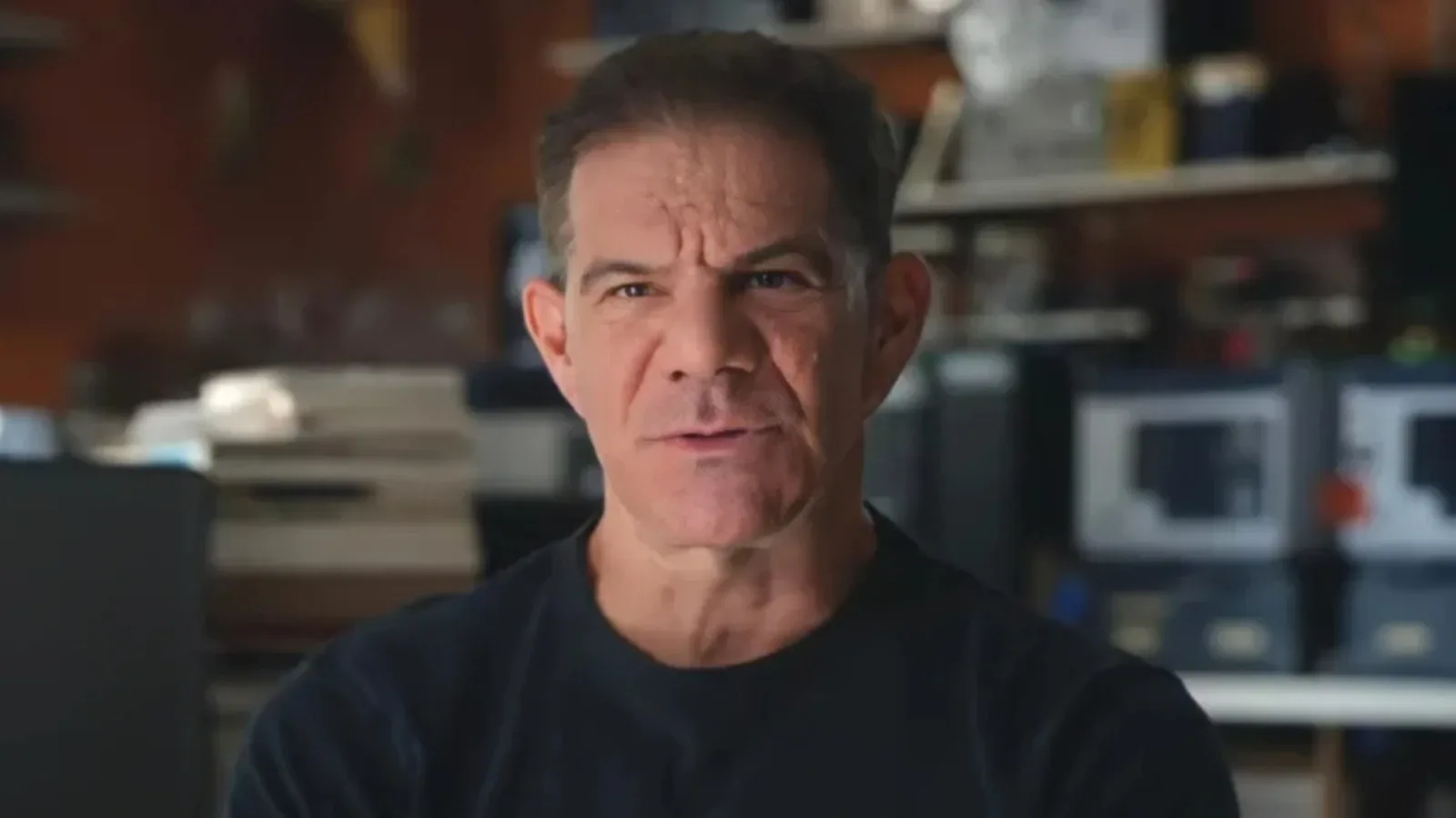
The modern relationship between All Elite Wrestling and New Japan Pro-Wrestling is now one of the most visible partnerships in major professional wrestling. Talent moves between the companies, crossover appearances have become familiar, and the annual AEW x NJPW Forbidden Door pay-per-view has established itself as a major event on the calendar.
That cooperation was far from inevitable when AEW launched. In fact, the early period between the promotions was defined by distance rather than collaboration. During a recent discussion, Dave Meltzer identified Jon Moxley as a central figure in changing that dynamic, pointing specifically to Moxley’s status as an AEW wrestler holding New Japan’s IWGP United States Championship through the COVID-19 pandemic.
“Jon’s the one responsible for the New Japan and AEW relationship back during the pandemic,” Meltzer said. “Jon had the [IWGP] US title and he was an AEW guy...there was no relationship at all. It opened up the relationship. That’s when KENTA came to AEW and it opened the door. They basically built a relationship after that point.”
Moxley’s place in both companies was distinctive from the beginning. He made his AEW debut in 2019, then appeared for NJPW less than two weeks later. In his debut New Japan match, Moxley defeated Juice Robinson to win the IWGP United States Championship. That immediate title victory gave him an important role in a major New Japan division while he was also one of AEW’s most prominent stars.
For more background on this topic, read AEW Dynamite Delivers Major Viewership Surge for September 30 Tribute Show.
It was an arrangement that became increasingly complicated because the companies did not yet have a formal working relationship. Moxley’s IWGP United States title history was also affected by circumstances outside the ring. He was initially stripped of the championship after travel complications forced him to miss a scheduled title defense in October 2019. When he regained the title in January 2020, however, a much larger travel issue soon emerged across the world.
The COVID-19 pandemic made it impossible for Moxley to routinely travel to Japan and defend the championship there. Rather than immediately stripping him for his absence a second time, New Japan kept the title on Moxley. That decision created a practical connection between the two promotions at a time when the wrestling business, like much of the world, was navigating severe restrictions and uncertainty.
A Champion Positioned Between Two Promotions
Moxley holding the IWGP United States Championship while appearing regularly in AEW was more than a trivia point about a belt. It placed a New Japan title in AEW programming orbit at a moment when the relationship between the companies had not yet been established. The championship gave both sides a shared point of interest, even if they were not initially positioned as official partners.
The situation eventually led to KENTA appearing in AEW. KENTA’s arrival represented a major development because it put an active New Japan wrestler on AEW television during a period when such crossover was not taken for granted. The appearance also carried direct relevance to Moxley and the IWGP United States Championship picture, making the connection feel rooted in an existing New Japan issue rather than simply being a one-off surprise.
From there, the door that had been only slightly open became the basis for a broader relationship. Meltzer’s assessment puts Moxley at the center of that progression: not necessarily as the sole reason two businesses chose to work together, but as the wrestler whose title situation and availability created an opening at a crucial moment.
That distinction matters when looking back at the evolution of AEW and NJPW. Partnerships between wrestling promotions are often discussed in broad business terms, but specific talent circumstances can also drive decisions. In this case, Moxley was a major AEW name, a former IWGP United States Champion, and an active part of New Japan’s title plans. The pandemic made that arrangement difficult, yet it also helped produce the circumstances that brought the companies closer.
Early Obstacles Were Significant
Before the relationship developed, there were notable reasons to believe AEW and New Japan would remain separate. New Japan management had been unhappy about The Elite leaving in 2019. The departure of Kenny Omega, The Young Bucks, Cody Rhodes and others from the New Japan landscape was an important backdrop to AEW’s formation.
There was also little apparent incentive for New Japan to immediately pursue an arrangement with the new promotion. Former NJPW President Harold Meij did not see upside in working with AEW while New Japan already had relationships with CMLL and Ring of Honor. From that perspective, AEW was not simply a potential partner; it was a new company connected to wrestlers who had recently exited New Japan.
Those issues help explain why the eventual cooperation was meaningful. The current state of the relationship can make it easy to overlook how different the landscape was at the start. AEW x NJPW Forbidden Door is now a recurring attraction, and the event has been held in the United States, Canada and the United Kingdom. Its existence reflects a level of trust and coordination that did not exist when AEW first arrived.
Moxley’s case did not erase every obstacle by itself. What it did provide was a shared wrestling problem that required some level of connection. A New Japan championship was associated with one of AEW’s top wrestlers, and the global travel restrictions made a conventional championship schedule impossible. As Meltzer described it, the ensuing contact helped establish a foundation from which the companies could build.
The Importance of the KENTA Appearance
KENTA’s appearance in AEW remains one of the clearest landmarks in the early crossover period. It was not merely an appearance by a visiting wrestler. It was tied to the IWGP United States Championship, Moxley’s place in New Japan, and the ability of the promotions to acknowledge one another on AEW programming.
For fans, moments like that often serve as the visible proof of a relationship. The discussions, permissions and logistical work that make an appearance possible happen away from the cameras. What viewers see is the result: a wrestler associated with one company suddenly entering the world of another. KENTA’s involvement signaled that AEW and New Japan could move beyond their earlier separation.
It also showed why Moxley was uniquely positioned to matter. He was not an AEW talent making a detached guest appearance in Japan, nor was he only a New Japan wrestler passing through AEW. He had a meaningful championship connection to New Japan while remaining a core AEW performer. That overlap made him a natural focal point as the promotions began establishing communication.
The eventual partnership has grown beyond any one championship or any one wrestler. Still, origin stories matter, especially in an industry where business relationships can be shaped by timing, availability and personal connections as much as by long-term strategy. Moxley’s pandemic-era title run is now part of the history behind a collaboration that became much larger than the circumstances that first brought the sides together.
Forbidden Door Became a Lasting Fixture
The biggest expression of the AEW-NJPW relationship has been Forbidden Door. The pay-per-view has become a regular annual event and a showcase for wrestlers from both rosters. Its expansion across the United States, Canada and the United Kingdom demonstrates how substantial the concept has become.
That development stands in sharp contrast to the period when there was no relationship at all. The idea of a joint event would have seemed far less likely when New Japan’s leadership had reservations about AEW and when the two sides lacked a clear pathway to cooperation. The pandemic created enormous disruption, but the unusual circumstances surrounding Moxley and the IWGP United States Championship helped turn a difficult situation into an opportunity for contact.
Chris Jericho’s New Japan appearances offer another reminder that AEW talent had connections to the company even before the broader partnership was in place. Jericho competed for NJPW while he was AEW World Champion. However, that match was Jericho’s final official New Japan match, and he has not returned to the promotion since.
Moxley’s path was different because his involvement remained directly connected to a New Japan championship during a period when travel restrictions prevented a normal defense schedule. His role was therefore not simply another example of an AEW wrestler working a New Japan date. It became part of the mechanism through which the two promotions could begin building a relationship.
Moxley’s Place in the Partnership’s History
The AEW-NJPW partnership has since become broad enough that it no longer depends on one performer. Forbidden Door, crossover matches and talent appearances have made the relationship larger than its initial catalyst. Even so, Meltzer’s comments underline the importance of recognizing how that process began.
Jon Moxley won the IWGP United States Championship in his New Japan debut shortly after arriving in AEW. He lost the title because he could not make a defense in October 2019, won it again in January 2020, and then found himself unable to return to Japan as the pandemic changed international travel. Rather than ending the connection, that difficult situation helped create one.
For a relationship that now produces one of wrestling’s most recognizable crossover events, the path began with a champion caught between two worlds. Moxley’s title status, KENTA’s AEW appearance and the communication that followed helped establish a bridge where none had existed. The scale of AEW and New Japan’s current partnership makes that early breakthrough all the more notable.
In pictures

Darryl Polo
Darryl Polo is a passionate wrestling fan covering WWE, AEW, TNA and beyond. He loves great rivalries, breakout stars and the moments that keep fans talking long after the bell. How we work.