
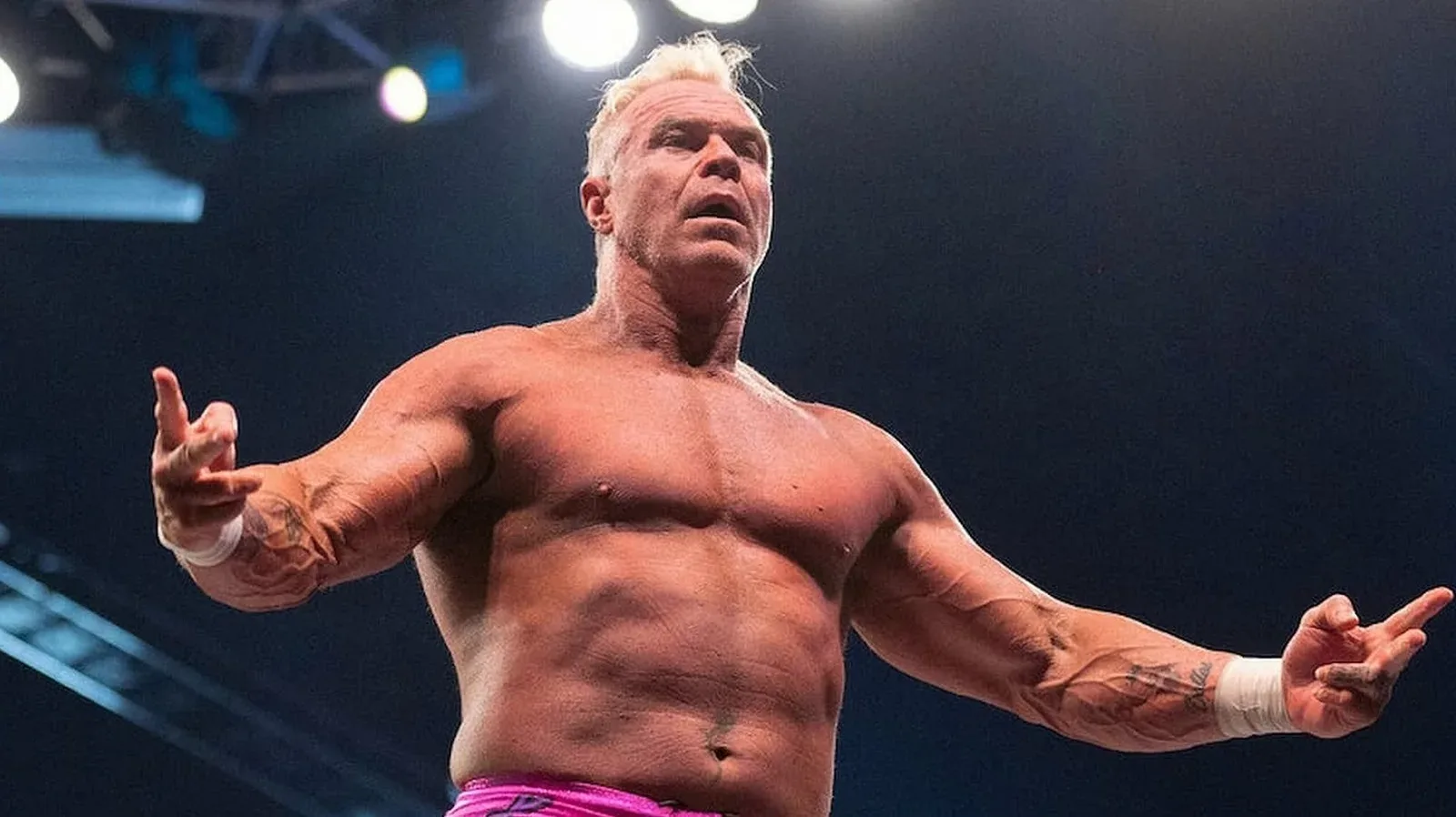
Billy Gunn did not arrive in AEW expecting to launch another sustained in-ring run. The veteran initially joined the company in a backstage capacity and was prepared to wrestle only on a limited basis when needed. Instead, his AEW tenure developed into a prominent on-screen role that put him in matches, segments and major championship programs alongside talent from a much younger generation.
Speaking with Inside The Ropes, Gunn explained that the arrangement he initially discussed with AEW President Tony Khan was far lighter than the schedule that ultimately followed. He said his talent agreement called for just 12 dates per year, with wrestling not intended to be the central part of his job.
“Yeah, so my contract, I had 12 dates a year,” Gunn said. “Like, I really wasn’t gonna wrestle, but I told Tony [Khan], ‘If you need me to, I’ll do some here and here and there.’”
That limited plan changed as Gunn became increasingly involved in AEW storylines. He noted that he held two separate agreements with the company: one as an on-screen talent and another for a backstage position. The combination created a much fuller workload than he expected when he first came aboard.
For more background on this topic, read Ilja Dragunov Explains Why He Chose a New Challenge in AEW After WWE Exit.
“And then, lo and behold, they crack me out and then I’m working both shows,” Gunn said with a laugh. “I’m working all the time, about to fall apart.”
Gunn’s AEW role has gone through several distinct stages. He first appeared closely connected to his sons, Austin Gunn and Colten Gunn, during their time as The Gunn Club. That presentation gave AEW an opportunity to put a longtime star alongside family members who were establishing themselves on national television, while Gunn’s presence also supplied the act with an experienced voice and an instantly recognizable personality.
His involvement later shifted in a major way when he aligned with Max Caster and Anthony Bowens of The Acclaimed. The pairing helped turn the “Daddy Ass” nickname into one of the most memorable character elements of Gunn’s recent career. What could have been a simple managerial or supporting role became a recurring part of AEW programming, with Gunn actively participating in the group’s rivalries rather than merely standing at ringside.
The trio’s run also produced championship success. Gunn, Caster and Bowens won the AEW World Trios Championships, adding another title accomplishment to a career that has already spanned multiple eras of major professional wrestling. For Gunn, the reign represented more than a nostalgic appearance or a one-off reunion with the spotlight. It was evidence that AEW had found a meaningful in-ring role for him well beyond the schedule originally envisioned.
A Veteran Working With a New Generation
At 62 years old, Gunn remains an unusual figure in modern televised wrestling. His longevity has allowed him to work not only alongside contemporaries and established stars, but also performers who were children or not yet born when he began building his reputation on a national stage. Rather than framing the age gap as an obstacle, Gunn said he believes his conditioning has enabled him to keep pace when AEW needs him in the ring.
Gunn credited his continued ability to perform to the fact that he has consistently maintained his physical condition. He said he was never someone who allowed himself to get badly out of shape, and he remains confident he can still “hang” with younger wrestlers.
“No matter what they do, I can still — it’s going to hurt a little while — I can go if I need to,” Gunn said.
That assessment is in line with the role he has filled in AEW. Gunn has not positioned himself as a full-time singles wrestler chasing the company’s top individual championship. His work has instead been built around tag team and trios situations, character-driven alliances and selectively featured matches. Those settings allow his experience, timing and physical presence to complement wrestlers who are carrying the weekly load, while still giving Gunn opportunities to contribute directly when a rivalry calls for it.
His willingness to wrestle has also added stakes to programs involving The Acclaimed and the Gunn family. A veteran who can still physically enter the fight offers more flexibility than a purely non-wrestling manager. It gives opponents another target, lets allies receive support during multi-person bouts and makes personal disputes feel more complete when the longtime star is willing to get involved himself.
Fitness Remains Central to Gunn’s Approach
Gunn was candid that the demands of wrestling at his age are different. He acknowledged that performing can hurt and stated that someone his age is not generally expected to still be competing in the ring. But he also made clear that training is about more than preserving a wrestling career.
For Gunn, working out is part of maintaining his health and staying active in daily life. It also helps him continue sharing the ring with the people around him in AEW, including his sons and his former Acclaimed partners.
“[Working out] also lets me still hang with my kids, and Anthony, and those guys, and when I need to work, I can work,” Gunn said.
That perspective helps explain why Gunn’s unexpected AEW workload was possible in the first place. The original 12-date expectation may have reflected a sensible plan for a veteran entering a new company with backstage responsibilities. Yet the physical preparation Gunn continued to maintain gave AEW the option to expand his television role when creative opportunities emerged.
It is also significant that Gunn’s increased activity did not come from trying to recreate every aspect of his past. His AEW presentation has embraced his history without being limited by it. The “Daddy Ass” identity, his work with The Acclaimed and the evolving connection with Austin and Colten all gave him fresh material within the company’s current roster. The result was a late-career resurgence that felt tied to AEW’s contemporary acts rather than simply dependent on nostalgia.
An Expanded Role Beyond the Original Plan
Gunn’s comments underline how quickly a wrestling role can change once a performer clicks with an audience and becomes useful in multiple areas of a promotion. He came in with backstage duties and a modest number of anticipated wrestling appearances. He ended up working regularly, appearing across AEW programming and holding the World Trios Championships with Caster and Bowens.
There is no indication in Gunn’s remarks that he expected that outcome when his AEW deal was first arranged. His description of suddenly working “both shows” conveys the surprise of being called upon so often, even if he delivered the line humorously. It also speaks to the trust placed in him as both a veteran presence behind the scenes and an active contributor in front of the cameras.
For fans, Gunn’s AEW years have offered a reminder that longevity in wrestling is not solely about age or past accomplishments. Conditioning, adaptability and the ability to connect with different generations can create opportunities that were not part of the original blueprint. Gunn may have entered AEW prepared for a handful of matches each year, but his run became considerably more substantial—and he says he remained ready whenever the company needed him to work.
In pictures

Darryl Polo
Darryl Polo is a passionate wrestling fan covering WWE, AEW, TNA and beyond. He loves great rivalries, breakout stars and the moments that keep fans talking long after the bell. How we work.