
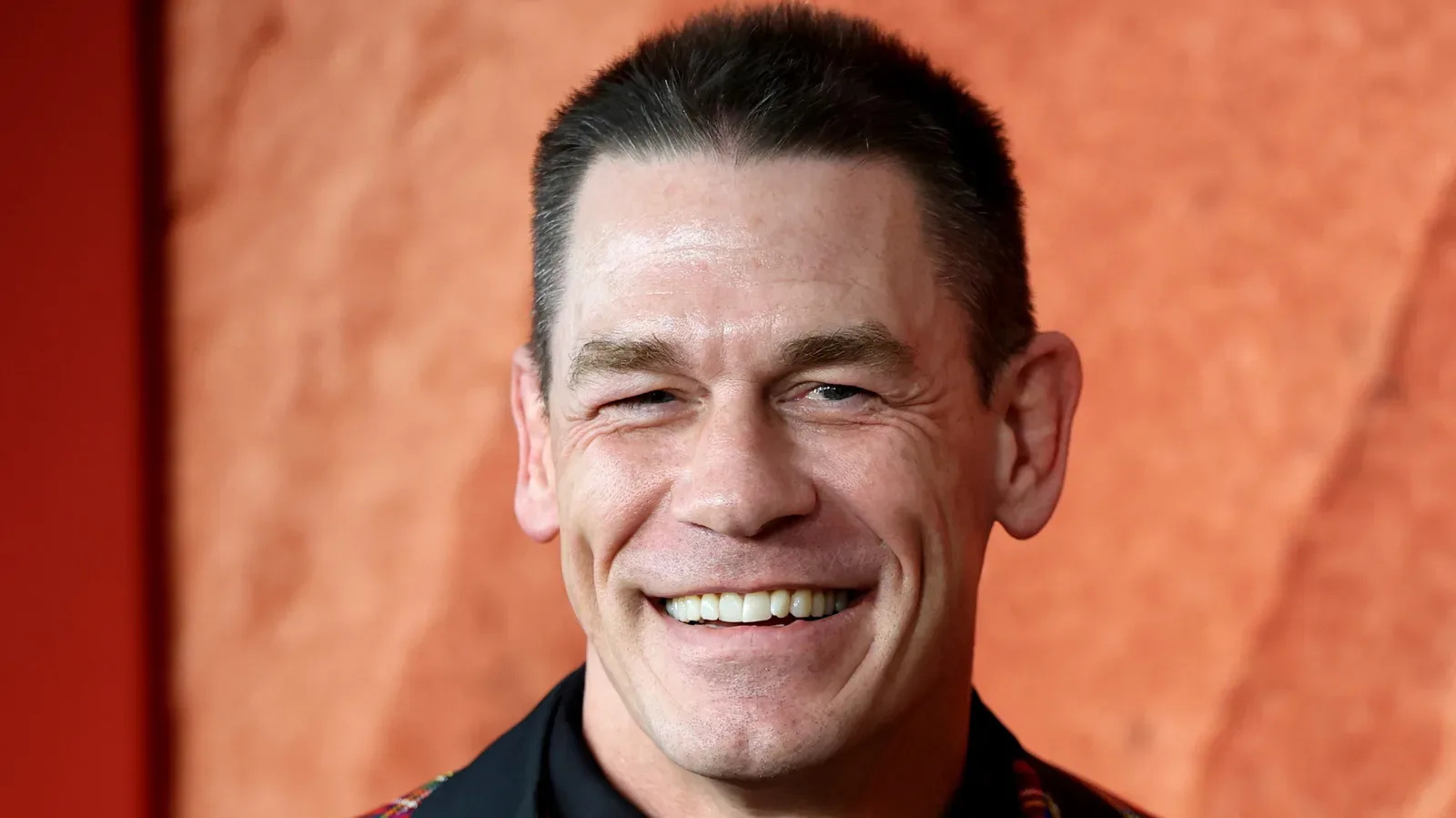
John Cena’s 17th world championship placed him alone atop one of professional wrestling’s most recognizable statistical landmarks, but Cena does not view the accomplishment as a personal victory alone. Reflecting on his historic title reign, the WWE icon said the moment carried greater meaning for WWE and the wrestling business than it did for him individually.
Cena became a 17-time world champion when he defeated Cody Rhodes at WrestleMania in 2025. The victory moved him past Ric Flair’s long-standing total of 16 recognized world title reigns and gave Cena a singular place in WWE history. Yet, speaking at FanX Comic Conventions, Cena emphasized that the purpose behind his pursuit was not simply to add another accolade to an already extraordinary career.
“17 passes the record set by the Nature Boy Ric Flair,” Cena said. “It’s a history-making moment, but personally, I think it was more important for WWE. I think it was more important for wrestling. I did a press conference at the Royal Rumble and said, ‘I’m finally serious about chasing down 17.’ And the reason I want to chase down 17 is to show that it’s possible. And I want to be around to shake the hand of the person that wins 18. So yeah, it was cool.”
That perspective is consistent with how Cena has long discussed legacy. The number itself matters, particularly given the history attached to Flair’s 16 world championships, but Cena framed the achievement as a marker meant to be challenged rather than protected. In his view, breaking a record only has its fullest value if it gives the next generation something tangible to pursue.
For more background on this topic, read Joe Hendry Announces ‘Beyond Belief’ Album Track List, Sets October 5 Release.
Cena’s milestone changed a defining WWE benchmark
For decades, Flair’s world-title total was treated as one of the sport’s most difficult benchmarks to reach. “The Nature Boy” became synonymous with championship success across generations, and his 16 recognized world championship reigns remained a central point of discussion whenever WWE’s greatest champions were debated.
Cena had spent years within range of that number, but the possibility of moving ahead of Flair had never been a straightforward story. His admiration for Flair made the idea complicated. Cena was not merely chasing a statistic; he was approaching a record held by a performer he respects deeply and one whose influence remains woven into the identity of modern professional wrestling.
That appreciation was part of why Cena was uncertain about becoming champion for a 17th time. The record represented far more than a number beside a name. It carried the weight of Flair’s career, the eras he helped define, and the countless major matches and championship moments associated with his legacy.
When Cena finally reached the milestone against Rhodes at WrestleMania in 2025, WWE presented a major historical transition. The result did not diminish Flair’s accomplishments. Instead, it created a new standard for the company’s active and future stars, with Cena now holding the total that others will measure themselves against.
The chase was about possibility, not possession
Cena’s comments make clear that he did not see 17 as a finish line intended to remain untouched. He wanted to demonstrate that a supposedly unreachable accomplishment could be reached. In that sense, the title victory was designed to open a conversation about the next record-holder as much as it was about Cena himself.
He returned to that point while discussing the depth of WWE’s current roster and the opportunity available to younger performers willing to commit themselves to the difficult path required to sustain success at the world-title level.
“I think it’s way more impactful for WWE. We got so much young talent now that actually have a chance if they play their cards right and they really hustle and give it all they got, they got a chance to win 17, 18. So I truly look forward to the day when I can shake the hand of the person who passes that record.”
It is a notably forward-looking stance from a wrestler whose own résumé has been central to WWE for so long. Cena’s championship history, major-event performances, and stature as one of the company’s defining figures have made him a measuring stick for numerous performers. Rather than treating that role as something to preserve, he wants the next generation to use it as motivation.
The path to 17 or 18 world titles would require a rare combination of longevity, positioning, health, adaptability, and sustained audience connection. A wrestler needs to remain valuable across changing creative directions and evolving roster cycles, while also repeatedly returning to the top of the card. Cena’s comments acknowledge that the necessary talent exists, but they also underline the work involved in turning potential into a career of that magnitude.
World championship totals can be debated in different contexts, but their importance within WWE is undeniable. They create a shared language for fans, performers, and the company itself. The pursuit of a high number of title reigns is not just about collecting championships; it reflects repeated trust in a performer to lead major stories and carry the responsibilities attached to the top prize.
A path that changed before WrestleMania 2025
Cena’s record-breaking moment could have happened earlier. He had been penciled in to win the title during his 2021 match with Roman Reigns, a match that would have provided another major stage for the 17th championship. Those plans changed, however, and Cena’s pursuit of the record took a different route.
That detour ultimately gave the achievement a different context. Instead of reaching 17 in 2021, Cena defeated Rhodes at WrestleMania in 2025, during the final few months of his WWE career. The timing gave the title change the feeling of a late-career culmination, while also placing Rhodes at the center of one of the company’s most significant championship moments.
There is an inherent contrast in Cena’s account of the situation. The achievement was unquestionably historic for him, but he continues to describe it in terms of what it can do for the industry after him. He recognizes the magnitude of passing Flair, while refusing to portray the record as something that should belong to him forever.
That approach also reflects the reality that wrestling history constantly evolves. Records that once appeared permanent eventually become targets. Every generation produces performers who change perceptions of what is possible, whether through title totals, event main events, longevity, or cultural impact. Cena’s stated hope is that his 17th title becomes a challenge that inspires another wrestler rather than an endpoint to the conversation.
The next standard has been set
Cena’s victory at WrestleMania 2025 will remain a major chapter in WWE’s championship history because it formally moved the benchmark from Flair’s 16 to Cena’s 17. But Cena is already looking beyond the fact that his name currently sits at the top.
His willingness to imagine someone reaching 18 is significant because it shifts the focus from preserving a legacy to extending it. Cena wants to be present to congratulate the wrestler who surpasses him, just as he viewed his own chase as an opportunity to prove that Flair’s record could be exceeded. The image he offered is simple: he wants to shake that person’s hand.
For WWE, that creates a powerful long-term narrative. Every young talent who begins stacking championship reigns can be viewed, fairly or not, through the lens of the 17-title standard. The target is exceptionally high, and no current path to it can be predicted with certainty. Still, Cena believes the talent pool contains wrestlers capable of making the pursuit meaningful if they maximize their opportunities and sustain the necessary level of effort.
For Cena himself, the record is now part of a larger message. His 17th world title was “cool,” as he put it, but its lasting significance will be determined by what comes next. If another WWE performer eventually reaches 18, Cena will see it not as a loss of status, but as proof that the standard he helped establish continued to push the business forward.
In pictures

Darryl Polo
Darryl Polo is a passionate wrestling fan covering WWE, AEW, TNA and beyond. He loves great rivalries, breakout stars and the moments that keep fans talking long after the bell. How we work.