
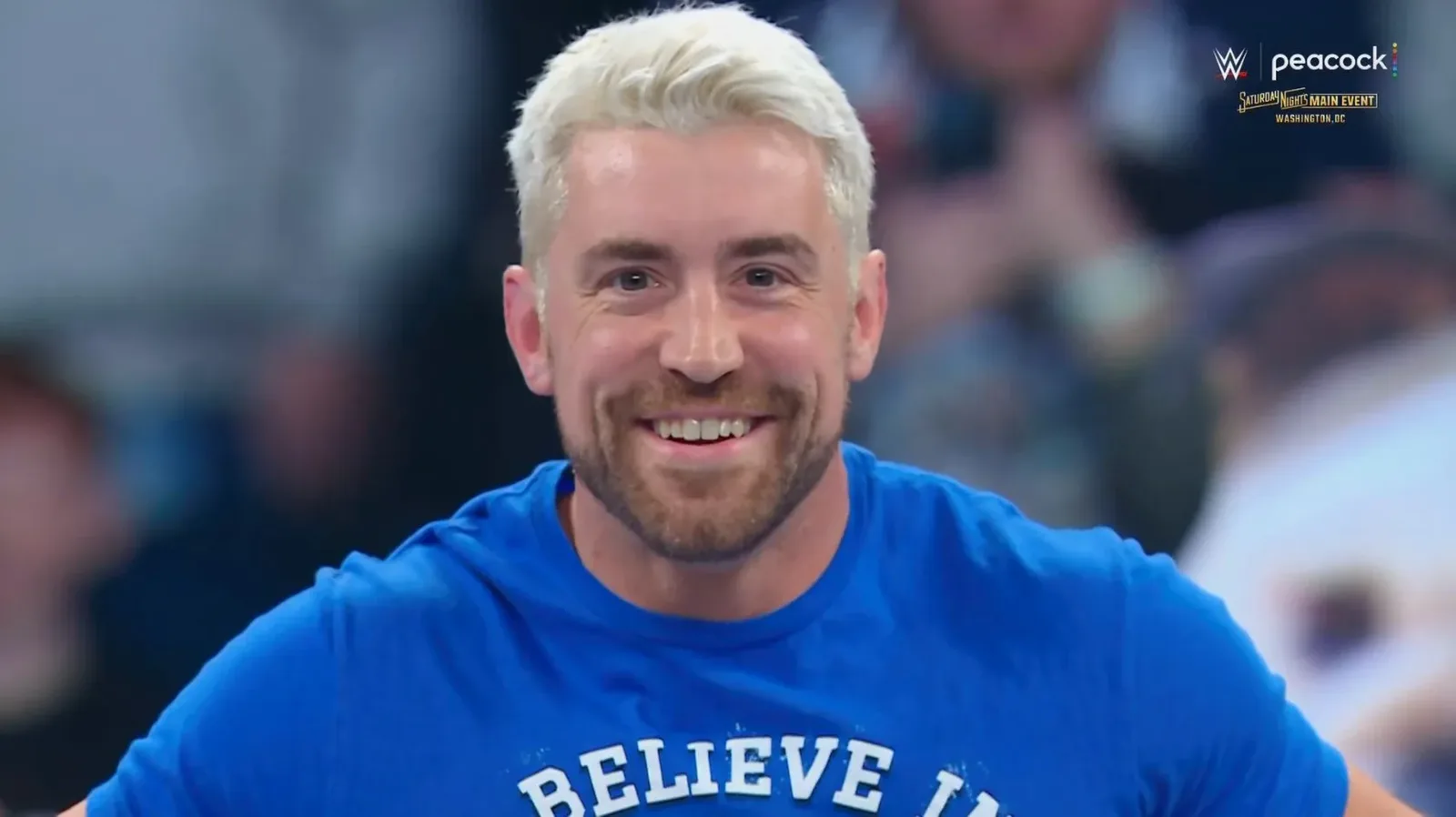
Joe Hendry’s WWE main-roster arrival came together differently than originally planned.
During an interview with Chris Van Vliet, Hendry explained that he had been scheduled to debut on the episode of WWE Raw immediately following WrestleMania. Instead, WWE announced on the April 20 edition of Raw that Hendry had signed with the red brand and would make his debut the following week.
The adjustment did more than alter the date of Hendry’s first appearance. It also forced a quick change to the song and promotional idea he had prepared for the occasion. Hendry said he had initially planned a Raw-focused version of the musical presentation that has become one of his trademarks.
“I was supposed to debut the night after WrestleMania, and the song I had was the same song, but it was ‘Raw, Raw, Joe Hendry signed to Raw,’” Hendry said.
For more background on this topic, read Joe Hendry Explains the Creative Pivot Behind Viral ‘Fire Logan Paul’ Song.
Hendry’s explanation offers a look at the way presentation can change rapidly in WWE, particularly when a performer’s debut, storyline direction, or on-screen announcement is adjusted. His planned material was tied directly to the intended surprise of his arrival on the brand. Once the company publicly established that he was coming to Raw the following week, Hendry believed the original concept no longer worked in the same way.
Rather than using a song built around the announcement that he had signed with Raw, Hendry said he had to pivot. He had been preparing a lyric that would play off the Raw and SmackDown brand names, with a line involving “back down” because he had joined Raw. However, after the announcement was made on television and a graphic was shown, the intended punchline had effectively been revealed before his debut.
That is where the eventual “Fire Logan Paul” song began to take shape.
A Change In Direction Led To Logan Paul
Hendry said he later learned that he would be working with The Vision. With that knowledge, he began looking for the strongest possible target for a revised musical number. He framed the decision through a principle he has learned during his wrestling career: go after the biggest and most formidable name available.
For Hendry, Logan Paul was the obvious choice.
“The one name who’s got the most controversy and fame is Logan,” Hendry said, explaining why he chose to focus the new song on Paul. He added that the revised words fit naturally into the music he already had in place.
The result was “Fire Logan Paul,” a track that Hendry said grew beyond what those involved may have initially expected. The song’s reception ultimately led to its inclusion on Hendry’s upcoming album, which is scheduled to be released on October 5.
The story highlights a key part of what has made Hendry’s act distinctive: his ability to combine wrestling angles, character work, and topical musical material. A change in a debut plan could have simply meant discarding a prepared idea. Instead, Hendry repurposed the structure of the song and turned it toward one of WWE’s most recognizable and divisive personalities.
That approach also fit the circumstances of his move to the main roster. A debut is an opportunity to establish a performer’s identity quickly, and Hendry’s musical segments have long been central to his presentation. By shifting the focus from a straightforward “Joe Hendry has signed to Raw” announcement to a direct shot at Logan Paul, the concept gave him a more immediate conflict and a more prominent name to address.
The Importance Of The Raw Announcement
The April 20 episode of Raw established that Hendry was joining the red brand, while also telling viewers that his debut would take place the next week. Hendry’s comments make clear that the announcement changed the creative circumstances surrounding his planned first main-roster segment.
Had the original plan gone forward, the “Raw, Raw, Joe Hendry signed to Raw” lyric would have served as part of the reveal. Once the audience had already been told where he was headed, Hendry needed material that could provide a fresh reason for attention. His answer was not to abandon the musical element, but to make the song about a larger on-screen target.
Hendry did not provide additional details about why the debut date changed from the Raw after WrestleMania to the following week. He also did not indicate whether the initial song was intended to be used in full, how long the post-WrestleMania appearance had been planned, or whether other aspects of the debut were revised. What he did clarify was the practical consequence: a public announcement meant his first idea had to be reworked.
In wrestling, timing is often inseparable from the impact of a storyline or introduction. A surprise signing, an unexpected appearance, or a first confrontation can have a different effect when fans have advance notice. Hendry’s comments show that his original presentation was built for one version of events, and that the announced debut required another.
“Fire Logan Paul” Takes On A Life Of Its Own
Hendry described the finished song as something that “blew up beyond what we had maybe expected.” That response made it more than a one-time adjustment to a changed schedule. It became a notable piece of Hendry’s current output and a track that will appear on his album.
The decision to include it on the record reinforces how closely Hendry’s music and wrestling persona are connected. His songs are not treated solely as entrance music or brief television gags. They can become extensions of his feuds, character perspective, and connection with the audience.
Logan Paul was a particularly fitting subject for that kind of material because of his prominence and the reaction he generates. Hendry was direct in saying that Paul’s level of controversy and fame made him the most compelling person to target. In a wrestling environment where drawing attention matters, aiming at a polarizing star can immediately give a performer’s message greater visibility.
The lyrics also had to work. Hendry noted that the words fit into the existing song, allowing him to make the switch without needing to begin from scratch. That practical element mattered. The structure was already in place; the creative challenge was finding a subject and message that could replace the Raw-signing premise while still landing effectively.
For Hendry, the revised concept appears to have done exactly that. What began as a necessity created by a delayed debut became a song significant enough to reach an album release.
Hendry’s Album Arrives October 5
Hendry’s album is set to drop on October 5, with “Fire Logan Paul” included after its unexpected rise. The release gives fans a chance to hear the song as part of a broader collection tied to one of wrestling’s most music-driven personalities.
While Hendry’s comments centered on the evolution of one song, they also underline the adaptability required of performers moving through WWE’s television system. Plans can change, announcements can alter the value of a planned reveal, and a performer may need to find a new hook on short notice. Hendry’s response was to redirect his material toward a major name and make the revised song feel relevant to his new surroundings.
The original Raw debut concept may never have been seen by the audience in its intended form. The “Raw, Raw, Joe Hendry signed to Raw” version belonged to a night that did not happen as planned. But the pivot produced “Fire Logan Paul,” and Hendry’s account suggests that the replacement ultimately became bigger than a simple backup plan.
As Hendry continues his WWE main-roster run, the story behind the song serves as an example of how an altered schedule can lead to a new creative opportunity. His debut was moved, his original lyric was no longer usable in the same context, and he responded by going after one of the company’s most talked-about figures. The final result connected strongly enough with fans to earn a place on his October 5 album.

Darryl Polo
Darryl Polo is a passionate wrestling fan covering WWE, AEW, TNA and beyond. He loves great rivalries, breakout stars and the moments that keep fans talking long after the bell. How we work.