
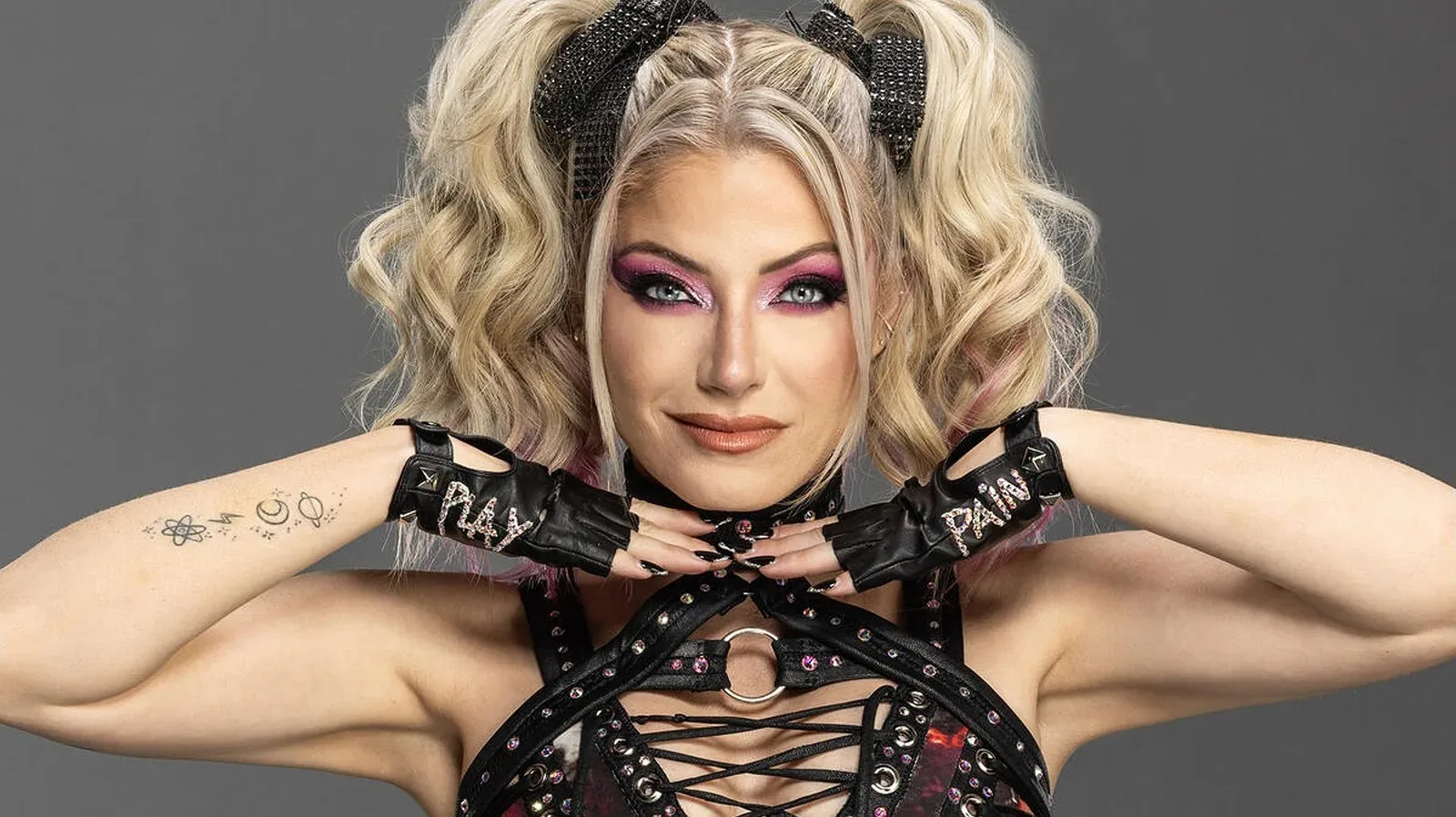
Joe Gacy has shed more light on a question that surrounded the Wyatt Sicks from the moment the group arrived in WWE: why was Alexa Bliss never folded into the story?
Bliss had an unmistakable on-screen history with Bray Wyatt and The Fiend, with her character moving into a darker direction after Wyatt returned to WWE. Their alliance became one of the company’s most distinctive supernatural-adjacent presentations, though the arc was interrupted when Bliss stepped away for real-life medical reasons and later maternity leave.
Wyatt’s death occurred while Bliss was still away from WWE. When the Wyatt Sicks eventually debuted, the presence of Bo Dallas as Uncle Howdy, along with Nikki Cross, Erick Rowan, Dexter Lumis, and Gacy, naturally prompted speculation that Bliss would be connected to the new group upon her return. That expectation was heightened by the visual nods in Bliss’ presentation to her prior work with Wyatt and the wider Wyatt family mythology.
Speaking with Denise Salcedo, Gacy said the possibility of Bliss joining the Wyatt Sicks was not merely fan speculation. He stated that it had been discussed internally, including during the group’s first meeting at WWE Headquarters.
For more background on this topic, read Cody Rhodes Credits Rey Mysterio as a Defining Force Behind His WWE Career.
“It was talked about,” Gacy said.
Gacy explained that the understanding at that stage was that Bliss could become involved once she was ready to return from maternity leave. From his standpoint, the eventual need to deal with the connection felt obvious whether Bliss ultimately joined the faction or remained separate from it.
“I just assumed like, okay, eventually she’s going to be with us,” Gacy said. “And my whole thing was always, when she comes back, we definitely – whether she’s with us or she’s not with us – we definitely need to address it.”
A Story Connection That Remained Unresolved
The central issue for Gacy was not necessarily that Bliss had to become a full-fledged member of the Wyatt Sicks. His concern was that WWE television did not provide a meaningful explanation for the overlap between Bliss’ past and the group’s continued use of Wyatt-associated imagery and themes.
Bliss had been visibly tied to Wyatt’s world. Her presentation, gear, and character history carried reminders of that period, while the Wyatt Sicks were built around figures intrinsically linked to Wyatt’s legacy. Dallas was Wyatt’s real-life brother and portrayed Uncle Howdy, while Rowan had been a member of the original Wyatt Family. Cross, Lumis, and Gacy rounded out a group that expanded the unsettling aesthetic attached to the Firefly Fun House era and its aftermath.
Gacy said Bliss attended several meetings at some point and offered ideas that did not come to fruition. That detail makes the lack of an on-screen resolution more notable. It indicates that Bliss’ place in the wider narrative was considered beyond an initial casual discussion, even if plans changed or never advanced to a final creative direction.
For Gacy, the disconnect was particularly apparent because Bliss and the Wyatt Sicks could be featured so closely together on WWE programming without acknowledging their shared history. He viewed that proximity, combined with the visual references surrounding Bliss, as a missed chance to make the story feel more cohesive.
“I just thought it was a little silly that you have her on the show, you know, wearing the same gear, having odes to [Wyatt] and the Wyatt family, and sometimes we’re immediately after her!” Gacy said.
That criticism gets to the heart of why the issue remained prominent among viewers. Wrestling audiences are accustomed to revisiting old alliances, betrayals, and character transformations years after they first occur. In Bliss’ case, the connection was not a minor footnote. Her pairing with The Fiend dramatically altered her persona and positioned her within one of WWE’s most unusual stories of that era. The Wyatt Sicks’ arrival made a callback appear not just possible, but logical.
Gacy’s Proposed Wyatt Sicks Split
Gacy also revealed an idea he and Dexter Lumis discussed involving a potential division within the Wyatt Sicks. The concept would have centered on Dallas being sidelined by an injury, creating an opening for Gacy to take over the Uncle Howdy role.
In that proposed direction, Gacy and Lumis would have aligned with Cross. They would have feuded with Bliss, Dallas, and Rowan. The pitch would have provided multiple layers to explore at once: a struggle for control of the Uncle Howdy identity, a split within the faction, and a direct explanation of how Bliss fit into the continued Wyatt-related story.
It also would have given each side a clear emotional connection to the group’s foundation. Dallas and Rowan had direct family and faction ties to Wyatt, respectively. Bliss had her own established on-screen link through The Fiend. On the opposing side, Gacy assuming the Uncle Howdy mantle could have created a power struggle over a persona that was already central to the Wyatt Sicks’ identity, while Lumis and Cross would have had defined roles in the internal fracture.
No such storyline materialized. Gacy did not state why the idea was not used, and there is no indication that it ever became an approved plan for WWE television. Still, the concept illustrates how the group could have moved beyond simply being a collection of connected characters and into a more conventional rivalry with competing goals and personal stakes.
Why Bliss Was an Obvious Piece of the Conversation
Bliss’ potential role was compelling because she could have entered the story in more than one way. She could have been presented as an ally who shared a history with Wyatt and understood what the group represented. Just as easily, she could have been positioned as someone wary of others claiming to carry on that legacy. Gacy’s comments make clear that he felt either route could have worked, so long as WWE addressed the relationship rather than leaving it unspoken.
That distinction matters. An on-screen acknowledgement did not require Bliss to abandon her own direction or permanently join a stable. A brief confrontation, a reveal of conflicting motivations, or a storyline built around her reaction to Uncle Howdy and the group’s imagery could have established where she stood. It could also have clarified whether the Wyatt Sicks viewed Bliss as family, an outsider, a threat, or something in between.
Instead, the association remained open to interpretation. For some fans, that ambiguity preserved the mystique surrounding the characters. For Gacy, however, the lack of an explanation left a significant story thread hanging, especially given the amount of symbolism viewers could see on screen.
What Gacy’s Comments Reveal About Creative Discussions
Gacy’s account is a reminder that ideas discussed in WWE creative meetings do not always become television angles. Wrestlers and creative personnel can explore possibilities, develop pitches, and identify logical connections between characters without those concepts reaching the final stage of production. Plans can shift for any number of reasons, but Gacy did not offer a specific explanation for why the Bliss material failed to materialize.
What he did make clear is that the group recognized the issue early. Bliss’ return was viewed as something that could potentially intersect with the Wyatt Sicks, and she was involved in meetings where ideas were discussed. The fact that Gacy still considers it a “huge missed opportunity” shows how strongly he believed that the thread should have been resolved.
The question is likely to remain part of the discussion around the Wyatt Sicks’ legacy. The group was formed in the shadow of Bray Wyatt’s influence, and Bliss was one of the most prominent performers ever connected to his later WWE character work. Leaving those paths unaddressed made for a conspicuous gap in a story universe that otherwise depended heavily on continuity, symbolism, and callbacks.
Gacy’s proposed split may never have happened, but it offers a clear glimpse at one route that could have tied the pieces together. More importantly, his comments confirm that Bliss’ absence from the Wyatt Sicks narrative was considered internally—and that, from his perspective, WWE never delivered the resolution the story warranted.
In pictures
Darryl Polo
Darryl Polo is a passionate wrestling fan covering WWE, AEW, TNA and beyond. He loves great rivalries, breakout stars and the moments that keep fans talking long after the bell. How we work.