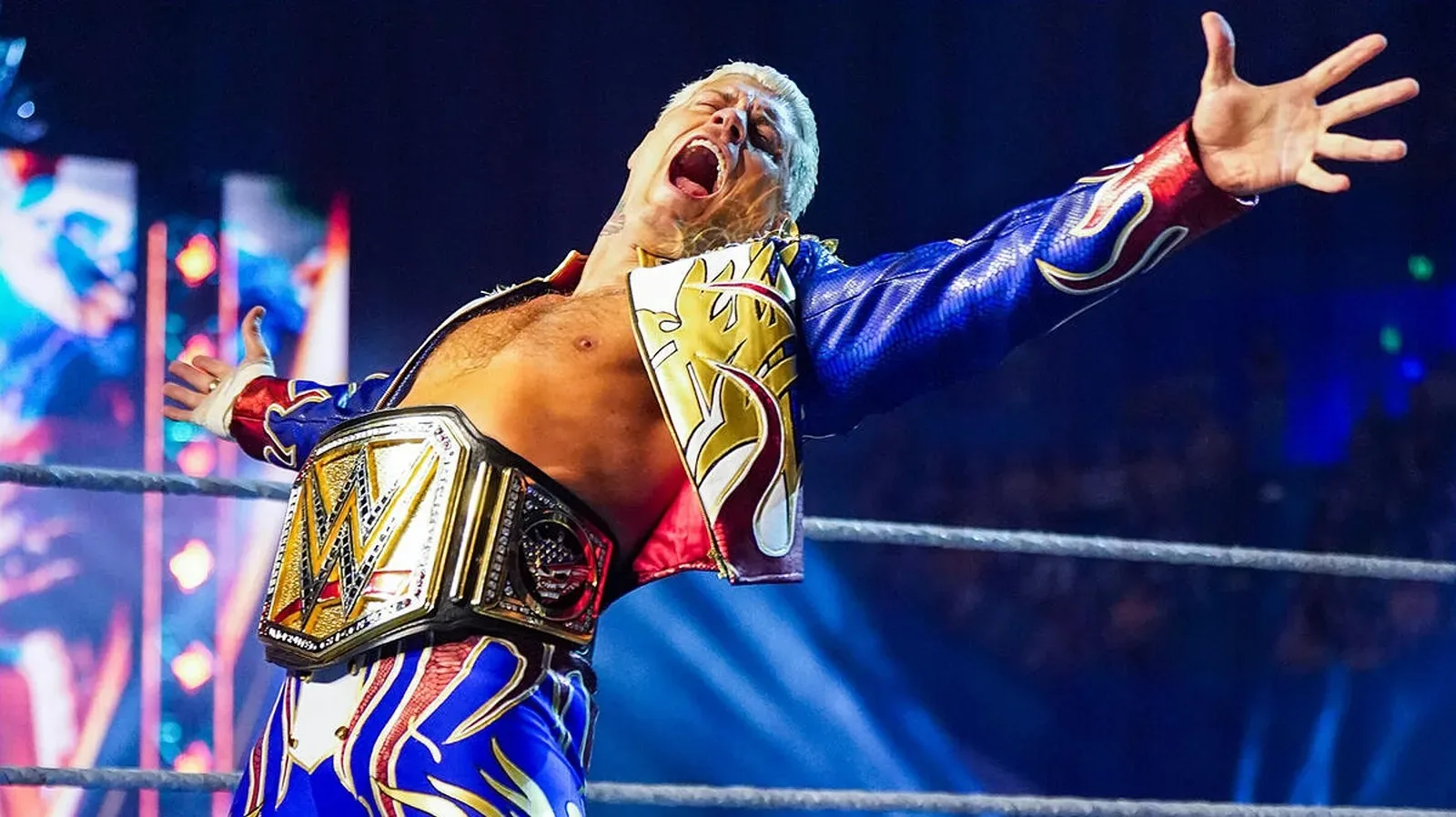
Cody Rhodes has reached a level in WWE that once seemed almost unimaginable during the more uncertain stages of his first run with the company. He is now firmly positioned among the promotion's defining modern stars, carrying the legacy of his family while building an identity that is distinctly his own. Yet Rhodes has consistently emphasized that his path was not made alone, and he has again pointed to WWE Hall of Famer Rey Mysterio as a crucial figure in the trajectory of his career.
Looking back on his 2011 rivalry with Mysterio during a conversation with James Sweetnam, Rhodes explained how significant their WrestleMania match was to his development. For Rhodes, it was more than another high-profile match on a major card. It was an opportunity that helped create the foundation for the performer and character he would become.
“Nothing happens in my career without Rey Mysterio wanting to wrestle against me at WrestleMania in my hometown,” Rhodes said.
That statement speaks to the importance Rhodes places on timing, trust, and the willingness of established names to elevate newer talent. Mysterio had long been one of WWE's most enduring stars by that point, a performer capable of connecting with multiple generations of fans while remaining an attraction on virtually any show. Rhodes, meanwhile, was still working to establish where he fit within WWE's larger picture.
For more background on this topic, read Wendy Choo’s WWE Release Reportedly Surprised Some Despite Developmental Reality.
Their program gave Rhodes a chance to step into a more defined spotlight. It also helped move him beyond being viewed only through the lens of his famous last name, his work in Legacy, or his association with Randy Orton and Ted DiBiase. A WrestleMania program against Mysterio carried a different kind of value: it put Rhodes opposite a beloved, recognizable veteran in an environment where a character could become memorable very quickly.
A WrestleMania Moment in Rhodes' Hometown
Rhodes' WrestleMania meeting with Mysterio took place in Atlanta, making the occasion especially meaningful for the Georgia native. WrestleMania is the stage where WWE performers often look to define themselves, and wrestling in his hometown added another layer to what was already a major career opportunity.
For a younger wrestler, sharing that stage with Mysterio could be both an enormous test and a unique vote of confidence. Mysterio's status as a fan favorite meant that any opponent working against him had to find a way to stand out, create emotional investment, and present a believable threat without losing the audience entirely. Rhodes was able to use that setting to further establish the edge and insecurity that would become central to one of the most distinctive gimmicks of his early WWE career.
Rhodes has made clear that he believes professional wrestling works best when the planned elements of a story are strengthened by real moments. The Mysterio feud gave him exactly that kind of opening when an in-ring incident led to Rhodes suffering a legitimate broken nose.
“Wrestling is always best when these organic moments happen,” Rhodes said.
In a business built around presentation, physicality, and character, an unexpected injury can dramatically alter the direction of a story. It can also force a wrestler to reveal how creatively adaptable they are. Rhodes did not treat the injury as merely a setback. Instead, he and WWE turned it into a defining part of his presentation.
The Broken Nose and the Birth of Undashing Cody Rhodes
The broken nose became the key catalyst for the evolution of Rhodes' character into “Undashing” Cody Rhodes. Rather than simply returning after the injury and moving forward as usual, Rhodes embraced the idea that the damage had psychologically affected his character. The result was a persona built around vanity, paranoia, and a warped self-image.
Rhodes discussed the deeper territory the character allowed him to explore. Although the injury and its aftermath became part of a heightened wrestling persona, the character was able to tap into ideas surrounding appearance and the fear of being changed or disfigured. Rhodes described the direction as a particularly deep place to go at that point in his career.
The Undashing presentation was visually memorable. Rhodes wore a protective face mask, carried himself as though he had been permanently scarred, and treated his perceived condition with intense seriousness. The character made his insecurities into weapons, using them to belittle others and create a strong contrast with the clean-cut image he had previously carried.
It was an effective example of WWE taking a legitimate occurrence and transforming it into character material. For Rhodes, the storyline provided a way to show a different side of his capabilities. He was no longer simply trying to prove that he could perform at a high level in the ring. He was being asked to carry a detailed personality, communicate a specific emotional perspective, and make fans react to an increasingly eccentric premise.
That kind of role can become difficult if it is played too broadly or without commitment. Rhodes instead leaned into the character's strange intensity. The mask, the obsessive concern over his looks, and the theatrical disgust he projected toward others all gave the gimmick a clear identity.
The Paper Bag Angle Had a Line Rhodes Would Not Cross
One of the most recognizable elements of the Undashing Cody Rhodes character involved paper bags. Rhodes would place bags over people's heads as part of the act, reinforcing the idea that he viewed others as unattractive while presenting himself as someone traumatized by his own supposed disfigurement.
While the gimmick had room for absurdity and humor, Rhodes said he resisted one particular direction proposed for the angle. WWE Creative wanted him to put bags on audience members it considered “ugly,” but Rhodes did not want to take the segment in that direction.
“That seems like assault,” Rhodes said.
The response underlined an important distinction in wrestling character work. A villain can be vain, insulting, and deliberately unpleasant without a performer needing to cross every possible line in pursuit of heat. Rhodes found a way to make the paper bags part of the persona while maintaining a boundary around directly involving fans in that manner.
That decision also shows how much thought Rhodes was putting into the work during a stage of his career when he was still evolving. The Undashing character was not merely a costume change following an injury. It was an exercise in developing instincts: deciding what fit the story, what could generate reaction, and what felt inappropriate even within the exaggerated world of WWE television.
Mysterio's Lasting Place in Rhodes' Story
Rhodes' praise for Mysterio was not limited to the mechanics of their 2011 feud. He described Mysterio as a timeless character and someone who has always been present in his life. That sentiment reflects Mysterio's extraordinary longevity in wrestling, as well as the way his career has intersected with multiple eras and generations.
For Rhodes, Mysterio is not only a past opponent. He is a connection point between Rhodes' early WWE years, his later reinvention outside the company, and his eventual return as one of WWE's most prominent names. Mysterio's son, Dominik Mysterio, has also become a major WWE figure in his own right, making the Rhodes-Mysterio relationship one that now spans an additional generation of performers.
Rhodes suggested that he has told both Rey and Dominik just how much that WrestleMania opportunity meant to him, even if he is not sure they fully appreciate the extent of its impact. From Rhodes' perspective, Mysterio's willingness to work with him on that stage set in motion developments that extended far beyond one match or one gimmick.
The road from Undashing Cody Rhodes to the modern American Nightmare was not direct. Rhodes would go through numerous reinventions, leave WWE, build momentum across the independent wrestling scene, help found AEW, and eventually return to WWE as a transformed main-event-level star. But the story of that rise includes key early turning points, and Rhodes sees his WrestleMania feud with Mysterio as one of them.
That perspective is a reminder that a major career often rests on moments that might initially appear to be only one chapter in a longer run. A rivalry, an injury, a character adjustment, and the confidence offered by an established star can all become defining pieces of a wrestler's larger story. In Rhodes' case, Rey Mysterio helped provide an opening that he was determined to turn into something lasting.
In pictures
Darryl Polo
Darryl Polo is a passionate wrestling fan covering WWE, AEW, TNA and beyond. He loves great rivalries, breakout stars and the moments that keep fans talking long after the bell. How we work.