
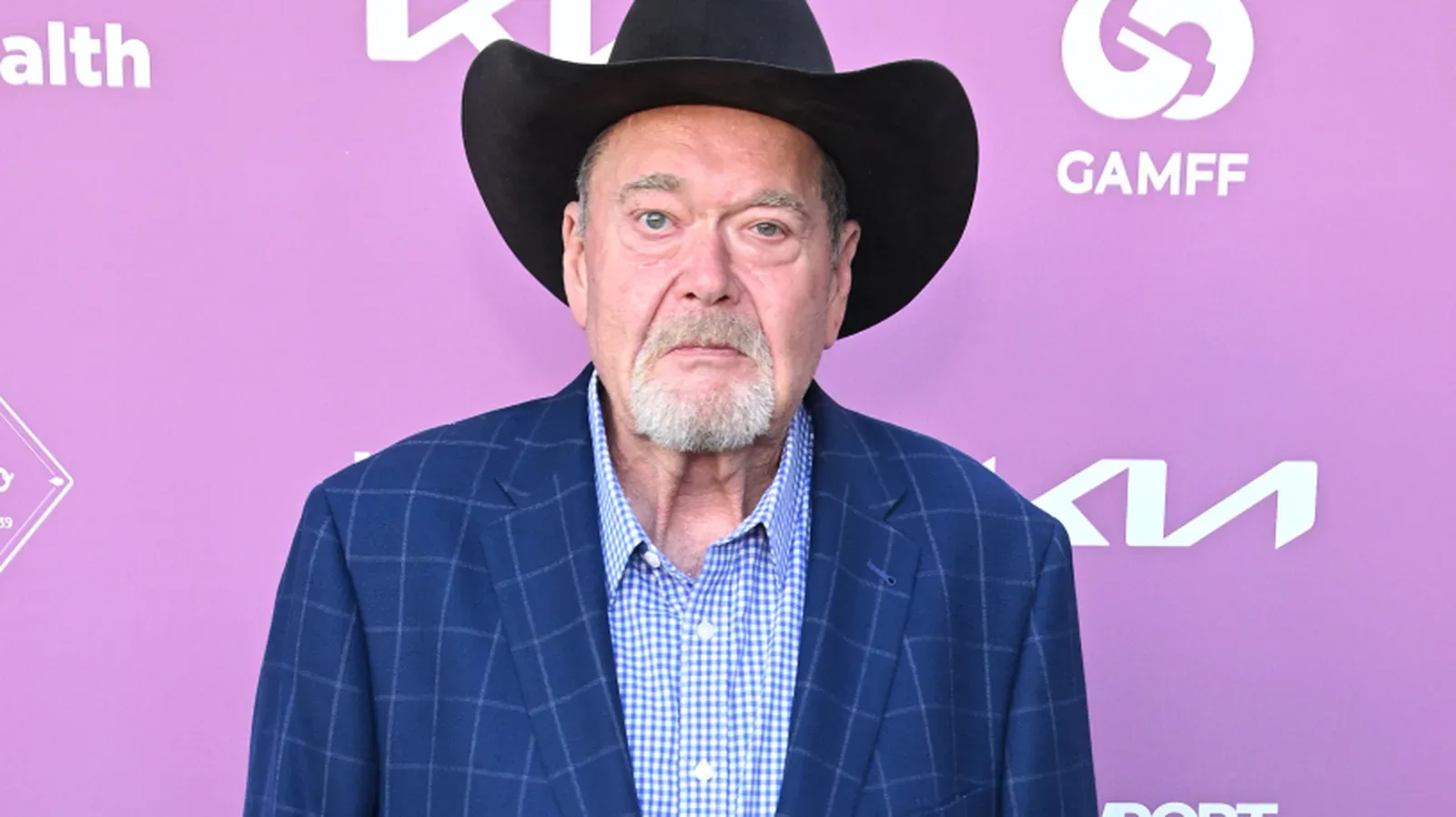
Jim Ross has added his voice to the growing call for support surrounding Tanea “Rebel” Brooks and the fight against amyotrophic lateral sclerosis, better known as ALS.
Brooks disclosed in May that she had been diagnosed with terminal ALS. Since then, the wrestling community has rallied around the longtime performer, with AEW dedicating a special edition of Dynamite to her and using the event to raise both awareness and money for ALS-focused advocacy and research efforts.
Ross addressed Brooks’ situation during a recent episode of Grilling JR, speaking warmly about her character while stressing the devastating reality of the disease. The veteran AEW broadcaster described Brooks as “a beautiful human being with a kind heart” and encouraged listeners to contribute what they can toward a cause he believes requires sustained public support.
“It’s strange to me that the world we live in has no cure for cancer, has no cure for ALS,” Ross said on Grilling JR. “I know cancer, progress being made in that regard. I’ve had colon cancer, I’ve had skin cancer, and thank God I dodged a bullet or two. But there’s no cure.”
For more background on this topic, read Walker Stewart Set To Remain Full-Time With NJPW And Stardom Through New Contract Terms.
Ross’ comments carried additional personal weight given his own history with cancer. He noted that treatments can have different outcomes from one person to another, but his focus remained on the need for greater progress against ALS. The disease affects nerve cells responsible for voluntary muscle movement and can progressively rob patients of mobility, speech, swallowing, and breathing functions. There is presently no cure.
“ALS, it’s a powerful disease and I don’t understand why we can’t find a cure for it,” Ross continued. “So how we do that is we take your money, you’re going to contribute a dollar, five dollars, whatever it may be. When those accumulate and continue to accumulate, then maybe somewhere down the road sooner than later, we’ll find a cure for this killer. It’s a death sentence and it’s a shame.”
The directness of Ross’ message reflects the tone surrounding AEW’s recent tribute. Rather than treating the occasion solely as an in-ring-themed special, the company centered the evening on Brooks, her life, and the wider effort to help people and families affected by ALS. The event was titled AEW Rebel Heart Dynamite, a fitting name for a performer who has been a familiar personality to fans through multiple stages of her wrestling career.
Following the special episode, AEW announced a donation of $140,000 to I AM ALS and Team Gleason. Both organizations are prominent advocates in the ALS community. I AM ALS works to advance patient-centered advocacy, research, and policy initiatives, while Team Gleason supports people living with ALS and works to increase awareness of the illness.
That announced donation gave the tribute an immediate tangible outcome. Awareness campaigns can introduce audiences to an issue, but Ross emphasized why financial participation matters as well. Whether a contribution is large or small, his point was that individual donations can build into meaningful resources for research, advocacy, patient support, and the push toward better treatment options.
A Wrestling Community United Around Rebel
The Rebel Heart edition of Dynamite also illustrated the breadth of Brooks’ relationships within professional wrestling. Several talents not currently associated with AEW attended the event, including Gail Kim, Killer Kross, Scarlett Bordeaux, Allysin Kay, and Marti Belle.
Their presence spoke to Brooks’ long-standing connections across the industry. Professional wrestling is often defined publicly by promotion lines and competitive divisions, yet major personal moments regularly bring performers together regardless of where they work. In this case, the gathering served as a show of support for Brooks while also expanding the event’s message beyond AEW’s own locker room.
Brooks appeared during the show in a segment of The Waiting Room, the talk-show format closely tied to her on-screen history. She later appeared during a tag team match involving her longtime friend Britt Baker. Those appearances ensured that the night was not simply about people speaking on Brooks’ behalf; it also gave her a place at the center of a program built to honor her.
Baker’s involvement was especially meaningful given the pair’s well-established friendship. Their association has been visible to AEW viewers for years, and the tag team match provided another emotional point of connection within a broadcast shaped by support and solidarity. The event’s structure allowed familiar wrestling presentation to exist alongside a very real cause, giving fans a way to participate in a tribute while being reminded of why the night mattered.
For Ross, the issue is larger than one special event. His remarks focused on the difficult gap between medical need and available cures. He acknowledged that progress has been made in cancer care while also noting that treatments do not produce identical results for every patient. His plea was not framed as an easy answer to an impossibly difficult disease, but as an appeal to keep funding and attention moving in the direction of researchers and advocacy organizations.
Why the Fundraising Effort Matters
ALS is frequently discussed in terms of its severity because it is a progressive and terminal illness, but the financial and emotional demands on patients and their families can also be immense. Advocacy organizations play an important role in supporting people navigating that reality while helping direct public attention toward research and policy needs. AEW’s contribution to I AM ALS and Team Gleason places the Rebel Heart event within that wider effort.
Ross’ appeal was deliberately practical. He did not suggest that everyone needs to make an enormous donation in order to help. Instead, he pointed to the cumulative effect of contributions at every level. A dollar, five dollars, or more can become part of a broader pool of support when many people choose to participate.
That is also why awareness-driven wrestling events can carry significance beyond their television runtime. Wrestling has a passionate global fan base, and performers often develop unusually personal bonds with viewers through years of live appearances, television stories, interviews, and social media interaction. When a company mobilizes that audience around a cause, the potential reach can extend well beyond the ring.
In Brooks’ case, the tribute underscored the affection she has earned among colleagues and fans. Ross’ description of her as a kind-hearted person was a personal reflection, but it aligned with the visible response around Rebel Heart Dynamite: friends attended, AEW created a dedicated platform, and money was directed to organizations working with the ALS community.
There is no indication in Ross’ comments that he views fundraising as a substitute for institutional medical research or broader healthcare solutions. Rather, his words made the case that continued giving is one avenue through which people can help push the search for answers forward. His own cancer experiences also made clear that he understands the uncertainty and fear that can accompany life-altering diagnoses.
Rebel Heart Leaves a Lasting Message
AEW Rebel Heart Dynamite was designed as a tribute to Brooks, but its impact is tied to what follows after the event. The $140,000 donation is a concrete result, while Ross’ call for continued support is a reminder that ALS advocacy cannot be confined to a single night of programming.
The special also offered a model of how wrestling can respond when one of its own faces a profound personal challenge. It brought together AEW talent, friends from elsewhere in the business, an on-screen appearance from Brooks, and a fundraising mission connected to established ALS organizations. The result was a show that retained the emotional language of wrestling while directing attention toward a cause of serious consequence.
Ross’ closing sentiment was stark because the stakes are stark. ALS remains a devastating illness, and the absence of a cure is central to the urgency felt by patients, families, advocates, and supporters. His message was ultimately one of compassion and action: remember Brooks, recognize the severity of the fight she is facing, and support the work being done to help create a future with better options.
For AEW, Brooks, and the many people who joined the tribute, Rebel Heart Dynamite represented more than a themed episode. It was a public show of love for a respected member of the wrestling community and a call to keep attention on ALS long after the final bell.
In pictures
Darryl Polo
Darryl Polo is a passionate wrestling fan covering WWE, AEW, TNA and beyond. He loves great rivalries, breakout stars and the moments that keep fans talking long after the bell. How we work.