
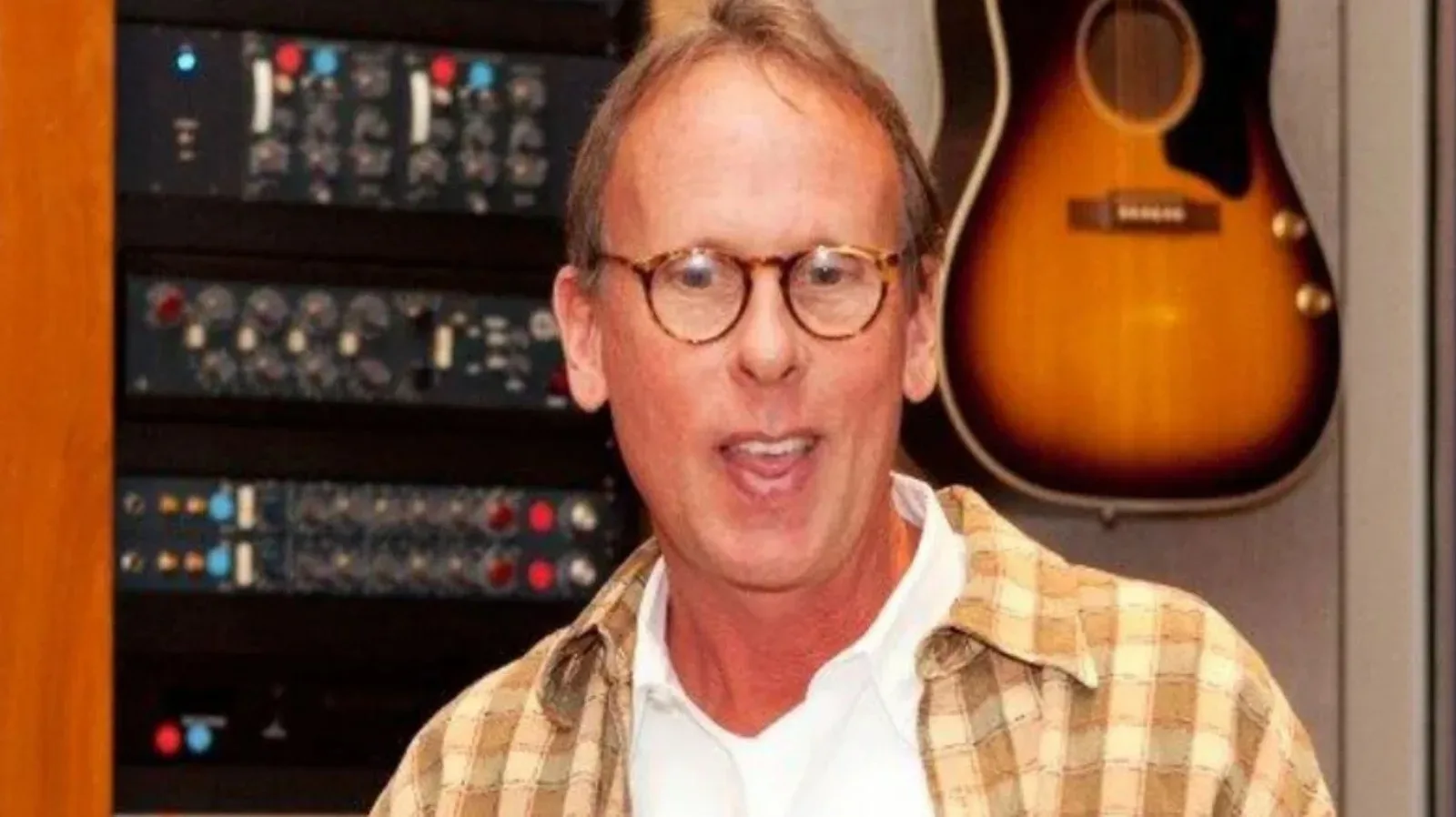
Jim Johnston’s place in WWE history is tied to sound as much as any composer’s work can be tied to a wrestling promotion. Across more than three decades, Johnston created music that helped define entrances, personalities, and major moments for generations of fans. His catalog includes the unmistakable “Stone Cold” Steve Austin theme, The Brood’s music, and Shane McMahon’s “Here Comes the Money,” along with many other tracks associated with WWE’s rise through multiple eras.
Yet Johnston’s first step into what was then the World Wrestling Federation did not begin with a carefully planned search for wrestling work or a formal assignment to build the sound of a company. Speaking on Ropes N Riffs, Johnston described an accidental connection made at a Japanese restaurant near his home. A familiar face from the restaurant crowd turned out to be working as Vince McMahon’s art director, and a request for help with music opened a door that would remain open for more than 32 years.
A Restaurant Conversation Led to WWF
Johnston said the restaurant had a regular group of customers, creating the kind of casual familiarity where people came to recognize one another over time. One evening, the art director approached him with a problem. He needed to assemble a video for his boss and had confidence in handling the visual component, but not the accompanying music.
“He comes in one night and said, ‘Didn’t you say you write music? I have to put together a video for my boss. I know how to put together the visual, but I have no clue how to put together music,’” Johnston recalled on Ropes N Riffs.
For more background on this topic, read Seth Rollins Says He Will Return to WWE “When the Time Is Right”.
At that stage, Johnston was still early in his professional career. He openly characterized his confident answer as being at least partly a bluff, but he accepted the job and wrote the music. The person asking for assistance was working as Vince McMahon’s art director at a significant point in company history: McMahon had recently bought the business from his father.
Johnston emphasized that there was not an established musical infrastructure waiting for him when he arrived. The project was not even designed for television, and the company did not have music in the way fans would later come to associate with WWF and WWE programming. The assignment was simply a chance to create something that fit a visual presentation.
After finishing the composition, Johnston was asked to attend the meeting where it would be presented to McMahon. McMahon liked what he heard, giving Johnston the opening he needed to continue working with the company. Johnston said McMahon’s immediate follow-up question was straightforward: “what else do you do?”
That question became the beginning of a remarkably long working relationship. Johnston would go on to work for WWF and later WWE for more than 32 years, remaining with the company until his release in November 2017.
There Was No Original Blueprint for Entrance Themes
For fans who grew up with WWE entrance music as an essential part of the show, it may be easy to assume Johnston was recruited with a clear mandate to write themes for individual wrestlers. His recollection paints a much less structured picture. He said his early contributions were focused on “peripheral stuff,” rather than a defined role as the composer assigned to score the roster.
Johnston explained that there was no single meeting where management established that wrestlers required personalized entrance songs. Instead, he believes the shift likely came about through trial and response. A piece of music written for a promo or another production purpose may have been used during an entrance, and the result may have demonstrated its value to those producing the show.
“The most likely scenario was I wrote a promo for something and Vince or someone in the truck played it as an entrance for someone and it worked,” Johnston said on Ropes N Riffs.
That practical approach reflects an era before entrance music was treated as a routine piece of a wrestler’s presentation. Today, an entrance track can communicate alignment, attitude, status, and momentum within seconds. It can be a cue for the crowd to erupt before a performer appears, and it can remain attached to a character long after a particular storyline ends. Johnston’s comments underline that this approach developed over time rather than arriving as a fully formed creative policy.
His work eventually helped establish the standard for how much personality could be packed into a wrestler’s music. Austin’s theme is a prime example: its opening sound instantly signals the arrival of a defiant character. “Here Comes the Money” works as a declaration of Shane McMahon’s on-screen persona before he reaches the ring. The Brood’s music creates an entirely different atmosphere, built around the dark, theatrical identity of that group.
Those examples are distinct from one another, which is central to the broader importance of wrestling music. An entrance theme does not need to merely fill time while a wrestler walks to the ring. It has to support a character and give an audience a rapid emotional instruction: cheer, fear, anticipate, laugh, or simply pay attention. Johnston’s long tenure coincided with the period in which that function became deeply embedded in WWF and WWE presentation.
The Early Rule That Kept Heels Quiet
One of Johnston’s most revealing memories concerned the division between babyfaces and heels. For a lengthy period, he said, only babyfaces received proper entrance music. Heels were not routinely given musical themes, a rule Johnston described as effectively ironclad at the time.
The creative logic behind that policy may have been intended to avoid giving villains an exciting or crowd-pleasing entrance, but Johnston did not agree with it. He argued that popular film offered an obvious counterpoint. A villain’s music can be among the most memorable and effective elements in a story, making the antagonist feel larger, more dangerous, or more inevitable.
“Look in the movies. Oftentimes the villain has the best music,” Johnston said. “Darth Vader. ‘Jaws.’ It’s a powerful thing, scoring bad guys.”
Johnston said heels initially received sounds such as toilet flushing effects or other audio that was not truly musical. The choice made the intended response unmistakable, but it also limited what an entrance could do dramatically. Rather than presenting a villain as a serious threat with a defining sonic identity, the approach leaned into mockery and direct audience rejection.
As the company’s use of music evolved, heel themes became an increasingly important part of wrestling presentation. Johnston preferred writing for villains, explaining that babyface material could become more restrictive. A heroic theme frequently relies on a familiar message: strength, greatness, beauty, confidence, or triumph. Those ideas can fit the role, but they can also become repetitive when the composer is asked to create many variations on a similar self-celebratory statement.
“‘Look how great I am. I’m the most beautiful thing ever and I’m stronger than everybody,’” Johnston said of the common babyface message. “It’s challenging to keep coming up with things to say a relatively shallow thought.”
For Johnston, heels offered more room for tonal variation and character detail. A villain can be threatening, arrogant, strange, cruel, manipulative, calculating, unhinged, or seductive. That range allows for a wider selection of musical moods, sounds, and structures. His comments also point to a basic truth about wrestling characters: heroes may be designed to be admirable, but antagonists often carry the sharper edges that make a story feel unpredictable.
A Lasting Influence on WWE Presentation
Johnston’s reflections provide a look at how a major creative element of wrestling developed from experimentation. The eventual importance of entrance music was not guaranteed when he first walked into a meeting to play a composition for McMahon. It emerged from production needs, successful creative accidents, and a willingness to expand the role music could play on a wrestling show.
His 32-year association with the company covered an enormous span of change. The WWF that first brought him in was not yet using music as the fully developed character language that later became familiar to fans. By the time Johnston left in November 2017, entrance themes had long been a core component of WWE’s identity and a vital element in how performers connected with audiences.
The impact of that work remains especially clear whenever an opening riff, a glass-shattering sound, or a distinctive lyric produces an immediate reaction. Johnston did not just provide background music for wrestlers walking to the ring. His compositions helped establish expectation before a match began, gave characters an added dimension, and turned entrances into events of their own.
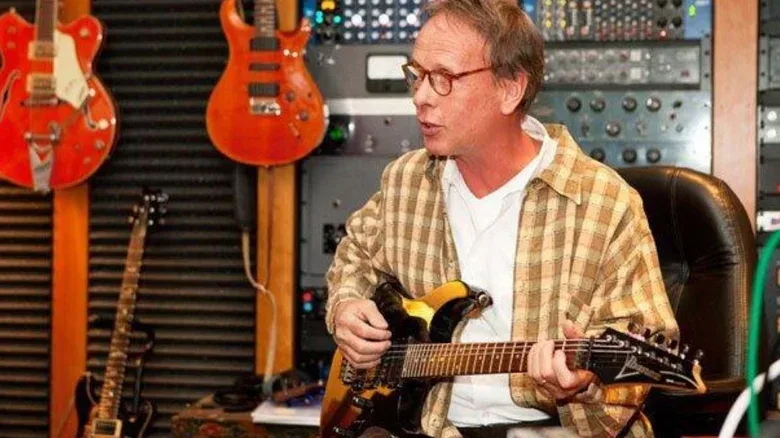
That legacy began with a request from an art director who needed help putting music to a video. From there, a composer took an early opportunity, impressed Vince McMahon, and became one of the defining musical voices in WWE history.
In pictures


Darryl Polo
Darryl Polo is a passionate wrestling fan covering WWE, AEW, TNA and beyond. He loves great rivalries, breakout stars and the moments that keep fans talking long after the bell. How we work.