
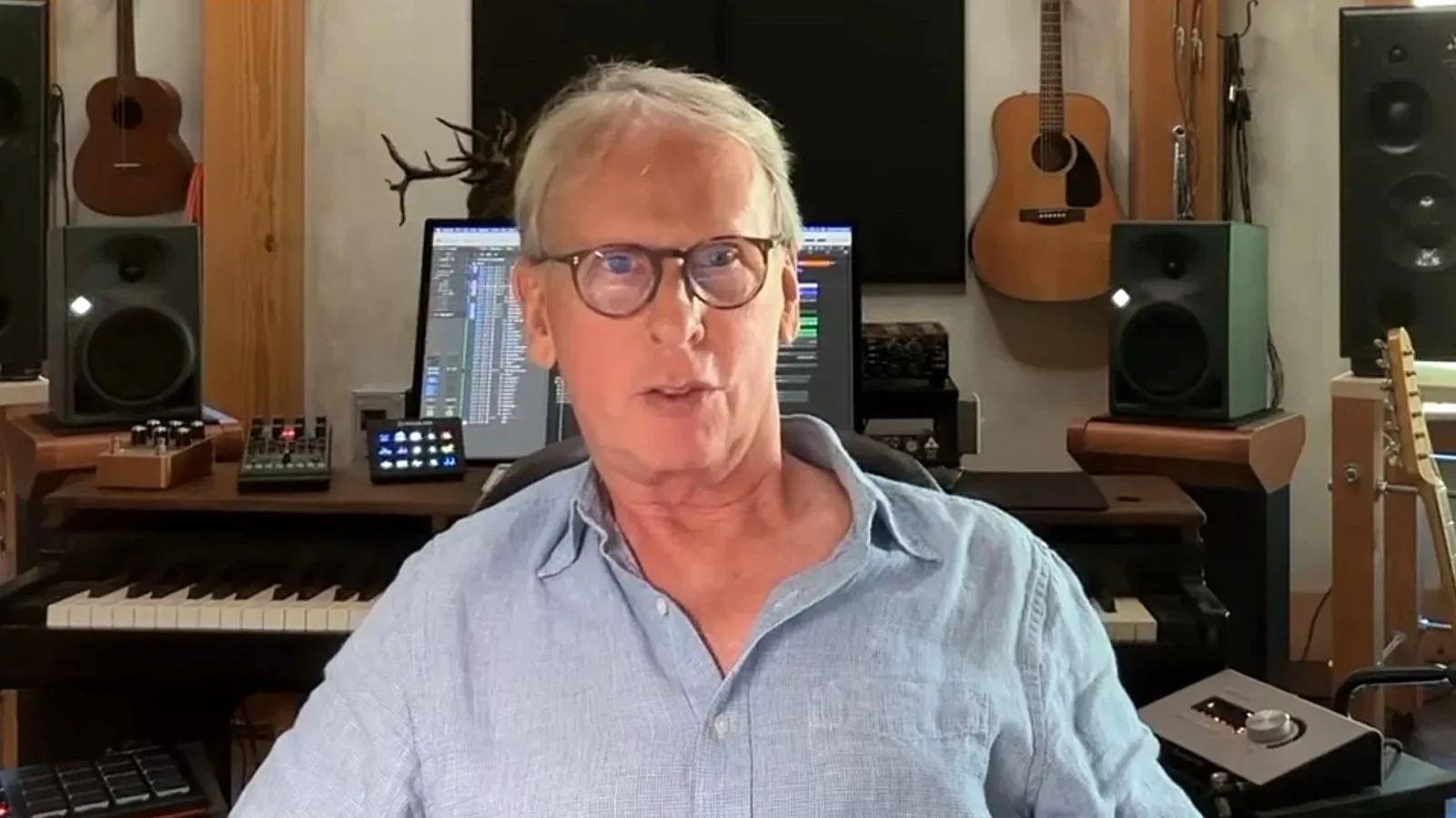
For more than three decades, Jim Johnston helped define the sound of WWE. His entrance themes did more than signal that a wrestler was walking through the curtain; they established mood, personality, danger, humor, status, and rivalries in a matter of seconds. From the opening notes alone, audiences often knew exactly who was coming and what kind of reaction the moment was meant to create.
That connection between music and character remains one of the major reasons Johnston’s body of work is so strongly remembered by wrestling fans. Yet the former WWE composer has also discussed creative frustrations from his time with the company, including requests that he felt reduced performers to broad assumptions about their ethnicity rather than presenting fuller, more distinctive characters.
Speaking with Ropes N Riffs, Johnston criticized the idea that a wrestler’s background should automatically dictate a narrow musical genre. He recalled the type of direction that could accompany the arrival of a Black performer, saying, “If a Black guy comes in, oh, it’s hip-hop. What a stupid thing! It’s like, why is it not ballet? What, Black people don’t like anything but hip-hop?”
Johnston’s point was not an objection to hip-hop itself, nor an argument that cultural influences should never be part of a theme. Instead, he objected to an approach that starts and ends with a simplified label. In his view, entrance music should first convey who the wrestler is within the world of WWE: their attitude, their physical style, their level of menace, their confidence, or the emotional response they are meant to inspire.
For more background on this topic, read Maven Recalls Randy Orton ‘Dropkick Match’ Experiment at WWE Live Event.
A character-first approach to WWE entrance music
Johnston’s WWE catalog became so closely tied to performers because many of his themes appeared built around a recognizable character hook. The ideal entrance song, in that model, is not merely background music. It is a concise piece of storytelling that tells viewers what they need to feel before the wrestler has even reached the ring.
That philosophy helps explain why Johnston sees stereotype-based instructions as creatively limiting. A performer can have a national, racial, or cultural identity that informs the presentation without making that identity the only trait audiences are asked to recognize. The difference is significant: one approach uses background as part of a larger character; the other treats background as the character itself.
Johnston also pointed to the way this could affect Japanese wrestlers. He said he would not necessarily object to a musical choice with a “Japanese vibe,” but argued that the concept became reductive when it always escalated into “a full-on koto ensemble.” He described the resulting message as one that tells the audience only that a wrestler is “the Japanese guy,” rather than emphasizing that he may be fierce, highly skilled, acrobatic, or dangerous.
“Now you’ve reduced his world to the audience as: he’s the Japanese guy. As opposed to: he’s a fierce guy, he’s an incredible wrestler, he’s incredibly acrobatic, he is really dangerous — oh, he’s also Japanese!” Johnston said on Ropes N Riffs.
The distinction Johnston draws is especially relevant in professional wrestling, where introductions and visual shorthand have historically carried enormous importance. A wrestler’s gear, entrance, nickname, music, mannerisms, and first moments on camera can all communicate an identity rapidly. Those tools can be effective when they add dimension, but they can also become restrictive when they turn a performer’s heritage into an all-encompassing gimmick.
Why the opening seconds matter
Entrance music has always served a practical purpose in WWE. It gives the live crowd a cue, allows television viewers to immediately identify who is arriving, and creates a rhythm for the transition from one segment to the next. But Johnston’s best-known work showed how much more a theme can accomplish when it is treated as part of the wrestler’s presentation rather than a generic genre assignment.
A memorable WWE theme is often built around an instant identifying element: a vocal phrase, a sound effect, a guitar figure, a dramatic orchestral flourish, or another musical signature that triggers recognition before a full melody even begins. That is why fans can become so attached to specific themes. The song is linked to victories, title reigns, rivalries, return moments, shocking betrayals, and the unique cadence of a wrestler’s career.
Johnston has previously spoken about composing music as another avenue for expressing a character’s story. His recent comments reinforce that perspective. If a wrestler is presented as ruthless, unpredictable, glamorous, intimidating, underdog-driven, or larger than life, the music should have the freedom to reflect those traits. A performer’s ethnicity can be present in that creative discussion, but Johnston believes it belongs much further down the list of priorities.
He suggested that ethnicity should be third or fourth in terms of importance to a character, perhaps even something fans largely take in without consciously focusing on it. That does not mean stripping away individuality or avoiding cultural specificity. It means refusing to let a single demographic marker override every other aspect of a wrestler’s persona.
The risk of reducing wrestlers to a single trait
Johnston’s criticism speaks to a broader challenge in wrestling presentation. Characters are designed to be understandable quickly, particularly in a format where performers may need to make an immediate impression on an audience that does not yet know them. The temptation to rely on the most obvious possible cue can be strong. However, obvious is not always the same as effective, and it is not always the same as respectful.
A theme based entirely on a presumed musical preference tells fans what to notice before the wrestler has had the opportunity to establish anything else. It can encourage a one-dimensional reading of the performer: not an elite athlete, villain, hero, strategist, brawler, or showman, but simply someone placed in a predefined category.
Johnston’s alternative is more demanding creatively. It requires WWE’s music and presentation teams to identify what makes a wrestler distinctive beyond their ethnicity or nationality. Is the performer’s style explosive? Are they elegant and calculating? Are they a dangerous powerhouse? Do they project swagger, vulnerability, discipline, chaos, or championship ambition? Those are the qualities that can shape a theme into something more lasting than a familiar genre shorthand.
The discussion also underlines why entrance themes matter so much to fans. When the music feels inseparable from a wrestler’s overall identity, it can elevate the act. When it feels like an external label imposed upon them, it can make the presentation feel smaller. Johnston’s comments are rooted in that fundamental difference.
Johnston sees little chance of a WWE return
Johnston’s legacy has led to continued calls from fans who would like to see him create music for WWE again. His 32-year run with the company produced a vast catalog that remains closely associated with generations of WWE programming, and his approach to character-driven composition continues to be a major point of comparison whenever fans discuss entrance music.
However, Johnston recently indicated that he believes the likelihood of returning to WWE is close to zero. He has said he would be happy to accept an opportunity if one were offered, but he pointed to Paul “Triple H” Levesque as a major reason he does not expect that call to come.
Whether or not Johnston ever works with WWE again, his comments offer a clear explanation of the principles behind the music that made his work resonate. For him, a wrestler’s theme should open the door to their world, not close it by reducing them to a stereotype. The strongest entrance songs make audiences feel they are meeting a complete character. Heritage may be part of that character, but Johnston’s argument is that it should never be allowed to become the entire story.
In pictures

Darryl Polo
Darryl Polo is a passionate wrestling fan covering WWE, AEW, TNA and beyond. He loves great rivalries, breakout stars and the moments that keep fans talking long after the bell. How we work.