
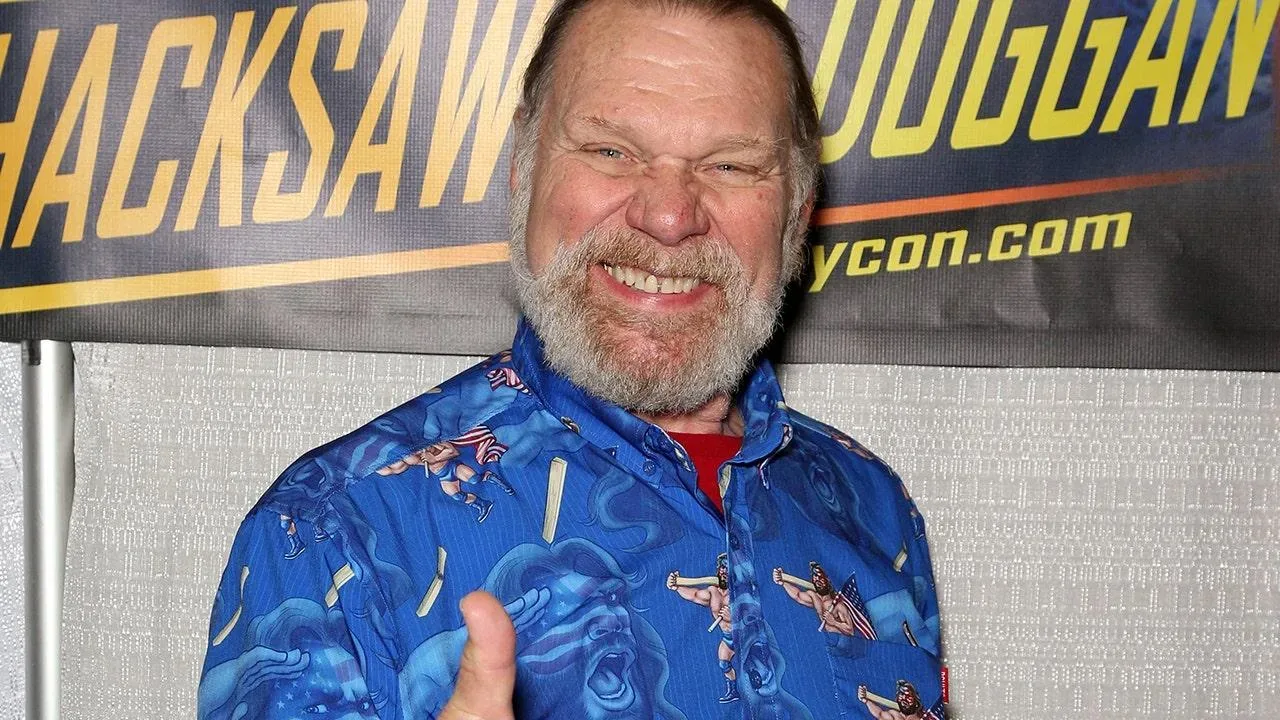
Jim Duggan has offered a sharply different perspective on professional wrestling’s past than the one frequently presented in discussions surrounding Dark Side of the Ring.
The longtime star, known around the world as “Hacksaw” Jim Duggan, said he has watched many wrestlers speak emotionally about the hardships they experienced in the industry and believes too much attention is placed on the negative outcomes. While he did not deny that difficult stories exist, Duggan stressed that wrestling gave him a life he considers overwhelmingly positive.
Vice’s Dark Side of the Ring has produced seven seasons focused on some of wrestling’s most painful, controversial and tragic chapters. The series has covered subjects involving personal loss, addiction, conflict, exploitation and the darker realities that accompanied various eras of the business. Duggan’s point is not that those stories should be erased, but that they should not become the only lens through which people view the profession and the people who worked in it.
In a recent interview, Duggan said he sees wrestlers “crying and whining” when discussing wrestling on the series, then contrasted those accounts with his own experience. “I had a fun time in the business,” he said.
For more background on this topic, read Jim Duggan Explains Why Vince McMahon Put an End to WWE Locker Room Card Games.
For Duggan, the clearest measure of his wrestling career is not simply the fame, the travel or the time spent performing in front of major crowds. It is the life he says he built away from the ring. He cited his 43-year marriage, said he never had to enter rehabilitation for alcohol or drug issues, and noted that he was able to put his two daughters through college.
At 73 years old, Duggan also remains active on the convention and autograph-signing circuit. He described continuing to travel internationally to meet fans, presenting that ongoing demand as another reminder of the opportunities that professional wrestling created for him.
“It’s been a great business for me,” Duggan said. “At 73 years old, I travel the world signing autographs. How can you gripe?”
Duggan’s View of Personal Responsibility
Duggan framed his remarks around personal choices as much as the wrestling industry itself. His argument was that the business can be difficult, but that wrestlers also retain responsibility for how they navigate its temptations and pressures.
He bluntly referenced drug use and failed marriages while making that case, saying that someone cannot reasonably condemn wrestling as entirely destructive while repeatedly making damaging decisions outside the ring. Duggan’s comments were deliberately unsparing, particularly toward performers who look back on their careers only through disappointment or resentment.
“It’s what you make of it,” Duggan said.
That statement reflects a worldview Duggan has expressed through his own example. His comments focused on stability: a long marriage, raising a family, helping his children receive an education, avoiding substance rehabilitation and remaining able to work with fans decades after becoming a nationally recognized wrestling personality.
It is also important to note the personal nature of Duggan’s position. He is speaking from his own life and career, not claiming that every wrestler shared the same circumstances or faced the same opportunities. The industry has long been home to vastly different experiences, depending on a performer’s era, schedule, health, finances, personal support system and the promotions for which they worked.
Still, Duggan believes there are more positive stories than fans may hear when wrestling history is primarily revisited through tragedy. He specifically named Tito Santana as an example of a wrestler he considers part of that broader group of success stories.
A Call to Remember the Positive Outcomes
Duggan’s reference to Santana was brief, but it underscored the main idea behind his comments: wrestling history contains performers who found long-term fulfillment and stability, even if their stories do not naturally fit the dramatic structure of a program centered on the industry’s darkest material.
There is an understandable reason that tragedies continue to draw attention. Wrestling’s most painful stories have had a lasting effect on fans, fellow wrestlers and families. They can also prompt important conversations about addiction, health, working conditions and the human costs of life on the road. Those subjects are not insignificant, and Duggan did not offer a detailed critique of any particular episode, wrestler or story featured on Dark Side of the Ring.
Instead, his frustration appears aimed at what he sees as an imbalance in the broader conversation. Duggan wants room for the veterans who look back at the business with gratitude rather than bitterness. In his view, a career in wrestling can be a route to professional satisfaction and personal achievement when someone avoids the destructive behavior that harmed many within the industry.
That is a perspective with particular weight coming from a wrestler who has remained publicly associated with the business for decades. Duggan’s identity as “Hacksaw” became one of the recognizable personas of his generation, and he has remained a familiar figure to audiences long after his full-time in-ring years. The autograph appearances he mentioned are evidence of the connection he continues to have with fans who remember his work.
For Duggan, that connection is not something to resent. It is part of why he rejects the idea that wrestling was inherently a bad business. His comments make clear that he sees the profession as having delivered more than it took from him.
Dark Side of the Ring’s Place in Wrestling Conversation
Dark Side of the Ring has become a major part of how modern wrestling fans revisit the past. Its seven seasons have brought renewed attention to events and personalities that many viewers either knew little about or had only encountered through rumors and fragmented recollections. The program’s emotional interviews have often placed former wrestlers, relatives and other people close to its subjects at the center of those stories.
Duggan’s response highlights a natural tension around that kind of retrospective storytelling. A series devoted to difficult subjects will, by design, feature accounts of pain and regret. It is not built to provide a complete statistical or emotional portrait of every wrestling career. Duggan’s message is that viewers should remember that limitation before treating the darker stories as the entire story of professional wrestling.
His remarks do not change the importance of examining the industry’s past problems. They do, however, add another voice to the discussion: that of a veteran who says he enjoyed his career, built a family life he values and continues to benefit from his relationship with wrestling audiences.
In that sense, Duggan is asking for a fuller picture. Wrestling can produce stories of hardship, grief and bad decisions, but it can also produce stories of longevity, family, financial support and lasting fan appreciation. He believes the latter group does not receive enough attention.
Duggan Also Recalls a WWE Backstage Rule
Elsewhere in the same interview, Duggan discussed a separate memory involving Vince McMahon and WWE backstage culture. Duggan recalled that McMahon once banned card games at WWE events.
The anecdote is distinct from his comments about Dark Side of the Ring, but it offers another example of Duggan reflecting on the environment surrounding wrestlers during his career. Backstage life has long been an area of fascination for wrestling fans, with stories ranging from travel routines and locker-room traditions to rules established by management. Duggan’s recollection adds his own account to that wider history.
His principal message, though, was clear: he does not view wrestling as a business that ruined his life. He sees it as a career that allowed him to support his family, remain connected to fans and look back on his time in the industry with appreciation.
“There are other success stories in wrestling,” Duggan said. His point is that those stories deserve to be heard alongside the more troubling ones.

Darryl Polo
Darryl Polo is a passionate wrestling fan covering WWE, AEW, TNA and beyond. He loves great rivalries, breakout stars and the moments that keep fans talking long after the bell. How we work.