
Long before phones, streaming services and modern gaming systems became familiar parts of a wrestling locker room, WWE performers found other ways to fill the substantial downtime that can come with a live event. For Jim Duggan, one of the memorable rituals from his years on the road involved card games, elaborate tournaments and a collection of wrestlers whose names ended up preserved on a particularly meaningful keepsake.
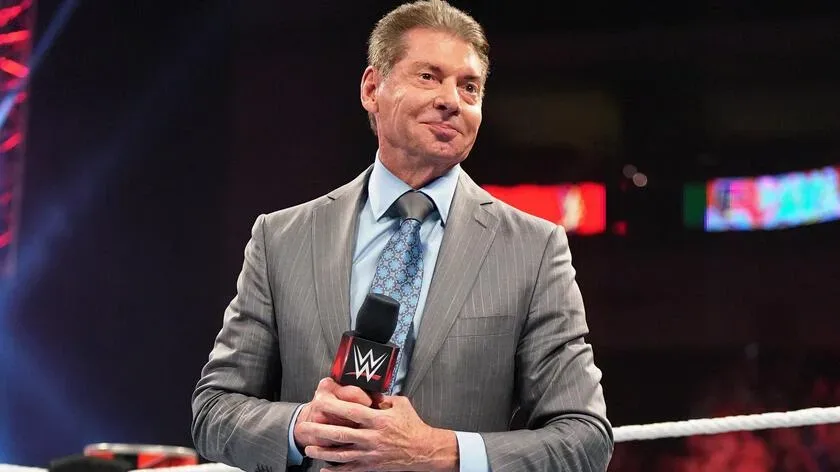
Those games eventually became enough of a concern that Vince McMahon banned card playing in the dressing room. Duggan recalled that the decision was not simply about stopping talent from having fun before going out in front of the crowd. In his view, McMahon had a practical reason: the games could absorb wrestlers' attention to the point where they were not ready when their entrance music began.
The story offers a humorous glimpse at the everyday realities behind WWE programming in the 1980s and 1990s. A performer could be sitting backstage, focused on a hand of cards, then suddenly have only seconds to grab the gear or props needed for a match and make it through the curtain. For a wrestler whose entrance depended on a signature item, that sort of distraction could become especially noticeable.
Sgt. Slaughter's Card Tournament Brackets
Duggan said Sgt. Slaughter was responsible for making especially detailed brackets for the card tournaments. The format was apparently taken seriously enough that Duggan still has one of the brackets, which he considers among his favorite mementos from that period.
For more background on this topic, read John Cena Calls WrestleMania 41 Title Match a Failure, Reflects on Rebounding With Cody Rhodes.
What makes the item particularly significant to Duggan is the list of participants it contains. He said names including Mr. Fuji, Arnold Skaaland, Andre the Giant and Bam Bam Bigelow appeared as part of the tournament. That lineup reflects the broad mix of personalities present in a WWE locker room at the time, from wrestlers to influential managers and longtime behind-the-scenes figures.
“Sgt. Slaughter would make these real elaborate card brackets. And I actually have one, too, so it’s one of my favorite keepsakes, ’cause you got, like, Mr. Fuji, Arnold Skaaland, Andre the Giant, Bam Bam Bigelow, is part of the tournament.”
The bracket is more than a record of a casual game. As Duggan described it, it captures a side of wrestling life that is rarely visible to fans. The public saw those names in dramatically different roles: Andre as one of the era's defining attractions, Fuji as an iconic managerial presence, Skaaland as a respected veteran figure and Bam Bam Bigelow as a distinctive powerhouse. Backstage, they could also be participants in a card tournament intended to make long stretches of waiting more entertaining.
That kind of environment also helps explain why the games took hold. A wrestling show does not unfold in the same way for every performer. Talent may have a match, an interview, a ringside appearance or another assignment, while others can spend long periods waiting for their cue. The card games provided a shared activity, but that shared activity created an obvious risk when it became too involving.
McMahon's No-Card Rule
Duggan recalled McMahon ultimately drawing a firm line. The directive was straightforward: no more card playing in the dressing room. Duggan said some people initially questioned the policy and wondered why it was necessary.
“Vince finally banned the tournament. He said, ‘No more, no more card playing. You can’t play cards anymore in the dressing room.’ And a lot of people were like, ‘Man, that’s pretty bad. I don’t understand why.’ But there’s actually a pretty good reason he did that.”
From Duggan's perspective, the reason became clear through the way the games could consume a wrestler's focus. He described the scenario of someone sitting at a card table, occupied with the action in front of them, before realizing their entrance music had already started. At that point, a performer could be rushing to locate the equipment necessary for the segment or match.
In a business built around timing, that is not a minor issue. An entrance is part of a wrestler's presentation, and the production of a live show depends on performers being prepared to hit their marks. Missing a cue or arriving without an essential item could disrupt the planned flow of the program. Duggan's recollection suggests McMahon viewed the card games as a potential obstacle to that readiness.
Duggan made the point in typically lighthearted fashion, imagining the panic of hearing one's music and immediately asking where a needed toolbox was. The reference is fitting for Duggan, whose well-known WWE presentation featured his 2x4 and an energetic charge to the ring. His own experience demonstrated exactly why trying to juggle cards and ring gear could lead to an embarrassing, if memorable, problem.
The Knee Pad Incident
The difficulty, Duggan explained, was finding a place to keep cards while already dressed in wrestling gear. He said he used his knee pads as storage. It was a convenient solution while he was backstage, but it came with a flaw: he could forget the cards were there when it was time to wrestle.
That is precisely what happened on one occasion. Duggan recalled heading out after his music hit and beginning his match without remembering the deck tucked into his knee pad. During the action, he hit a big knee, and the cards flew out into the ring.
“I throw the guy in. I pick him up. I drop the big knee. Cards go flying everywhere. Magic trick.”
The visual of cards suddenly scattering during a match is the sort of unscripted mishap that can stand out immediately, especially in an era when a wrestler's gear was expected to be streamlined for the ring. Duggan said Arnold Skaaland asked him where the cards had come from. Duggan's answer was to blame an audience member, telling Skaaland that a fan must have thrown them into the ring.
The incident was funny in retrospect, but it reinforced the larger issue McMahon had identified. The cards were not merely a backstage diversion that might delay someone by a moment. They could follow a performer through the curtain and directly into the match itself. Duggan's story gives the ban a concrete explanation rather than presenting it as an arbitrary restriction.
A Snapshot of a Different WWE Backstage Era
Duggan's recollection is also a reminder of how much the ways wrestlers pass time have changed across generations. He contrasted the earlier locker-room environment with the modern popularity of video games as a way for performers to occupy themselves before matches and segments. In the 1980s and 1990s, that was not the same readily available option, leaving talent to create their own routines during downtime.
Card games clearly filled that role for at least a portion of the WWE locker room. The tournament brackets made by Sgt. Slaughter indicate the games had enough continuity and organization to become a regular feature. Yet the same structure that made them enjoyable also could make them engrossing. When competitors were tracking brackets, holding cards and waiting for the next hand, it was easy to see how attention could shift away from the live show happening nearby.
McMahon's decision, as Duggan now frames it, was therefore rooted in maintaining discipline and preventing avoidable mistakes. The card games may have been a source of camaraderie, but live television and live event production require performers to remain aware of their assignments at all times. Duggan's flying deck of cards was a memorable example of what could happen otherwise.
For Duggan, the ban did not erase the value of the memories. He still has the card bracket featuring names from a notable WWE generation, and he speaks of it as a prized keepsake. It represents both the camaraderie of the locker room and the unusual circumstances of an era when a wrestler might go from a card table to a match in an instant.
The story ultimately lands as a small but revealing piece of WWE history: a backstage tournament involving major wrestling names, a company leader concerned about focus, and a wrestler discovering in the middle of a match that his knee pad had turned into an accidental card dealer. McMahon's no-card policy may have frustrated some talent at the time, but Duggan's account makes the logic behind it difficult to dispute.

Darryl Polo
Darryl Polo is a passionate wrestling fan covering WWE, AEW, TNA and beyond. He loves great rivalries, breakout stars and the moments that keep fans talking long after the bell. How we work.