
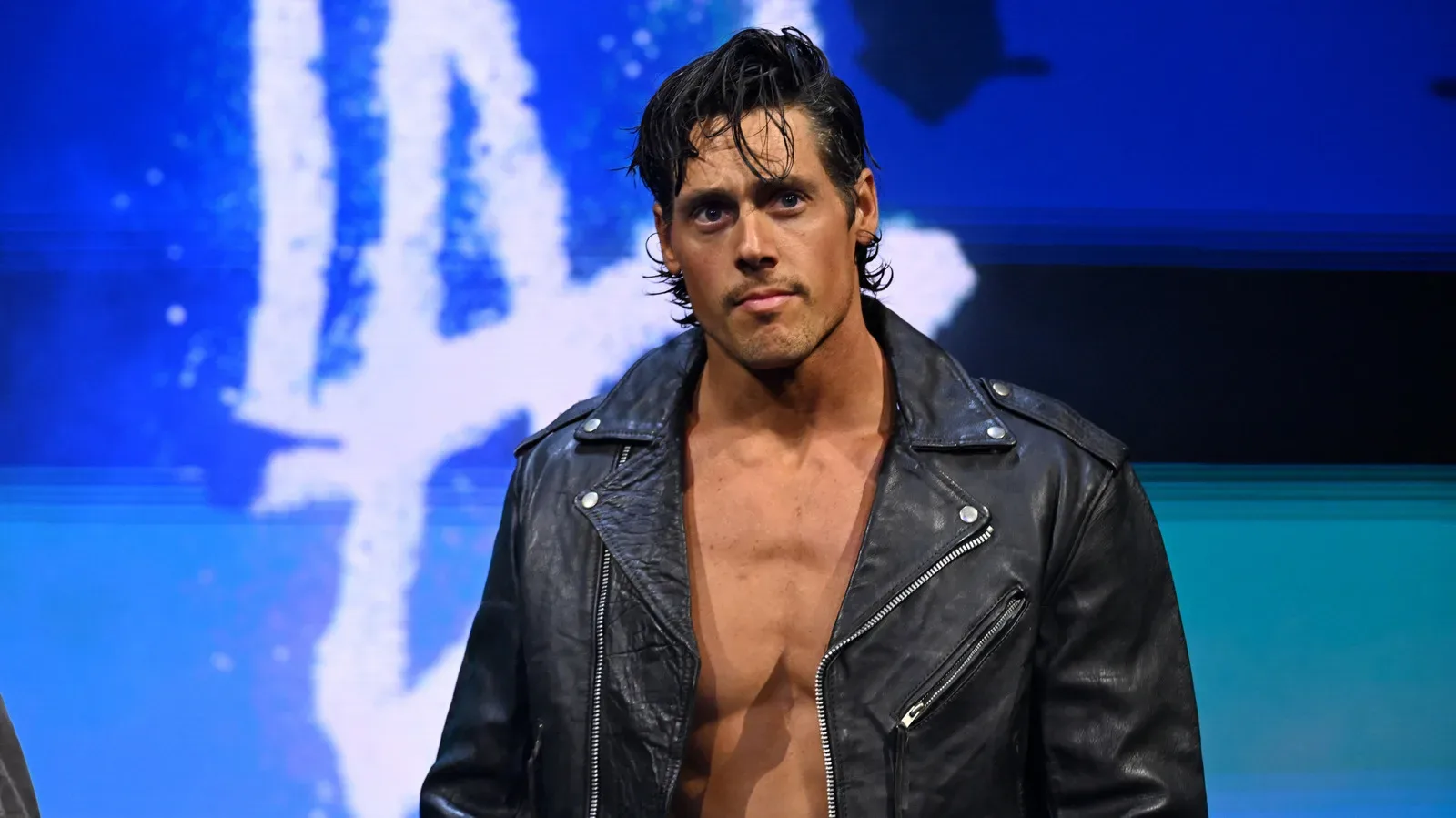
Jeff Jarrett has addressed the frightening injury scene involving Steven Borden at AEW All Out 2026, describing the unsettling atmosphere that follows a serious incident in the ring and praising the response from those working behind the scenes.
Borden was injured during the tag team match that saw him team with Darby Allin against Kevin Knight and Kyle Fletcher. The incident occurred when Borden and Knight climbed opposing turnbuckles for a high-risk sequence that appeared designed to bring both wrestlers together in midair. Instead, Borden came down hard on the mat.
The match was halted by the seriousness of the moment, and Borden was removed from the ring on a stretcher. AEW’s presentation shifted quickly from the planned action to the medical situation, with the focus understandably placed on Borden’s condition and his safe removal from the arena.
Speaking on My World w/ Jeff Jarrett, Jarrett reflected on both the emotional impact of seeing Borden injured and the professional systems now in place when an unexpected situation unfolds during a match. Jarrett has a relationship with the Borden family that goes back decades through Steven’s father, Sting.
For more background on this topic, read Will Ospreay Eyes Sports-Driven AEW World Title Reign Ahead Of Major Tests.
Jarrett said he has known Steven Borden throughout his life, including during the period when Jarrett and Sting were connected through TNA storylines while Borden was still involved in high school football. That personal history made the All Out situation particularly difficult for Jarrett to witness.
A frightening moment at All Out
The spot involving Borden and Knight was the kind of ambitious aerial sequence that can create a major highlight when everything lands as intended. At the same time, it served as a sobering reminder that even the most carefully prepared move can change in an instant.
Professional wrestling requires timing, positioning, balance and trust between everyone involved. That is especially true when performers are working from the ropes or turnbuckles, where a small adjustment in momentum can greatly alter a landing. The Borden-Knight exchange carried obvious risk before either wrestler left the turnbuckle, and the outcome immediately made clear that something had gone wrong.
Jarrett did not present the incident as a matter of Borden lacking athletic ability or familiarity with wrestling. Rather, he emphasized that unpredictable injuries remain an unavoidable part of a physical profession, even for an athlete with Borden’s background and upbringing around the industry.
Steven Borden’s path to the ring has naturally attracted attention because of his family name. As Sting’s son, he entered AEW with a built-in connection to one of wrestling’s most recognizable figures. Jarrett characterized that position as comparable to being the child of Elvis Presley: a young performer carrying an enormous legacy before having the opportunity to establish a legacy of his own.
That reality creates a unique level of scrutiny. Fans recognize the name, remember Sting’s career and may immediately measure Borden against a standard accumulated over generations. But Jarrett’s comments pointed to the need for patience as Borden develops in his own time.
Jarrett stresses Borden’s athletic background
Jarrett described Borden as a strong athlete who has spent his entire life around the wrestling business. He also noted that Borden had not always been expected to pursue wrestling as a career, despite growing up with a front-row view of what Sting’s work demanded.
Being around the industry does not remove the learning curve of becoming an in-ring performer. It can provide valuable awareness of wrestling’s rhythms, travel demands, physical cost and emotional stakes, but matches still require experience that can only be accumulated over time. Jarrett’s central point was that Borden needs continued repetitions as he progresses through the early stage of his career.
The timing of the injury underlines that point. Borden’s AEW Dynamite debut had taken place only 17 days before All Out. His pay-per-view appearance represented a rapid move onto a major stage, in a match involving established names and a particularly dangerous high-flying sequence.
There is no suggestion that Borden’s quick arrival on pay-per-view caused the injury. Wrestling injuries can occur at any level of experience and in any setting. Still, the short window between his Dynamite debut and the All Out match illustrates how early Borden is in the process of building the ring time that Jarrett believes will be essential to his future.
For a second-generation wrestler, each appearance can carry added pressure to prove that the opportunity is deserved. Jarrett’s remarks offered a different perspective: Borden’s development should be measured by the work he puts in over time, not only by the expectations attached to his surname or by one unfortunate moment at a major event.
The importance of AEW’s medical response
Jarrett also focused on the response after Borden went down. He cited referee Bryce Howard, AEW physician Doc Sampson, the wider backstage group and the production truck while discussing the way the company handled the incident.
In an injury situation, there are several responsibilities unfolding at once. Medical personnel must assess the wrestler and determine the safest way to proceed. Officials in the ring need to protect the injured performer and maintain control of the environment. Production personnel must make rapid decisions about the live presentation, while those backstage coordinate the next steps.
Jarrett praised the broader wrestling industry’s progress in dealing with sudden in-ring medical situations. His comments did not minimize the fear of seeing someone immobilized and placed on a stretcher. Instead, they recognized that preparation, communication and trained personnel matter greatly when the planned match must give way to an emergency response.
The veteran said he was backstage when Borden was wheeled past on the stretcher. For someone with Jarrett’s experience in wrestling, the sight still carried a heavy emotional effect. He described the eerie feeling that comes when a wrestler is strapped onto a gurney, adding that no one in the business can be completely prepared for such a moment.
That is a reality shared by wrestlers, referees, medical personnel, production workers and fans. Wrestling is built around controlled physical performance, but control can disappear quickly. When it does, the priority must become the welfare of the person who has been hurt.
What comes next for Steven Borden
No further details regarding Borden’s condition were included in Jarrett’s comments. As a result, the immediate concern remains his health, rather than any discussion of when he could return to AEW competition.
The All Out incident interrupted an important early chapter for Borden. Pairing with Darby Allin in a pay-per-view environment provided a prominent platform shortly after his Dynamite introduction. Facing Kevin Knight and Kyle Fletcher also placed him opposite wrestlers known for speed, athleticism and a fast-paced style.
Once Borden is able to resume his career, the long-term objective will likely remain the same one Jarrett highlighted: gaining experience. Every wrestler develops differently, and the value of steady, safe progression is particularly clear following an injury scare so early in a performer’s time on national television.
Jarrett’s perspective carried weight because it came from someone who knows the family personally, understands the demands of elite-level wrestling and has spent decades watching the industry evolve. His message was not about forcing a comparison between Steven Borden and Sting. It was about recognizing Borden as a young athlete at the beginning of his own journey, one who has already encountered the harsh and unpredictable side of the profession.
AEW All Out was supposed to be another opportunity for Borden to show what he could do. Instead, the match became a distressing reminder of the risks inherent in the ring. The hope now is that Borden receives the care and time required after the injury, and that his eventual return can allow him to continue building his career on his own terms.
In pictures

Darryl Polo
Darryl Polo is a passionate wrestling fan covering WWE, AEW, TNA and beyond. He loves great rivalries, breakout stars and the moments that keep fans talking long after the bell. How we work.