
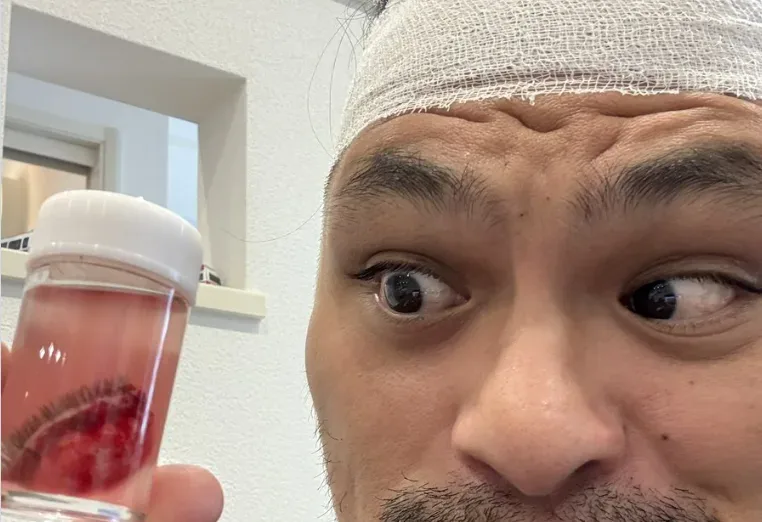
Jeff Cobb has provided a fuller account of the scalp growth removal that concerned fans when he first revealed the procedure in August 2026.
The wrestler had previously shown the aftermath of having a visibly large growth removed from the back of his head, though he did not initially go into detail about the diagnosis or the circumstances surrounding the surgery. Cobb continued wrestling after the procedure and appeared to be unaffected in the ring, but his new comments offer clarity on what had happened and why he finally chose to have it addressed.
Speaking on Insight with Chris Van Vliet, Cobb said he first became aware of a lump on the back of his head shortly before the COVID-19 pandemic. Because the growth was located where he could not easily see it, and because his hair would grow over the area, it gradually became something he did not regularly think about.
View the referenced post on X
“Yeah. So I noticed I had this lump on the back of my head. I would say right before the pandemic, but it’s in the back of my head, so I don’t see it. Then your hair grows back, you don’t even think about it.”
For more background on this topic, read JC Mateo Says Fans Speculated About a Bronson Reed Pairing Before WWE MFTs Role.
That meant the issue remained unaddressed for years. Cobb estimated that roughly six years passed between first noticing the lump and ultimately having it removed. He explained that a return trip to Japan gave him a practical opportunity to pursue treatment, in part because he still had Japanese insurance coverage that remained active for the year.
Cobb said he was visiting friends in Japan when he began considering whether it would make more sense to undergo the procedure there instead of waiting to have it done in the United States. He expected it could be less expensive, and he said the removal ultimately cost about $100 and took approximately 15 minutes.
A Long-Standing Growth Finally Gets Removed
Cobb placed the surgery around June 2026. While the procedure itself was quick, he said the moment the growth was removed was startling. The wrestler asked if he could photograph it because of how severe it looked to him.
“Then I remember going through that and they pulled it out. I was like, holy crap! Can I take a picture of this? I took a picture of it because it looked pretty gnarly.”
The immediate visual of the removed growth was not the only moment that left Cobb unsettled. As he lay on the operating table, he began wondering about the nature of what had been removed. He acknowledged that he was not a doctor and did not want to search online for answers, joking about the tendency for online medical searches to point toward worst-case outcomes.
Still, the doctor’s initial comments created an understandably anxious situation. Cobb said the physician spoke some English and told him the removed material would be sent for testing. Cobb believed that, given how long the lump had been there, he likely would have felt noticeably unwell if it had been something more serious. The doctor, however, raised the possibility of cancer before a final result was available.
“I don’t think cancer because six years I would have felt something wrong? But he looked at me. He goes, ‘I send for a test.’ I was like, all right, cool. Then he just goes, ‘Maybe cancer.’ I say, wait, what? You can’t start with that.”
Cobb framed the exchange as a combination of the doctor’s direct manner and a possible language barrier. He said the blunt wording was familiar to him from interactions with doctors in Japan, but that did not make the uncertainty any easier to hear in the moment. He recalled being told to return in about a week after the testing was completed.
Thankfully, the eventual result brought good news. Cobb said the growth was benign and described it as a cyst, although he was careful not to overstate the exact medical terminology because he could not fully remember the diagnosis.
“Oh, it was like a benign thing. Okay, it was like a cyst that went benign or something like that. I can’t really remember the full of it.”
Cobb’s Message: Pay Attention to Your Body
There was no indication in Cobb’s account that the condition affected his ability to compete, and his continued wrestling activity after the removal supported that. The more meaningful takeaway for him was the length of time he had allowed to pass before getting a persistent physical change checked by a professional.
Cobb was candid in criticizing his own decision to wait. He said that people know their own bodies better than anyone else and should not ignore something that feels unusual simply because it is not currently causing major pain or disruption. While his case had a benign outcome, the wrestler emphasized that he should have sought an examination much earlier.
“Since then, I’m like, okay, you know your body more than anybody else. If something’s off or something feels weird, should definitely get it checked. Don’t wait a couple years like me, like an idiot.”
It is a straightforward message, but one that carries additional weight given the uncertainty Cobb experienced between the surgery and the test result. The procedure itself may have been brief, but the mention of a possible serious diagnosis ensured that the wait for confirmation was difficult. Cobb’s recollection also illustrates why a vague or long-standing health concern can be easy to put aside, particularly when it is in a spot a person does not routinely see.
Professional wrestlers work through a physically demanding schedule and regularly deal with bumps, bruises, strains, and visible signs of the job. That environment can make it tempting to treat any bodily issue as another inconvenience to endure. Cobb’s comments did not present his situation as a wrestling injury, and he did not connect the cyst to any in-ring incident. Instead, he described a personal health issue that predated the pandemic and simply remained in the background until he made a decision to act.
His story also underlines the distinction between initial concern and a confirmed diagnosis. The doctor’s use of the word “maybe” was tied to the need for testing, not a declaration that the growth was cancerous. The final result, as Cobb explained it, was benign. He has not suggested that he required further treatment beyond having the growth removed.
More Context From Cobb’s Recent Interview
The discussion of the cyst came during a broader interview in which Cobb also addressed wrestling-related subjects, including possible WWE ring names that were considered before JC Mateo became the name associated with him. That portion of the conversation has drawn attention for its look at the branding process surrounding a wrestler’s presentation.
But the medical story stands apart because it answers the question created by Cobb’s August 2026 reveal. Fans saw that he had undergone a procedure and that the removed growth looked concerning, yet the initial post did not provide a diagnosis or explain how long it had been there. His new remarks fill in that timeline: the lump was first noticed before the pandemic, remained largely out of sight for years, and was removed during a June 2026 visit to Japan.
The encouraging conclusion is that testing found the growth to be benign. Cobb was able to continue his career, and he used the experience to encourage a more proactive approach to health concerns. For someone whose work depends on physical durability, his advice was not about panic or self-diagnosis. It was about not allowing uncertainty to linger when a medical professional can provide an answer.
For Cobb, what began as an easy-to-ignore lump at the back of his head ended with a short procedure, an unnerving wait for test results, and a positive outcome. His experience serves as a reminder that even when something proves harmless, getting it examined can replace years of unanswered questions with needed peace of mind.

Darryl Polo
Darryl Polo is a passionate wrestling fan covering WWE, AEW, TNA and beyond. He loves great rivalries, breakout stars and the moments that keep fans talking long after the bell. How we work.