
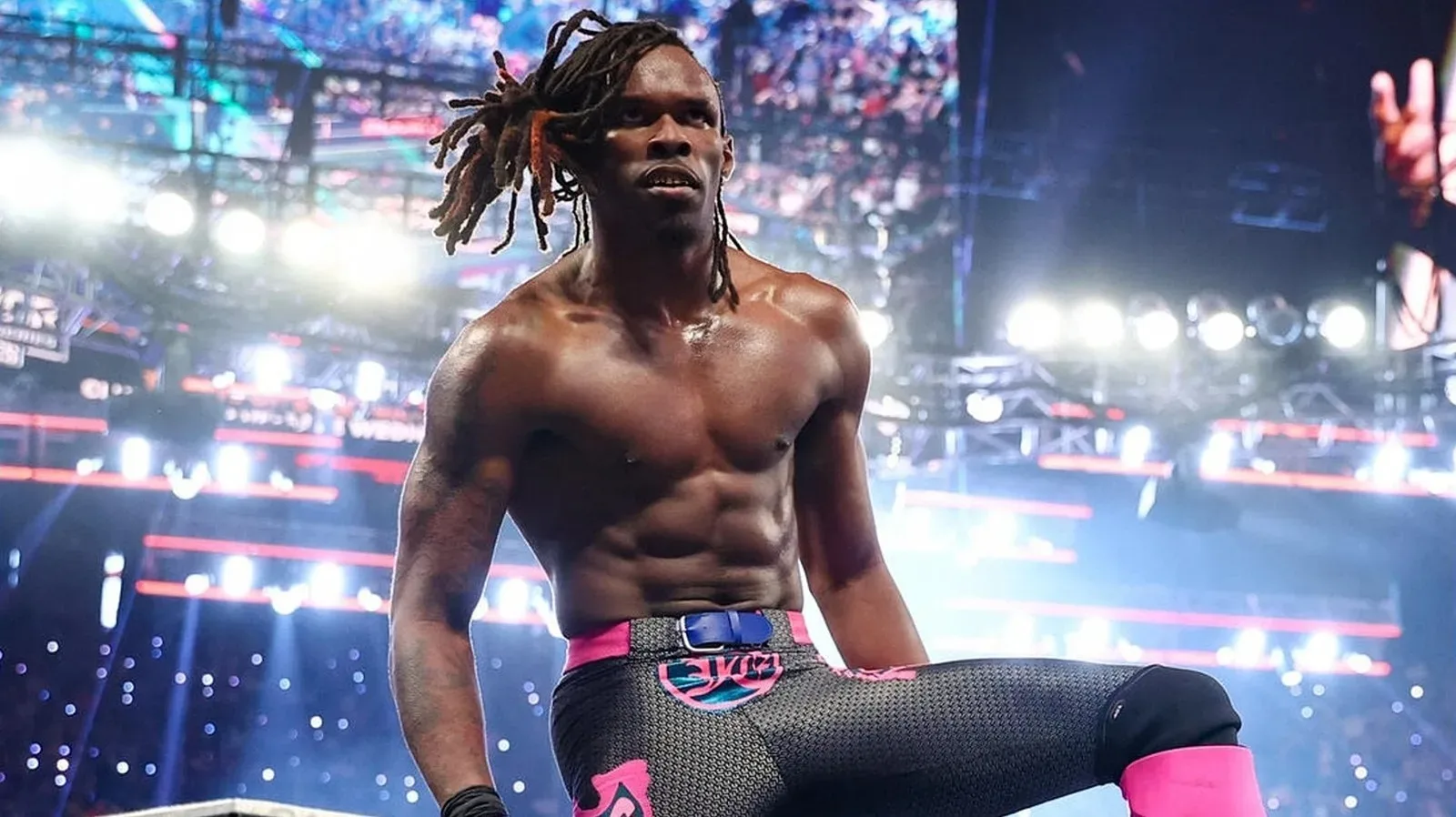
Je'Von Evans has offered a revealing look at the wrestling fan behind the WWE performer, recalling how strongly he reacted to The Authority during one of the defining storylines of the modern era.
Speaking on What's Your Story with Steph McMahon, Evans told Stephanie McMahon that the villainous WWE power structure succeeded completely in making him despise them as a viewer. His reaction was especially tied to the shocking breakup of The Shield, when Seth Rollins turned on Roman Reigns and Dean Ambrose and aligned himself with The Authority.
“I just want to say — The Authority. Hey. I hated y'all,” Evans said on What's Your Story with Steph McMahon. “Bro, when Seth turned... Oh, my God.”
For Evans, the emotion was not merely about seeing a popular group split apart. It was the effectiveness of the broader presentation: a group of authority figures positioned as antagonists, an elite trio whose internal tensions were gradually becoming visible, and a betrayal that transformed Rollins into a major singles villain under The Authority banner.
For more background on this topic, read Joe Hendry Names The Rock’s Hollywood Theme as His All-Time Favorite WWE Entrance.
That response speaks to the lasting place The Shield's dissolution has in WWE history. Rollins, Reigns, and Ambrose had been presented as a united force, making the eventual collapse of that unity feel particularly personal to fans who had followed their rise. By putting Rollins alongside The Authority, WWE added another layer to the story. He had not simply decided to leave his partners; he had joined the same force many viewers had spent months rooting against.
Evans Saw The Warning Signs, But Did Not Expect The Betrayal
Evans explained that, in hindsight, there were signs that The Shield was no longer entirely on the same page. He noticed the arguing and the tension in the weeks and months before the pivotal episode of WWE Raw. Still, he interpreted those issues through the lens of their brotherhood rather than as a signal that one of the members was about to attack the others.
“I feel like this is what people didn't realize, because if you go back, weeks and months prior, you'll see everybody in The Shield arguing,” Evans said. “I caught on to that, but I was like, ‘I mean, bro, brothers argue.’”
That is a key part of why the angle resonated. Wrestling betrayals often rely on a careful balance: audiences need enough clues that the story feels coherent when revisited, but not so many that the eventual turn becomes inevitable. In Evans' recollection, the disputes within The Shield registered as believable conflict among close allies rather than a guaranteed end to the group.
The moment Rollins chose The Authority changed that reading immediately. What had appeared to be ordinary friction became part of the path toward a full-scale rupture. Reigns and Ambrose were left to deal with the consequences, while Rollins gained the backing of WWE's most prominent on-screen power players.
Evans' comments also underline the difference between appreciating an angle and enjoying what happens to one's favorite characters. He hated what Rollins did and hated The Authority for benefiting from it. At the same time, he could recognize that the story was compelling enough to produce that reaction. For a young fan, being upset by a development is often evidence that the creative stakes are working exactly as intended.
Stephanie McMahon Explains The Story Logic Behind Rollins' Alignment
McMahon reflected positively on her time as part of The Authority, a group that also featured her husband, Triple H. Kane and Batista were among the wrestlers associated with the faction at different points as well. The stable was built around control, influence, and the notion that its leaders could determine which talents received opportunities and which ones faced obstacles.
In discussing Rollins' decision to join them, McMahon framed the move as an understandable one within the story. The Authority saw greater potential in investing in Rollins as an individual than in continuing to deal with him as one part of a three-man unit.
“We could do more for Seth as an individual than we could when he was in a group... And if he's on our side, then we want to invest, right? I mean, it's all psychology, right?” McMahon said on What's Your Story with Steph McMahon.
The explanation captures why the alliance worked from a character standpoint. The Authority was not simply recruiting Rollins for the sake of adding another name to the group. In the storyline, they were identifying someone they believed could be elevated and shaped into a centerpiece player. Rollins, meanwhile, had a clear incentive to accept the support and resources that came with standing beside WWE's on-screen leadership.
That motivation gave the betrayal an additional edge. Rollins was not portrayed as a wrestler making a random decision in the heat of the moment. The move suggested ambition, calculation, and a willingness to sacrifice his closest allies for a path that he believed would lead to more individual success.
A Fan's Perspective On WWE's Power Structure
Evans said that despite hating the betrayal at the time, he loved watching the story unfold. One reason was the unusual scale of the conflict. To him, it marked a memorable instance of seeing the actual bosses of WWE effectively “take over” within the fictional world of the program.
Authority-based stories are a familiar part of wrestling, but they can be especially effective when the personalities involved are already recognizable as major figures behind the scenes. The Authority brought that concept to the forefront, with McMahon and Triple H functioning as the central figures in a group that could influence the direction of the show and the fortunes of its wrestlers.
For Evans as a fan, that presentation made the conflict feel bigger than an ordinary rivalry. The Shield was not just dealing with another set of opponents. Their problems became intertwined with a powerful group that appeared capable of changing the rules and creating advantages for its chosen representatives.
The distinction matters because it helps explain why Rollins' turn stood out so sharply. Leaving Reigns and Ambrose was one thing. Choosing to stand beside the people presented as the most powerful antagonists in WWE made the decision feel like a total rejection of the identity The Shield had established together.
Why The Moment Continues To Connect
Evans' recollection is also a reminder that some wrestling moments endure because audiences experience them at a particular stage of their lives. For viewers who were invested in The Shield as a group, the breakup was not merely a plot point to be analyzed later. It was a moment that demanded an immediate emotional response.
Years later, Evans is now a WWE star himself, but his memories remain rooted in the perspective of the fan who watched The Authority frustrate him and watched Rollins make a choice he did not want to see. That combination of anger, surprise, and admiration is often what the most memorable wrestling storytelling produces.
The conversation with McMahon showed both sides of that reaction. Evans remembered the betrayal as a fan who felt the sting of it, while McMahon described the internal story logic that made Rollins an ideal investment for The Authority. Together, those perspectives illustrate why the angle remains such a prominent chapter in WWE's modern history.
For Evans, The Authority did not fail because he hated them. They succeeded because he did. Their role was to create a force fans wanted to see challenged, and Rollins' decision to join that force gave the story one of its most unforgettable turns. Even now, the WWE star's response makes clear that the moment landed exactly as intended.
In pictures

Darryl Polo
Darryl Polo is a passionate wrestling fan covering WWE, AEW, TNA and beyond. He loves great rivalries, breakout stars and the moments that keep fans talking long after the bell. How we work.