
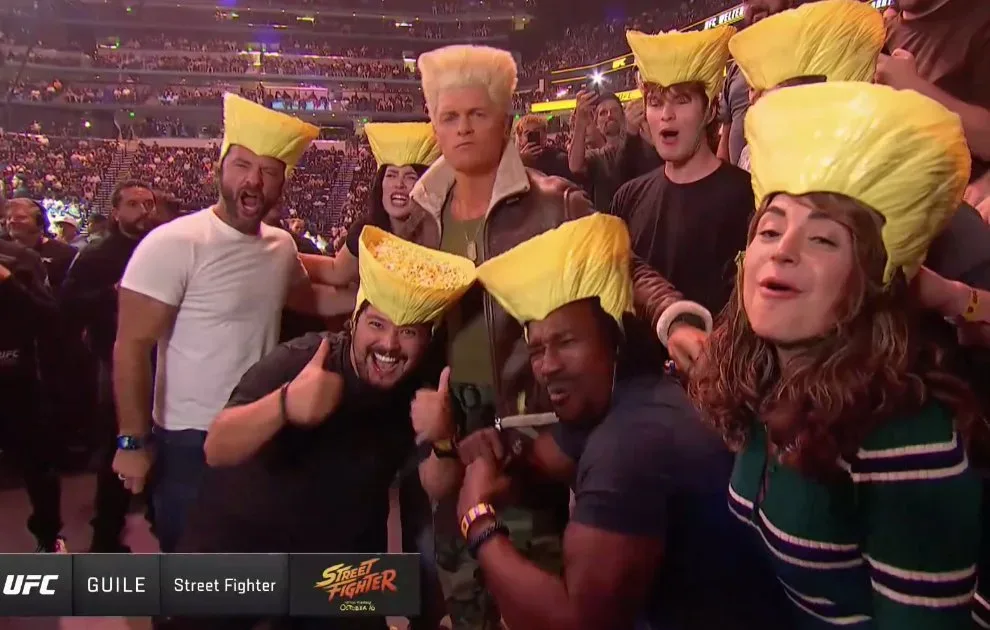
Cody Rhodes believes the release of Street Fighter represents more than an individual career milestone. The new adaptation of the landmark video game franchise has arrived around the world with Rhodes among several professional wrestlers in its cast. Roman Reigns and Hirooki Goto are also part of the film, giving the project representation from major corners of the wrestling landscape.
For Rhodes, that combination is what makes the moment significant. He described the film’s release as something the entire wrestling industry can celebrate, rather than viewing it only through the lens of the individual performers involved. The WWE star stressed that having three wrestlers in a major film, each bringing a different presence and background, is a reason for optimism about what can follow.
“I really think it’s a moment for all of wrestling to be proud and, you know, it’s kind of our moment, right?” Rhodes said while speaking with Denise Salcedo. “I’m so lucky that I got offered this role and you work your whole life and you want these things.”
Rhodes has long spoken about the importance of ambition and upward movement, both inside professional wrestling and outside it. In this case, he framed Street Fighter as an example of wrestlers gaining opportunities in a mainstream entertainment property without the moment belonging to just one company, one roster, or one style of performer.
For more background on this topic, read Bayley Returns to Big Time Wrestling for 30th Anniversary Celebration.
The cast presence of Rhodes, Reigns and Goto makes that point especially clear. Rhodes and Reigns are among WWE’s most recognizable names of their era, while Goto has built an acclaimed career in New Japan Pro-Wrestling. Their involvement places performers with notably different identities and experiences in the same major release.
Three Different Wrestlers, One Major Release
Rhodes emphasized that the trio’s differences are part of the appeal. He is not presenting Street Fighter as a movie where several wrestlers are simply interchangeable additions to the cast. Instead, he sees value in the public encountering multiple types of wrestlers through the same project.
“I’m excited for all of wrestling at three wrestlers in a movie,” Rhodes said. “So the fact that you have Roman, you have Goto and me all in this, and everyone’s vastly different, I’m excited for wrestling.”
That distinction matters because professional wrestling is often discussed in broad terms by audiences outside the industry. To longtime viewers, however, Rhodes, Reigns and Goto represent distinct approaches to the craft. Their careers were shaped by different promotions, different audiences, and different expectations. Having all three attached to Street Fighter gives the film a wider wrestling footprint than a project centered on one personality alone.
Rhodes’ comments also reflect an increasingly familiar conversation around wrestlers crossing into film and television. These opportunities naturally carry individual stakes. They can expand a performer’s profile, create a new professional avenue, and introduce them to viewers who may not regularly watch wrestling. But Rhodes’ perspective is that a strong showing can have a wider effect. When one wrestler succeeds in a prominent role, it can help build confidence that other wrestlers can do the same.
In that sense, Street Fighter’s arrival is a showcase for the versatility that performers develop over years in wrestling. The industry requires athletes to work in front of large live crowds, deliver characters with clarity, react in the moment, communicate physical storytelling, and sustain audience investment. Those skills do not make every wrestling performer an automatic fit for every acting role, but they create a foundation that can translate effectively when the right opportunity arrives.
Rhodes Points to Batista’s Breakthrough
While discussing why Street Fighter feels meaningful, Rhodes looked back to Dave Bautista’s emergence as Drax in Guardians of the Galaxy. Bautista’s work in that film became an important reference point for wrestlers seeking recognition beyond the ring, particularly because the performance connected with broad audiences rather than being received merely as a novelty appearance by a famous wrestler.
“I remember going to see Guardians of the Galaxy and people being curious how Dave Bautista would be,” Rhodes said. “And then the first big laugh was a Drax moment, was a Batista moment. I felt like, ‘Yeah, that’s the wrestler, that’s the guy.’”
The memory illustrates the larger point Rhodes is making. A successful crossover is not simply about a wrestler appearing on screen. It is about audiences responding to the performance and seeing the person as a meaningful part of the film. Bautista’s success provided a clear example that a wrestler could earn major opportunities in Hollywood and thrive in them through the work itself.
Rhodes did not suggest that every crossover follows the same path or that Street Fighter must be judged against any previous wrestling-to-film success story. Rather, he used Bautista’s moment to describe the satisfaction of seeing a wrestler win over viewers in an environment where wrestling credentials alone are not enough. That is why he views the presence of himself, Reigns and Goto in Street Fighter as a broader point of pride.
There is also a natural connection between the franchise and wrestling audiences. Street Fighter is one of gaming’s most recognizable fighting properties, built around distinctive combatants, rivalries, visual identities and larger-than-life presentation. Those elements have always had an obvious overlap with professional wrestling’s character-driven world, even as the two forms of entertainment remain very different. Bringing wrestlers into a new adaptation creates an intriguing meeting point between two fan communities that both value memorable personas and physical spectacle.
A Moment Beyond WWE Alone
Rhodes’ framing is notable because he did not limit the significance of the release to WWE. He specifically included Goto in his excitement, making the point that the film can be a positive reflection on wrestling as a whole. That is a broader view than the usual promotion-versus-promotion framing that often surrounds major names from different companies.
Reigns and Rhodes bring immediate name recognition as two of WWE’s defining modern stars. Goto’s inclusion adds a different dimension, representing a performer whose reputation was developed through a long career in Japan. The performers may come from distinct professional environments, but their shared appearance in a globally released film gives fans a rare common point of reference.
For Rhodes, that unity is central to the occasion. Wrestlers can be fierce competitors within their own industry, and promotions can pursue separate goals, but external opportunities can highlight the shared foundation behind all of those differences. A major film with multiple wrestlers in its cast offers a chance for fans to take pride in the fact that the profession continues to produce performers capable of reaching audiences well beyond its usual boundaries.
Rhodes also acknowledged the personal significance of being offered the role. He described it as the kind of opportunity a performer works toward over the course of a career. That feeling is consistent with a journey that has included high-profile achievements in wrestling, yet his comments kept returning to the collective value of the project rather than placing the focus entirely on himself.
That balance will likely resonate with fans who have followed the long history of wrestlers pursuing acting work. Some appearances have been designed primarily to capitalize on an established ring persona, while others have allowed performers to reveal qualities that audiences had not previously seen. Rhodes’ hope for Street Fighter is rooted in the idea that the film can add another positive chapter to that ongoing relationship between wrestling and entertainment.
What Street Fighter Means for Wrestling Fans
Street Fighter now gives wrestling fans a new opportunity to see Rhodes, Reigns and Goto in a setting separate from their usual arenas and matches. The release is also an invitation to audiences who know the video game series more than they know professional wrestling. If those viewers come away impressed by the wrestlers’ contributions, Rhodes believes the benefit can extend beyond any one performer.
That does not require every viewer to become a wrestling fan overnight. The larger value is visibility. Successful appearances in major entertainment projects can challenge limited assumptions about what wrestlers are able to do and open the door to further opportunities for talent across the industry.
Rhodes’ message is ultimately one of shared celebration. Street Fighter may feature individual stars with their own careers and motivations, but he sees its worldwide release as evidence of wrestling’s continued ability to place talented performers on major stages. With Rhodes, Reigns and Goto all part of the film, he feels the moment belongs to the wrestling community as much as it belongs to any one of them.

Darryl Polo
Darryl Polo is a passionate wrestling fan covering WWE, AEW, TNA and beyond. He loves great rivalries, breakout stars and the moments that keep fans talking long after the bell. How we work.