
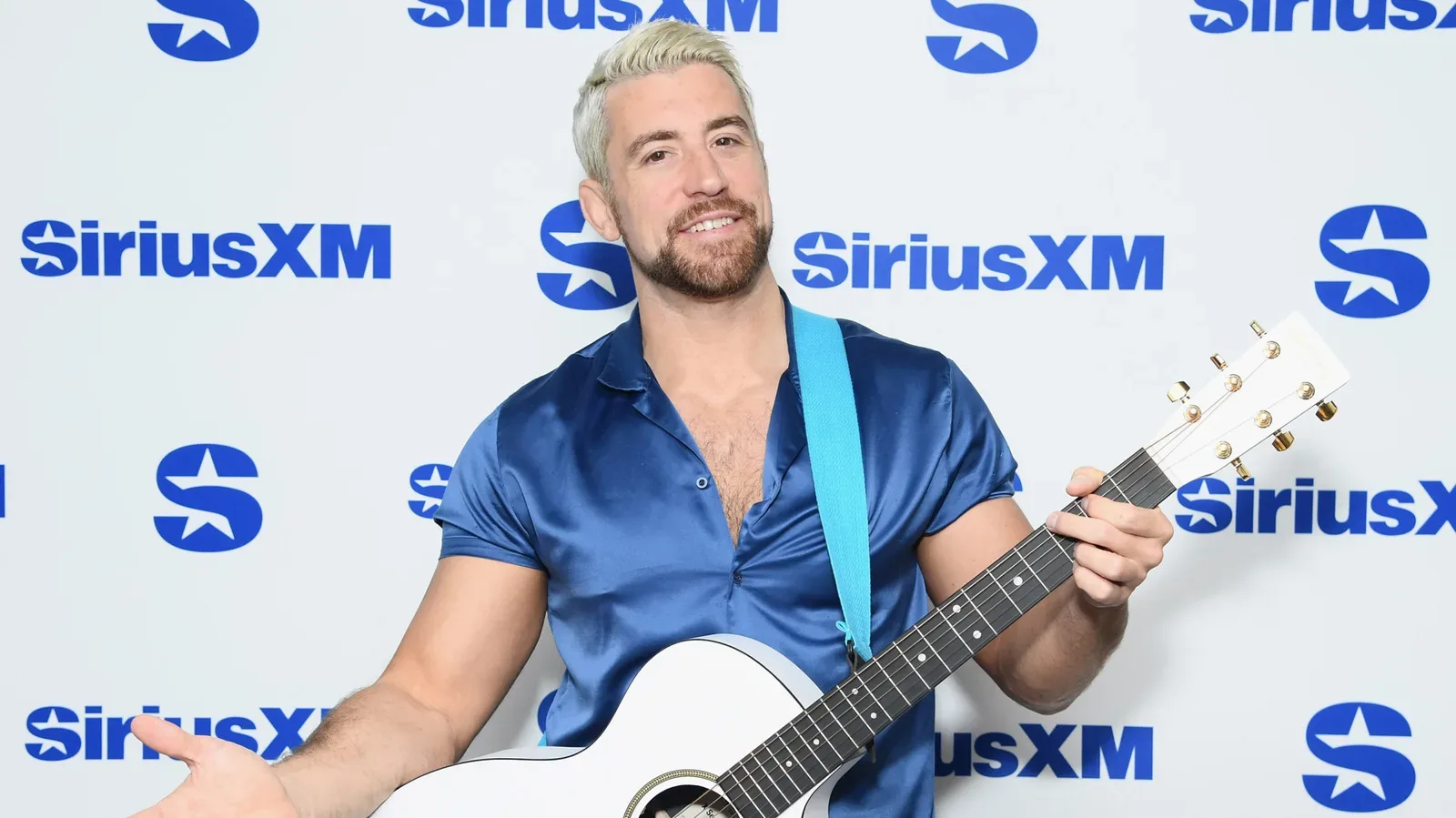
Joe Hendry knows as well as anyone how much an entrance theme can mean in professional wrestling. His own “I Believe in Joe Hendry” has become one of the most recognizable crowd-participation songs in the industry, giving audiences a clear cue to sing along before he even reaches the ring. When asked to name the WWE themes that stand above the rest for him, Hendry pointed to a mix of major Attitude Era staples, a defining Triple H track, and one current WWE song built for audience involvement.
Hendry’s top choice was The Rock’s Hollywood-era entrance music, the theme associated with Dwayne “The Rock” Johnson during his villainous run after returning to WWE in 2003. The character had shifted dramatically from the beloved “People’s Champion” into an arrogant movie-star persona, and the entrance presentation changed with him. For Hendry, that version of The Rock’s music remains the standard-bearer.
“Okay, so [my] favorite theme of all time is The Rock’s Hollywood theme,” Hendry said during an appearance on Inside the Ring. “That just, like, as a fan, it gave me goosebumps watching that.”
The choice speaks to the importance of context in wrestling music. The Hollywood Rock theme was not simply a song attached to one of WWE’s biggest stars. It was part of a complete reinvention, designed to announce the arrival of a character who had become more self-obsessed, more cutting, and more openly hostile toward fans. The music helped establish that the audience was seeing a different version of The Rock from the one that had electrified arenas during the peak of his popularity.
For more background on this topic, read Kevin Owens Explains Why He Returned for WWE NXT Live Event in Gatineau.
While The Rock’s Hollywood track received Hendry’s highest praise, he also named two other themes as iconic landmarks in WWE history: Steve Austin’s unmistakable glass-shattering entrance and Triple H’s long-running “The Game” by Motörhead.
Why WWE’s Classic Themes Still Carry Such Weight
Stone Cold Steve Austin’s entrance is among the clearest examples of a sound effect becoming inseparable from a wrestling character. The breaking glass that starts Austin’s music immediately signaled disruption. Before the first full musical phrase played, the audience knew that the anti-establishment star was on his way to the ring. The reaction was built into the production itself, and the sound remains one of the most instantly identifiable opening cues in wrestling.
Triple H’s “The Game,” meanwhile, became a defining song for a performer whose presentation was constructed around intensity, control, and championship-level confidence. Motörhead’s involvement gave the entrance an authentic hard-rock edge, while the lyrics and vocal delivery fit Triple H’s on-screen identity. The track endured across numerous chapters of his WWE career because it felt bigger than a single storyline or championship reign.
Hendry grouped both songs among wrestling’s great themes, recognizing the way they immediately communicate a specific wrestler and a specific feeling. Austin’s glass break brings a sense of chaos and rebellion. “The Game” announces a calculating, dominant figure. The Hollywood Rock theme captures spectacle, ego, and transformation. Each track succeeds because it does more than fill time between the entrance stage and the ring.
That principle matters especially coming from Hendry, whose career has shown the value of a song that audiences can actively take ownership of. “I Believe in Joe Hendry” is not presented as background music. It is an invitation for fans to participate. The song’s repetition, recognizable phrasing, and direct connection to Hendry’s persona have helped make his entrance a major part of his appeal.
Hendry Highlights Crowd Interaction in Modern WWE Music
When the discussion turned to today’s WWE roster, Hendry did not frame the subject as a debate between older and newer generations of themes. Instead, he emphasized that current WWE has several effective entrance songs and identified crowd interaction as a key trait in the themes that connect most strongly.
“On the current roster, there are some great songs,” Hendry said. “I think ultimately songs that are about crowd interaction [work best], so I think they did a really great job with Trick’s song. There’s so many good ones.”
Hendry specifically singled out Trick Williams’ entrance theme as an example of that approach working. Williams’ music is built around an immediate, recognizable audience response, with fans regularly joining the entrance through chants and call-and-response participation. The reaction is a crucial part of the presentation: it helps establish Williams as a star before a match begins and creates momentum that can carry directly into the bout.
That is increasingly valuable in an environment where entrance music is expected to cut through the noise of a live arena, television broadcast, social-media clips, and highlight packages. A theme does not necessarily need complicated lyrics or a long introduction to succeed. In many cases, the most effective songs are defined by a single opening sound, a memorable phrase, or a rhythm that tells fans exactly how to respond.
Williams’ theme also illustrates why crowd participation can make an entrance feel distinct even in a roster filled with talented performers. The audience is not merely listening to the song; it becomes part of the act. The chant creates a shared moment between wrestler and crowd, turning the walk to the ring into an extension of the character rather than a pause before the match.
Entrance Music as a Core Part of Character Presentation
Wrestling entrance themes have always played a central role in making stars feel larger than life. They can establish a wrestler’s attitude, create anticipation, and shape the emotional tone of an entire segment. A heroic figure may be introduced with an uplifting or explosive track, while a villain can use music that conveys menace, superiority, or unpredictability. The best themes remain connected to the performer even when heard outside the context of a show.
Hendry’s selections cover several different ways music can serve that purpose. The Rock’s Hollywood theme is tied to a reinvention. Austin’s glass break is an instant emotional trigger. Triple H’s “The Game” is a statement of identity. Williams’ current track generates direct crowd involvement. There is no single formula that guarantees an iconic entrance, but each example has a strong relationship with the character it represents.
The discussion also arrives at a time when fans continue to pay close attention to the role of music in WWE presentation. Entrance themes are often judged not only on their standalone sound, but on whether they fit the wrestler, produce a recognizable reaction, and give audiences something to remember after the show. Hendry’s comments suggest that the latter point is especially important. The best songs, in his view, help fans feel involved.
For Hendry, that is hardly an abstract idea. His own entrance has demonstrated how quickly a theme can become central to a performer’s identity when it gives viewers a simple and memorable way to engage. Whether it is the crowd reacting to the first sound of shattered glass, shouting along with Trick Williams, or recognizing the opening of a legendary rock track, the connection between song and audience remains one of WWE’s most reliable tools for creating a moment.
And among all of the famous WWE themes Hendry mentioned, it is The Rock’s Hollywood-era music that still produces the strongest reaction for him as a fan. That enduring response is precisely what every entrance theme aims to achieve: making the audience feel that something important is about to happen before the wrestler has even stepped through the curtain.
In pictures

Darryl Polo
Darryl Polo is a passionate wrestling fan covering WWE, AEW, TNA and beyond. He loves great rivalries, breakout stars and the moments that keep fans talking long after the bell. How we work.