
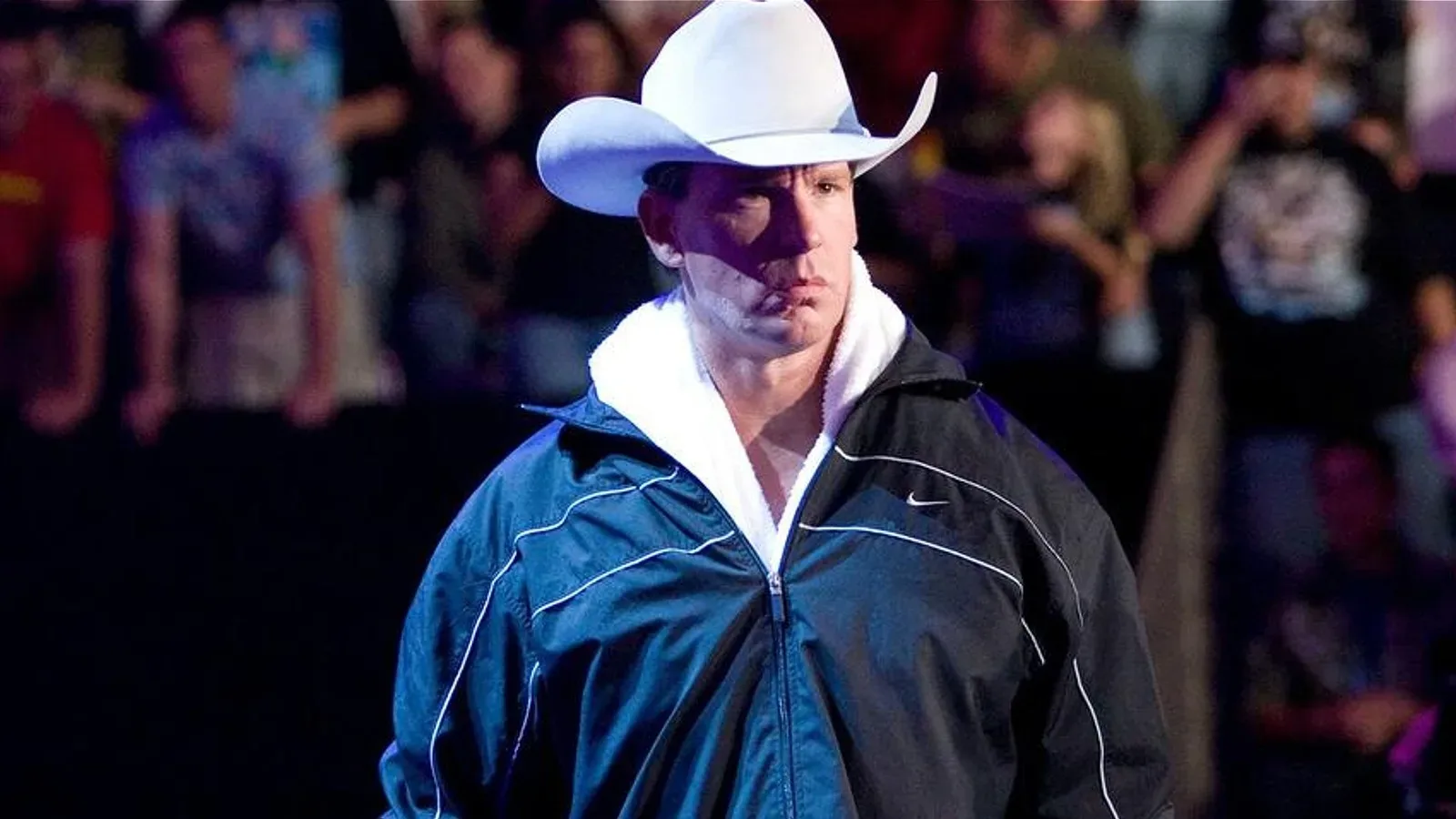
John “Bradshaw” Layfield doesn’t have a problem with wrestlers playing characters. He has a problem with them telling fans when they’re doing it. Speaking on Something To Wrestle, the WWE Hall of Famer took issue with performers who use social media to congratulate themselves on being good heels. As JBL sees it, the moment a wrestler steps outside the act to explain why it worked, they risk defusing the very reaction they spent the show trying to provoke.
“Why in the world would you put out there: ‘Hey, I’m playing a character?’” Layfield asked. His point wasn’t that a wrestler should never develop a gimmick or that fans have to be unaware that wrestling is a performance. It was that knowing how wrestling works doesn’t stop a viewer from taking a dislike to somebody on television. A wrestler who rushes to clarify that the objectionable part is just an act gives that viewer a reason to reconsider the feeling.
Layfield linked that distinction to a problem wrestlers can face even when they have a good gimmick or the athletic ability to stand out in the ring: getting over. A fan can recognize a performer’s talent without caring whether that performer wins or loses. For a heel, that difference is especially important. A match can be well wrestled, but if the audience doesn’t particularly want to see the villain lose, it’s harder to make the result feel like a payoff.
What JBL Wants Heels to Leave Unsaid
Layfield’s own WWE career gives his argument some context. As JBL, he drew some of the strongest negative reactions of his generation, at times getting booed out of the building. He has also claimed that he once had to leave a city in Mexico because authorities couldn’t guarantee his safety. That story is Layfield’s account, not a standard for judging heel work. But it illustrates how intense he remembers the reaction to his character being, and why he puts so much stock in whether fans buy the person they’re seeing.
For more background on this topic, read WWE Announces 40,279 Attendance for Survivor Series at Houston’s Daikin Park.
The social media example Layfield singled out was the wrestler who goes online and says, in effect, that they’re a really good heel. It’s easy to see the temptation. If a segment gets people talking, the performer may want to take credit for making it work, especially when some of the comments are personal. But claiming that credit also asks the audience to change its relationship with the wrestler. Instead of staying mad at the villain, fans are invited to appreciate the performer who made them mad.
Those responses can coexist. Plenty of fans understand what a heel is trying to accomplish and still enjoy seeing that person get beaten. The risk Layfield identified is more specific: a wrestler can interrupt a reaction that’s already working by asking for a different one. Right after a heel has given the audience a reason to root against them, a self-congratulatory post can redirect the conversation from what the character did to how cleverly the performer pulled it off.
Why Logan and Jake Paul Came Up
Layfield pointed to Logan and Jake Paul as examples of public figures who, in his view, benefit from people not knowing where the act ends. He argued that many people online genuinely dislike the brothers because they take what they see as an expression of who Logan and Jake really are. Layfield’s assessment is that the brothers are playing characters, even if the people reacting to them don’t see it that way. “They draw money because of that,” he said.
It’s a revealing example because Layfield isn’t claiming there’s no performance involved. He’s arguing almost the opposite: the performance works because the audience doesn’t feel obliged to separate it from the person. A viewer who finds one of the Paul brothers irritating may want to see him get humbled, whether or not that viewer goes into the event thinking about how the personality was put together. For Layfield, that desire matters more than whether the audience gives the performer credit for cultivating it.
He also brought up Floyd Mayweather, Muhammad Ali, Conor McGregor and Brock Lesnar as major draws whose public personas registered with audiences. Layfield wasn’t saying they all sold fights or matches the same way, or that their appeal depended on being hated. What he saw in common was that viewers believed in the person they saw on television. Boxing, mixed martial arts and WWE present different kinds of competition, but in each case, caring about the person can give the audience an extra reason to care about the outcome.
Getting a Reaction Is Only Part of the Job
Layfield’s argument comes down to what happens after the segment ends. A heel can earn a loud response on the night, but the promotion still needs fans to carry some of that feeling into the next appearance. If an audience is eager to see how a rival answers an insult or whether a champion finally gets beaten, the villain has done more than generate noise in the building. The performance has given people a reason to come back.
That’s also why a good gimmick and good matches aren’t necessarily an answer to the problem Layfield described. They give a wrestler ways to make an impression, but wanting to watch someone perform is different from wanting to see someone get their comeuppance. A heel can benefit from both. The trouble comes when the wrestler is so quick to invite praise for the performance that the audience’s dislike of the character starts to feel secondary.
There’s no need to read Layfield’s comments as a call for every wrestler to stay in character around the clock. The behavior he criticized was voluntary and public: a performer telling fans that the thing they were just reacting to was only a character, often while patting themselves on the back for it. What WWE’s former top villain would rather leave intact is the little bit of doubt that makes somebody wonder whether the person on television really is that obnoxious. If that doubt is already getting fans invested in seeing the heel lose, JBL sees no business upside in clearing it up for them.
In pictures

Darryl Polo
Darryl Polo is a passionate wrestling fan covering WWE, AEW, TNA and beyond. He loves great rivalries, breakout stars and the moments that keep fans talking long after the bell. How we work.