
Few results in WWE history have landed with the force of Brock Lesnar defeating The Undertaker at WrestleMania 30. For more than two decades, The Undertaker’s undefeated WrestleMania record had become one of the company’s defining attractions. It was not simply a statistic discussed during entrances and video packages; it was a central part of the WrestleMania experience, a yearly question that was almost always answered the same way.
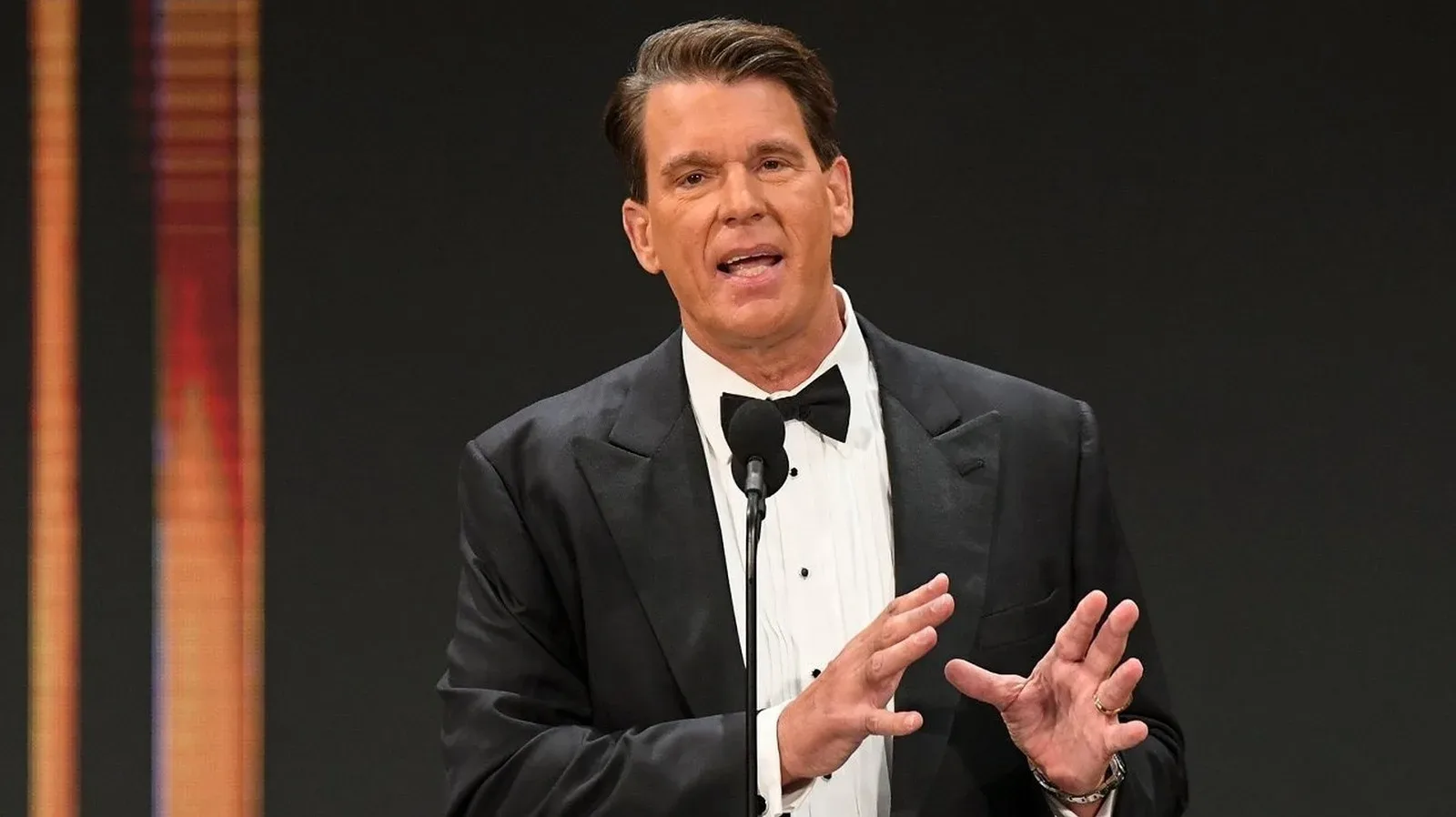
That certainty disappeared when Lesnar pinned The Undertaker, ending “The Streak” and creating a reaction that extended far beyond the crowd in the building. JBL has now recalled that the surprise was not limited to viewers. Speaking on Something To Wrestle, the WWE Hall of Famer said that he and broadcast partner Michael Cole had not been told the finish before calling the match.
“Michael and I didn’t know the finish,” JBL said on Something To Wrestle.
The revelation helps explain why the call and the immediate aftermath of the pinfall felt so unguarded. Announcers are often tasked with giving WWE’s biggest moments their proper scale, directing attention toward the ramifications of a victory or a defeat while maintaining the emotion of the moment. In this case, JBL said the commentary desk was reacting to a result that it had not been prepared to frame in advance.
For more background on this topic, read Kurt Angle Calls WWE Eagle Belt His Favorite Championship Design.
JBL explained that the normal practice was not necessarily complete secrecy. Commentators could be informed about winners and losers in advance, which allowed them to shape the story of a match as it unfolded. Knowing which performer is going over can affect what an announcer emphasizes, whether that means highlighting resilience, building anticipation for a comeback, or laying the verbal groundwork for a major defeat.
But JBL also noted that advance knowledge is not always essential, particularly when a match involves two established, major stars. The Undertaker and Lesnar were both performers whose reputations needed little additional explanation. Their WrestleMania 30 encounter carried enormous stakes on its own because of The Undertaker’s record and Lesnar’s standing as a dominant, physically imposing opponent.
“If we’d have asked, they’d probably have told us, but we didn’t need to know,” JBL said. “What a freaking moment!”
That approach resulted in one of the most memorable periods of stunned silence in modern WWE presentation. After Lesnar scored the decisive fall, the scale of what had happened seemed to register slowly throughout the venue. The Undertaker had lost at WrestleMania, and the unbeaten record that had become synonymous with the event was over.
For years, the annual Undertaker match had operated as an attraction within WrestleMania itself. The event could feature championship bouts, celebrity involvement, personal rivalries, and marquee title matches, but “The Streak” occupied its own space. Fans counted the wins, debated possible opponents, and wondered whether WWE would ever choose to have someone end it. As the number continued to grow, the prospect of a loss became more difficult for many viewers to imagine.
That history is what made the Lesnar result feel so jarring. It was not merely that a favored wrestler had been beaten. The loss represented the end of a long-running tradition attached to WrestleMania. JBL described feeling that finality after the match, even while recognizing the significance of the choice.
“I remember going backstage, telling ‘Taker I loved him, what a great thing he did. It just kind of felt like the end of something,” JBL said. “... I remember thinking, ‘God, that kind of sucks.’”
JBL’s reaction captures the conflicting emotions surrounding the decision. The result was historic, but history does not have to be comfortable. The Undertaker’s WrestleMania record had given fans a familiar piece of the show every year. Its conclusion naturally carried a sense of loss for those who had followed it for so long, including people working behind the scenes and at ringside.
At the same time, JBL made clear that he believed the streak should have been broken eventually. In his view, Lesnar was the right person for the role. That is an important distinction in the discussion around WrestleMania 30: being saddened by the end of the streak was not the same as believing it should have remained intact forever.
Lesnar was already positioned as one of WWE’s most formidable attractions, and defeating The Undertaker gave his standing an even greater sense of permanence. In the language of WWE, he did not simply win a major match. He became the man who ended The Undertaker’s unbeaten WrestleMania run. That accomplishment instantly became inseparable from Lesnar’s legacy and a reference point for his presentation going forward.
The choice also demonstrates why WWE can benefit from withholding select outcomes, even from those responsible for narrating the action. Commentary is usually strongest when it combines preparation with emotional authenticity. An announcer needs context, timing, and an understanding of the characters involved. Yet an unexpected outcome can produce a reaction that cannot be completely replicated through planning.
JBL’s recollection does not suggest the commentators were unprepared to call a WrestleMania-level match. Rather, it underscores that they did not need to know every detail in order to tell the story between The Undertaker and Lesnar. They knew the importance of the streak, understood the stature of both wrestlers, and were ready to react to what happened. When the unexpected finish arrived, their response came from the same shock felt by much of the audience.
JBL recalled that Cole had been preparing to say that the streak continued before the result changed everything. That detail speaks to how deeply ingrained the expectation of another Undertaker victory had become. Even at the commentary desk, where the presentation is built around split-second decisions, the assumed ending was that The Undertaker would once again leave WrestleMania with his record untouched.
Instead, WWE delivered a finish that immediately altered the conversation around the event. The Undertaker’s WrestleMania matches had long been judged partly through the lens of whether the opponent could pose a credible threat. After WrestleMania 30, that question was no longer theoretical. Lesnar had proven that the streak could end, and no future Undertaker WrestleMania bout could be viewed in quite the same way.
There is also a broader lesson in JBL’s comments about the role of surprise in professional wrestling. Major moments are often heavily anticipated, debated, and analyzed before they occur. Fans study momentum, character direction, match placement, and every possible clue in search of an answer. A result that genuinely catches people off guard is rare, especially on WWE’s biggest stage.
The Undertaker-Lesnar finish succeeded as a shock because it challenged an expectation that had been reinforced over many WrestleManias. The surprise was not based on confusion over what was at stake. Everyone understood the stakes. The shock came from the realization that WWE had actually chosen to end something many had come to see as untouchable.
JBL’s backstage memory also places the result in a more personal light. His comments about speaking with The Undertaker after the match focused on appreciation for what had been accomplished, while also acknowledging the emotional weight of closing such a major chapter. For performers and commentators who had watched the streak become a cornerstone of WrestleMania over the years, the end represented more than a storyline development.
WrestleMania 30 will continue to be remembered for the moment Lesnar pinned The Undertaker and the arena processed the result in disbelief. JBL’s account adds another perspective to that memory: the people calling the match were also learning the outcome as it happened. They had not asked for the finish because they did not believe they needed it, only to find themselves witnessing the end of one of WWE’s most enduring traditions in real time.
For JBL, the finish was both the correct decision and a difficult one to watch. Lesnar was, in his estimation, the best possible wrestler to break the streak. But the sadness he felt afterward reflects the unique place The Undertaker’s WrestleMania record held in WWE history. It was a landmark that seemed permanent until, suddenly, it was not.
In pictures

Darryl Polo
Darryl Polo is a passionate wrestling fan covering WWE, AEW, TNA and beyond. He loves great rivalries, breakout stars and the moments that keep fans talking long after the bell. How we work.