
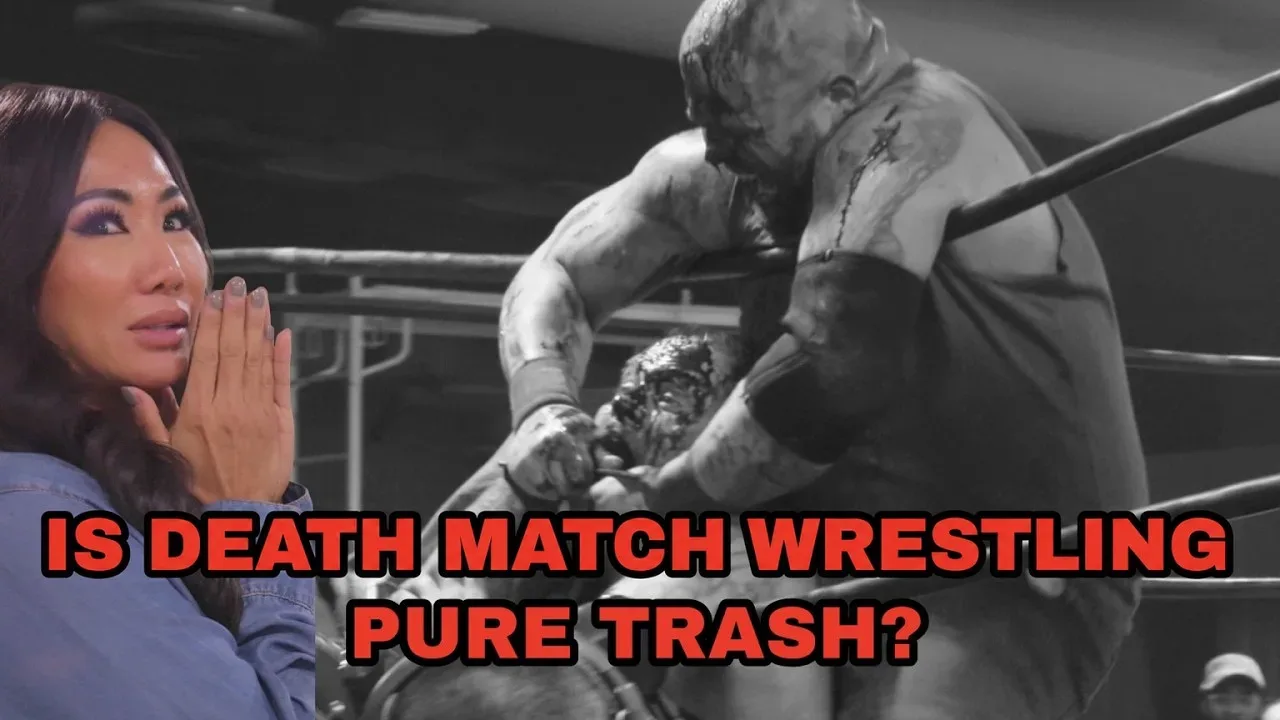
Gail Kim is stepping into a new role with the launch of Getting Over with Gail Kim, a series that opens by examining one of professional wrestling’s most debated styles: deathmatch wrestling.
The first episode follows the TNA Wrestling Hall of Famer to GCW, where she speaks with people who work within, promote and support the deathmatch scene. Rather than keeping the discussion limited to an online back-and-forth, the episode puts Kim in front of the people closest to that corner of the industry and allows them to explain its appeal in their own words.
The project is produced by Kim, Brandon Scott Wolf, Matthew Rainstein and Sean Mowry. Mowry also handled filming and editing, with the series produced through Built Different Media.
A Direct Look at a Divisive Wrestling Style
Deathmatch wrestling has long created strong reactions from audiences and wrestlers alike. Its presentation can feature violent imagery, visible injuries and a willingness to push beyond the conventional limits of mainstream televised wrestling. Those elements are precisely why some fans connect with it, while others question where its place is within the broader wrestling landscape.
For more background on this topic, read AJ Styles Admits He Is Hard on Son Avery Ahead of TNA Bound for Glory Debut.
Getting Over with Gail Kim begins in that tension. The episode is framed around Kim’s public questions about deathmatch wrestling and her decision to seek out the people involved rather than simply leave the subject as an online debate. At GCW, she talks with promoter Brett Lauderdale, wrestlers Joey Janela, Matt Tremont and Matt Cardona, as well as fans in attendance.
“After questioning death match wrestling online, Gail Kim goes to GCW to hear from the people behind it,” the episode description states. “She speaks with Brett Lauderdale, Joey Janela, Matt Tremont, Matt Cardona and fans about what draws them to this side of wrestling.”
The decision to feature multiple perspectives is central to the opening episode’s premise. Lauderdale can address the promotional side of an environment that has found a dedicated audience. Janela and Tremont bring experience from within the wrestling scene being discussed. Cardona offers another wrestler’s perspective after appearing in GCW, while the inclusion of fans gives the episode a view from the crowd rather than solely from those performing or organizing the events.
That structure gives Kim a chance to ask direct questions in the setting where deathmatch wrestling is being presented. The series description emphasizes that the conversation moves “from the online exchange to the live crowd,” making the audience response part of the episode’s examination.
Kim Brings a Veteran Perspective
Kim’s involvement gives the series a recognizable wrestling voice with extensive experience in the industry. As a TNA Wrestling Hall of Famer, she has been part of major moments across her career and has remained a prominent figure associated with TNA Wrestling.
Her new series is not positioned as a simple promotional showcase for deathmatch wrestling. The initial concept is built around inquiry. Kim had questions about the style, and the episode’s purpose is to hear why wrestlers, promoters and fans are drawn to it. That distinction matters, especially for a subject that often attracts quick judgments from viewers who may only encounter clips or discussion online.
The project also carries a viewer-discretion notice because of its subject matter. The first episode includes professional-wrestling violence and injury imagery. That warning accurately reflects the visual and physical nature of the style under discussion and signals that the series will not avoid the harsher realities that can come with it.
For Kim, the on-camera work arrives after her most recent match in 2023. She wrestled in a 10-woman tag team match held to celebrate 1,000 episodes of iMPACT/TNA Wrestling. Kim suffered a concussion during that bout. The launch of Getting Over with Gail Kim now gives her a different avenue to remain connected to wrestling by leading conversations about the industry and the many forms it takes.
GCW Provides the Setting for Episode One
GCW is a fitting location for the series’ first topic because the promotion provides an active environment for the discussion rather than an abstract debate. Kim visits a show and speaks to the individuals connected to the scene while the atmosphere, audience and wrestling culture around deathmatches are immediately visible.
Lauderdale’s appearance is notable given his role as a promoter. Discussions around deathmatch wrestling can often become narrowly focused on the physical risks to the competitors, but the business and event-presentation side is also part of the story. A promoter’s role includes understanding the audience that wants to see this style, the performers who make it possible and the way an event is shaped for those in the building.
Janela and Tremont represent performers who can articulate the appeal from the wrestlers’ side. The episode description does not detail each individual response, but their participation ensures that Kim’s questions are being directed to people with direct familiarity with the subject. Cardona’s inclusion adds another voice to the conversation, while fan interviews ensure that the question of attraction is addressed by those buying into the experience as spectators.
That combination has the potential to make the episode more useful than a purely argumentative discussion. Wrestling is an industry built on varied tastes, and audiences do not all seek the same match structures, styles or emotional experiences. Deathmatch wrestling sits at one end of that spectrum, but its supporters are part of the larger wrestling audience. Kim’s series starts by asking them why.
A New Platform for Wrestling Conversations
The name Getting Over with Gail Kim suggests a format that can move through many different wrestling topics in future installments. The launch description specifically invites viewers to subscribe for more episodes and highlights, indicating that the deathmatch discussion is intended as the beginning of an ongoing project rather than a standalone special.
Starting with a contentious subject gives the series an immediate identity. Kim is not opening with a retrospective of her career or a straightforward interview designed to revisit familiar accomplishments. Instead, she is entering an area of wrestling that prompts disagreement and putting the focus on listening to those who are immersed in it.
That approach could be especially valuable in an era when wrestling conversations regularly unfold in fragments across social media. An online exchange can generate attention quickly, but it rarely offers the same context as speaking to the people involved at a live event. By going to GCW, Kim takes the conversation beyond posts and reactions and into the venue where the subject is actively experienced.
The first episode’s participants also make clear that the series is interested in more than one level of the business. Wrestlers, a promoter and fans all occupy different roles, and their reasons for engaging with deathmatch wrestling may not be identical. The format allows those differences to be part of the story rather than forcing a single answer to a complicated question.
What Viewers Can Expect
Viewers should expect a discussion-centered look at deathmatch wrestling, anchored by Kim’s questions and filmed in the GCW setting. The episode includes wrestling violence and injury imagery, so the viewer-discretion warning should be taken seriously. It is designed for an honest engagement with the subject, including the aspects that make deathmatches controversial in the first place.
The production credits also underline the hands-on nature of the launch. Along with producing the project, Sean Mowry filmed and edited the episode. Kim, Wolf and Rainstein are credited as producers, while Built Different Media is listed as the production banner.
For Kim, Getting Over with Gail Kim creates a new platform built around curiosity, conversation and direct access to wrestling’s varied communities. Its first episode does not sidestep the debate around deathmatch wrestling. It makes that debate the starting point, then brings Kim face-to-face with the people who can explain why the style continues to resonate with its audience.

Darryl Polo
Darryl Polo is a passionate wrestling fan covering WWE, AEW, TNA and beyond. He loves great rivalries, breakout stars and the moments that keep fans talking long after the bell. How we work.