
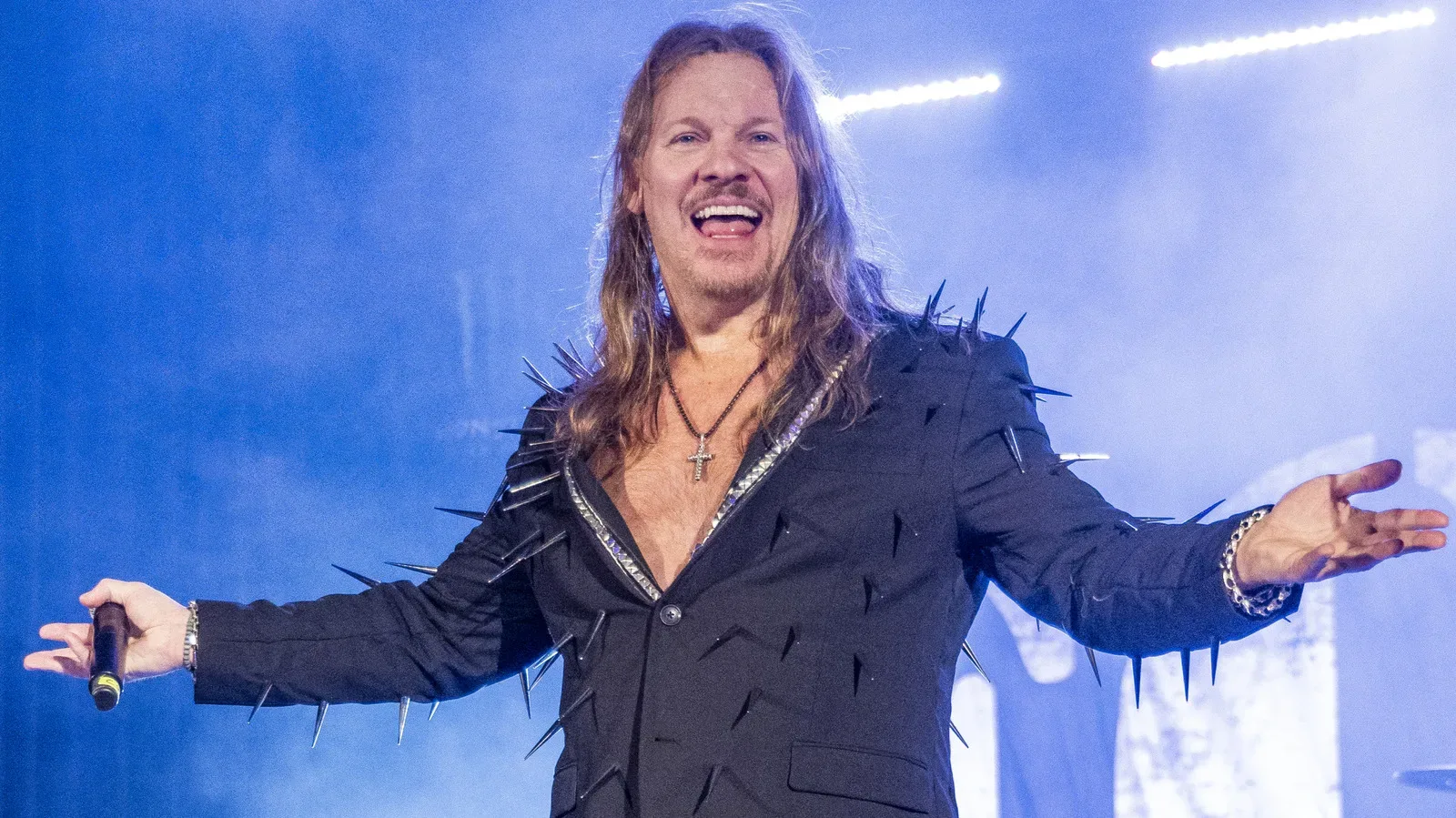
Chris Jericho’s career has been defined by an ability to change direction, revise his presentation and find fresh ways to remain relevant in major wrestling environments. Long before his rise to the top level in WWE and his later work in AEW, Jericho was already displaying the drive to shape his own path during his time in WCW.
Eric Bischoff reflected on that period during a recent appearance on 83 Weeks, describing Jericho as a performer who did not wait quietly for opportunities to arrive. Bischoff said Jericho was willing to approach WCW decision-makers with concepts, suggestions and ideas for what he could do next, but did so with a professional attitude.
“Even early on, Chris had no problem stepping up with ideas, and suggestions, and things that he wanted to do,” Bischoff said on 83 Weeks. “He did it professionally; it was not like he was a pain in the a** when he did it. It was welcome, you know?”
That distinction is central to Bischoff’s recollection. In a promotion with a large roster and extensive competition for television time, a wrestler’s willingness to advocate for himself could be valuable. However, Bischoff made clear that Jericho’s approach did not come across as disruptive. Instead, he remembered an ambitious performer who wanted to participate in the creative conversation and who brought energy to the process.
For more background on this topic, read Jake Roberts Sees Himself in Bray Wyatt and Randy Orton.
Bischoff did not suggest that every pitch Jericho offered was necessarily a perfect fit for the direction of a storyline. That is a normal part of wrestling’s creative process: performers can bring forward ideas that are eventually adjusted, delayed or simply deemed unsuitable for a particular situation. What stayed with Bischoff was the fact that Jericho was actively looking for ways to improve his position and add substance to his work.
Early signs of a career-long trait
The comments provide another look at a trait that has followed Jericho throughout his career. Reinvention is often discussed in terms of characters, catchphrases, presentation and changing alliances, but it also begins with a willingness to examine what a performer can do differently. Bischoff’s memory of Jericho in WCW suggests that the instinct to search for new material and new challenges was already in place well before Jericho became one of the most recognizable names in the industry.
Jericho’s WCW tenure was an important stage in his development. It offered him a national platform and the chance to work within a roster that included established veterans, emerging younger talent and major stars. For a wrestler attempting to break through in that environment, merely delivering strong matches was not always enough. Developing an identity, locating compelling opponents and giving audiences reasons to keep paying attention were equally significant.
Bischoff’s recollection frames Jericho as someone who understood that responsibility. Rather than treating creative direction as something entirely handed down from above, Jericho wanted to contribute. The former WCW executive admired the initiative even while acknowledging that the practical use of an idea depends on timing and the larger direction of television.
That professional balance is notable. There can be a difference between presenting a thought and demanding that it be adopted. Bischoff’s comments indicate that Jericho was able to offer input without creating an unnecessary problem for the people around him. In a collaborative medium such as professional wrestling, that can help a performer develop trust while also establishing that he cares deeply about his work.
Bobby Eaton’s appeal as a possible opponent
One specific possibility discussed by Bischoff involved Bobby Eaton, the highly respected veteran whose reputation as an in-ring wrestler made him an appealing opponent for many performers. Bischoff said Jericho may have been the wrestler who pitched a program involving Eaton, though he did not state that point as a certainty.
Bischoff reasoned that Eaton’s standing would naturally have caught Jericho’s attention. The suggestion fits with his broader description of Jericho as a performer focused on pushing himself and finding meaningful opportunities during his WCW run.
“I think Bobby’s reputation would have got Chris’ attention early on,” Bischoff said on 83 Weeks. “If he’s going to have a match, wouldn’t a guy like Chris Jericho — bit of a perfectionist, always pushing the envelope for himself, certainly back at that time — wouldn’t he want a match with a guy like Bobby Eaton?”
Bischoff’s wording leaves room for uncertainty over whether Jericho was definitively responsible for that particular idea. Still, the larger point remains clear: an opponent with Eaton’s reputation would have represented an opportunity to test oneself against an accomplished wrestler and potentially create something that added credibility to a rising performer’s resume.
For Jericho, the appeal would not simply have been the match itself. Programs and rivalries can give a wrestler a chance to show different parts of their personality, refine their pacing on television and establish why a fan should view them as important. Seeking out respected opponents can therefore be both a competitive choice and a creative one.
Ambition without certainty
Bischoff’s perspective also underlines an important reality of WCW during that era: ambition alone did not guarantee a straightforward route to the top. A wrestler could have ideas, possess ability and work hard while still needing the right opening, the right opponent and the right creative circumstances to take the next step.
Jericho’s willingness to present suggestions was not an assurance that every proposed direction would happen. Nor did Bischoff claim that each idea was the correct answer for the product at the time. Instead, he focused on the quality of Jericho’s approach. The fact that Jericho was thinking ahead, trying to enrich his career and seeking opportunities to do more made a strong impression.
That mindset can be particularly important for a wrestler who is still climbing. A performer may not control every decision, but they can control preparation, presentation and the effort put into making their case. Bischoff’s comments portray Jericho as someone who took those parts of the job seriously.
It is also a reminder that creative confidence does not have to mean refusing guidance. The most productive pitches are often part of a conversation, where performers and executives weigh what would work, what needs revision and what may have to wait. Bischoff’s description of Jericho indicates that the young wrestler was willing to be part of that conversation in a constructive way.
Why Bischoff’s recollection matters
Jericho has spent decades building a reputation as a wrestler who is rarely content to remain static. That reputation is frequently associated with the many evolutions that came after WCW, particularly once he became a major star in WWE. Bischoff’s remarks, however, point to the roots of that tendency. The desire to contribute ideas and find the next creative opening was present much earlier.
For fans looking back at Jericho’s career, the comments offer a useful perspective on the connection between his early ambition and his longevity. Reinvention is not only about changing a persona after an audience grows familiar with it. It also requires a performer to recognize when more can be done, to seek out worthwhile creative challenges and to make those suggestions in a way that encourages collaboration.
Bischoff remembered Jericho as a wrestler who did exactly that in WCW. Whether every individual proposal made it to television was secondary to the attitude behind it. Jericho wanted more from his career, wanted to challenge himself and was prepared to speak up professionally in pursuit of those goals.
That quality helped distinguish him in Bischoff’s eyes and remains consistent with the broader story of Jericho’s career: a performer continually looking for another way to evolve, compete and make an impact.
In pictures

Darryl Polo
Darryl Polo is a passionate wrestling fan covering WWE, AEW, TNA and beyond. He loves great rivalries, breakout stars and the moments that keep fans talking long after the bell. How we work.