
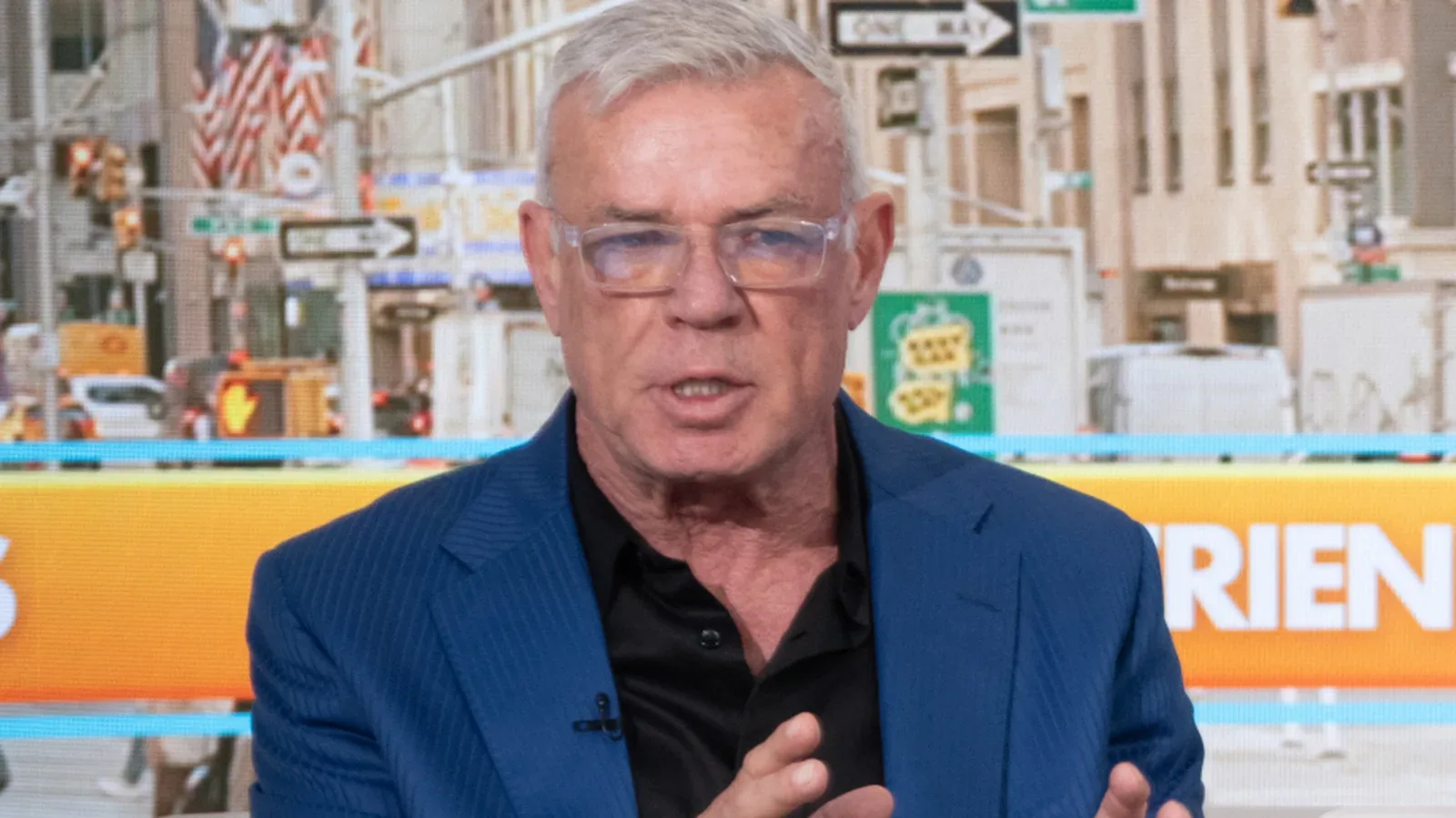
WWE’s preparation for Crown Jewel in Saudi Arabia could require far more than the normal demands of staging one of the company’s major international premium live events. With the show set for November 7, WWE Hall of Famer and former WCW President Eric Bischoff has raised questions about the logistical burden created by regional instability, particularly the potential effect that airspace disruptions could have on talent, crews, equipment and production plans.
Bischoff addressed the issue during a recent edition of 83 Weeks, framing the situation through his own recent travel experience. His central concern was not whether Saudi Arabia could produce a WWE event from an infrastructure standpoint, but whether the conditions around international travel could change quickly enough to place even a carefully planned event in doubt.
“Right now, Saudi Arabia, at least according to that post, was a level three [travel advisory]. When I went to Moscow a couple weeks ago, Russia was level four. And the real issues — and we experienced the issue on our arrival into Moscow — we ended up in a holding pattern of about 90 minutes or so, maybe a little longer,” Bischoff said.
The former WCW executive used that experience to illustrate how an issue beyond a promoter’s control can immediately impact an event plan. A flight delay or airport interruption is inconvenient under ordinary circumstances. For a wrestling production that involves a large traveling group, a broadcast team, technical staff, ringside personnel, security, production equipment and performers arriving from multiple locations, it can become much more significant.
For more background on this topic, read Tavion Heights Calls Myles Borne ‘The Scum Of The Earth’ After NXT Heatwave Betrayal.
Crown Jewel has become a prominent fixture on WWE’s annual calendar through the company’s relationship with Saudi Arabia. These shows are built on a large scale and typically require extensive advance planning. WWE does not simply fly in wrestlers for a standard live event; the company must coordinate television production, international transportation, promotional commitments, event presentation and the movement of a considerable number of employees and contractors.
That is why Bischoff’s concern centers on the possibility of airspace being closed or flights being diverted. Even a threat that causes authorities or airlines to alter normal operations can create a serious challenge. A disruption does not necessarily have to occur at the event site itself to complicate an international production. It can affect the ability of people and equipment to arrive on schedule, depart afterward, or move between planned locations during a critical production window.
Air Travel Is the Major Variable
Bischoff pointed specifically to the risk posed by drones and missiles, arguing that the uncertainty surrounding any potential threat is itself a major issue for an event organizer. His comments did not suggest that WWE cannot hold Crown Jewel, nor did he question Saudi Arabia’s experience in presenting major entertainment and sporting events. Instead, he emphasized that conditions can develop rapidly and force companies to prepare for multiple possible outcomes.
“The real risk is, you know, drones and missiles in this case. Who knows when that potential, because all it takes is the threat of it and you’ve got airspace being shut down,” he added.
For WWE, travel is not an isolated department. Every part of the production is connected to it. A delay in moving a broadcast crew affects the ability to establish television operations. A delay involving a key performer could affect creative plans. A delay involving equipment could require changes to the physical presentation of the show. The larger the event, the more moving pieces there are to account for.
That does not mean every contingency will be necessary. Major live events are routinely planned with backup arrangements for flights, staffing, equipment and medical needs. But the possibility of a broader airspace issue is different from the normal challenges of weather delays or individual flight cancellations. It can affect many travelers at the same time and leave a company scrambling to determine what can be moved, when it can be moved and where it can be moved.
WWE is also in the position of maintaining its regular worldwide programming responsibilities while Crown Jewel preparations continue. A premium live event of this size does not exist in a vacuum. The company’s roster, creative teams and operational departments remain involved in the ongoing weekly production cycle around Raw, SmackDown and other WWE obligations. That makes the timing and coordination of international travel especially important.
Planning for Crown Jewel Means Planning Beyond Crown Jewel
Bischoff’s most substantial point was about the cost and labor involved in creating a meaningful backup plan. In his view, a contingency cannot merely be an idea written down in case circumstances change. A workable alternative requires people, resources, schedules and operational decisions well before a crisis point arrives.
“You know, your Plan A requires a tremendous amount of time and effort and focus and resources just to pull off Plan A because it’s usually pretty big. But we’ve got the added workload now of developing a Plan B, which, by the way, it’s not like, ‘Well, let’s just write it down on a piece of paper and if we need it, we’ll go to work.’ No, you’re probably already investing time and resources. Now, you’re doubling up on your resources for this.”
That assessment applies especially to a company like WWE, where major shows involve detailed coordination across creative, production, travel, venue operations, broadcast, talent relations and corporate departments. If an alternate location or alternate format had to be considered, it would not be enough to simply identify a building. The company would need to assess availability, staffing, production capabilities, travel routes, local requirements and whether the event could be presented at the standard expected of a WWE premium live event.
There is also the question of communication. In a situation involving changing travel conditions, WWE would need to keep talent and employees informed while avoiding unnecessary disruption to those who may not be immediately affected. Any major alteration to an international show would have consequences for the performers booked on the card, the company’s domestic television schedule and the larger promotional campaign surrounding the event.
Bischoff’s experience as a television executive gives his comments a particular perspective. During his WCW tenure, he dealt with the pressures of weekly live programming and the operational demands of producing events on a major scale. While WWE’s modern global operation is different in scope and structure, the underlying issue remains familiar: live entertainment depends on timing, personnel and logistics all functioning at once.
Saudi Arabia’s Event Capabilities Are Not the Question
Bischoff acknowledged that Saudi Arabia has staged enough major events to make the production side of Crown Jewel manageable. WWE has already held multiple shows in the country, and Saudi Arabia has continued to host high-profile international sports and entertainment events. From the standpoint of venue presentation and in-country event operations, there is an established foundation for putting on a major show.
The uncertainty, as Bischoff sees it, lies in the additional layers of preparation that could be required if travel conditions become unstable. He questioned how the use of multiple crews, potential backup arrangements and parallel production preparations would function in practical terms. A company can commit significant resources to the intended show, but building readiness for an alternative can mean duplicating work before there is any certainty that the alternate plan will be used.
Those are expensive decisions, but they may be necessary decisions when an event involves international travel and a live global audience. WWE has experience with adapting to unusual circumstances, including producing major programming under changing conditions. Still, every event presents its own variables, and an international stadium-scale premium live event carries a particularly complex set of concerns.
As of now, Crown Jewel remains scheduled for November 7 in Saudi Arabia. Bischoff did not present a definitive prediction that the event would be moved or canceled. Rather, he outlined why the work behind the scenes may be unusually complicated while regional uncertainty remains a factor.
For Bischoff personally, it is the kind of challenge he is relieved not to have on his desk. WWE’s teams will continue working toward the original Crown Jewel plan, while the company’s ability to prepare for unforeseen travel complications could be just as important as the work that audiences ultimately see inside the venue.
In pictures

Darryl Polo
Darryl Polo is a passionate wrestling fan covering WWE, AEW, TNA and beyond. He loves great rivalries, breakout stars and the moments that keep fans talking long after the bell. How we work.