
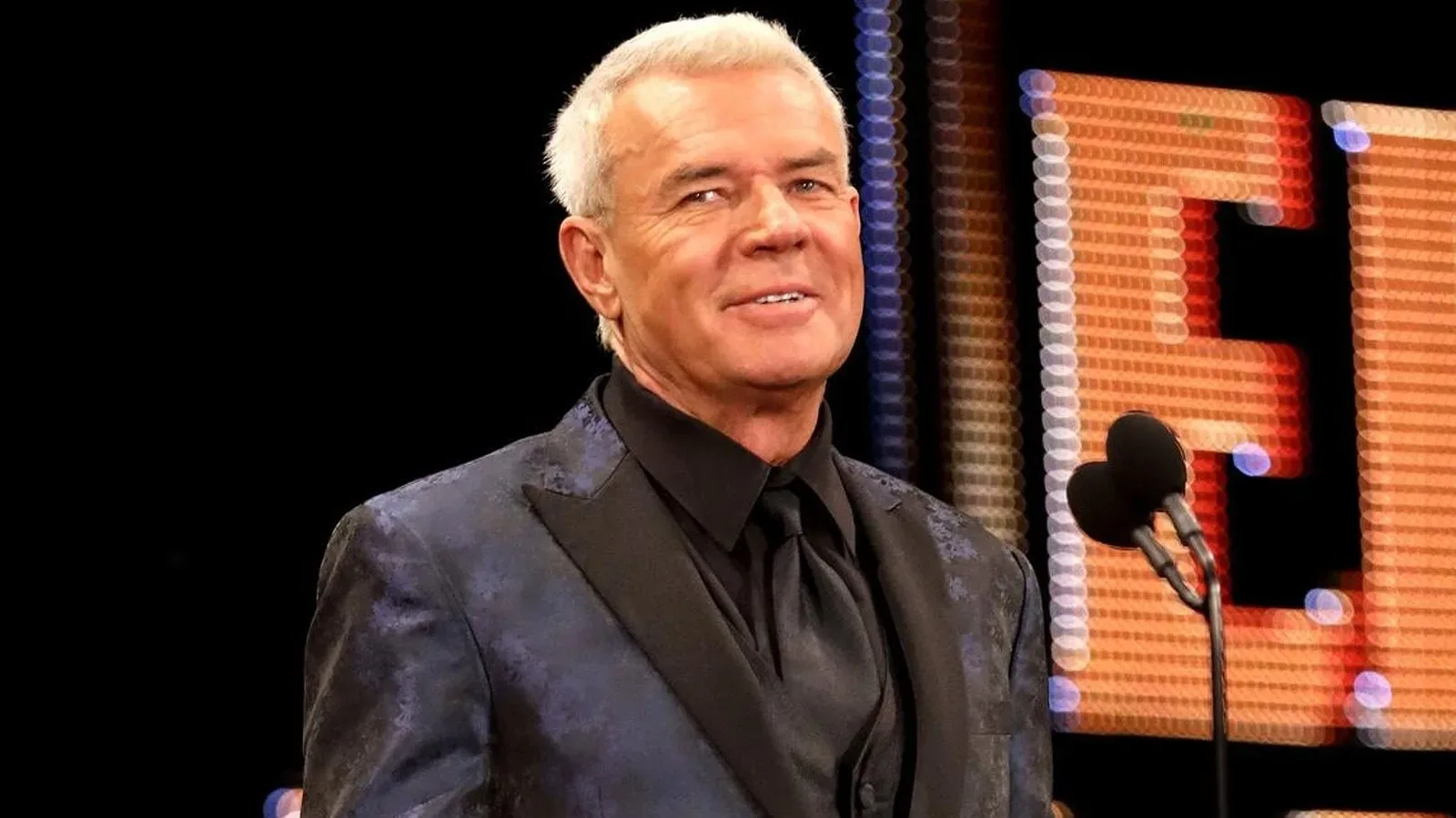
Professional wrestling has always depended on performers making larger-than-life characters feel believable. The greatest stars can have unforgettable entrance music, elaborate wardrobes and signature catchphrases, but Eric Bischoff believes the defining difference comes from something deeper. In his view, the rare wrestlers who truly connect with an audience do not simply portray a character when the cameras are rolling. They become that character.
During an episode of 83 Weeks, Bischoff discussed the art of “living the gimmick,” comparing that approach to method acting. He pointed to several all-time icons as examples, including Hulk Hogan, Ric Flair, Stone Cold Steve Austin and The Undertaker. He also named two major modern-era figures, AEW’s Maxwell Jacob Friedman and WWE’s Roman Reigns, as performers who understand how to extend their personas beyond the most obvious elements of presentation.
Bischoff’s central argument was that a wrestling character is not confined to ring gear, a theme song or the minutes spent wrestling inside the ropes. For the performers who reach another level, the attitude, mannerisms and worldview of the persona shape how they carry themselves at all times. That commitment, he said, creates a sense of reality that is difficult to manufacture through conventional heel and babyface cues alone.
Bischoff’s definition of living the gimmick
Bischoff described the practice in direct terms on 83 Weeks: “Living the gimmick is method acting. In sports entertainment, it’s living your gimmick 24/7, brother.”
For more background on this topic, read Kyle Fletcher Explains Why the AEW International Title Never Got a Pink Makeover.
He then placed Hogan, Flair, Austin and The Undertaker in that category. While each performer had a dramatically different character, they shared an ability to make the audience feel that their on-screen identity was connected to who they actually were. Bischoff said there was “very little difference” between their real personalities and television characters, aside from the fact that their televised versions were amplified for the audience.
That distinction is important. Bischoff was not suggesting that wrestling personalities are literally identical to the people playing them. The business is built on performance, and every character is shaped by the needs of a particular match, storyline or era. Instead, he was emphasizing the kind of consistency that allows a performer’s identity to remain recognizable no matter the setting. The audience may understand that wrestling is a performance, but it can still respond more intensely when a character feels authentic.
Hogan’s “Hulkamania” persona, Flair’s ostentatious Nature Boy lifestyle, Austin’s anti-authority defiance and The Undertaker’s aura of mystery all became central parts of wrestling culture because they were presented with unwavering conviction. Their appeal was not merely based on a costume change or a catchphrase. Each had a sharply defined identity that was sustained over years, often across multiple promotions and generations of fans.
Ric Flair’s character became inseparable from the man
Among the names Bischoff discussed, Flair received particularly strong praise. The Nature Boy has long been associated with stories of a flamboyant lifestyle outside the ring, and Bischoff said those widely told tales reflect just how completely Flair inhabited the role.
“I’m not even sure he even knew who Richard Fliehr was anymore. Not is, was — that’s how deep Ric Flair is into being Ric Flair,” Bischoff said on 83 Weeks.
The comment was not framed as criticism. Bischoff quickly made clear that he sees Flair’s commitment as a remarkable strength rather than a flaw. In his assessment, Flair’s persona did not disappear at the end of a promo, a match or a television taping. “Ric Flair” became the public identity through which nearly everything else was filtered.
Bischoff applied a similar view to Hogan. Even after their full-time in-ring careers ended, both men continued to be associated with personas that had become enormous parts of their identities. That longevity is one reason the characters remained so potent. Fans did not see them as creations that could simply be switched off after a storyline concluded; they saw them as living embodiments of distinct wrestling eras.
Flair is a particularly notable case because “The Nature Boy” was built around excess, confidence and the claim of being the greatest. The robes, stylized promos and “Woooo!” all mattered, but those were extensions of the broader identity rather than substitutes for it. Bischoff’s point was that the most memorable pieces of Flair’s act worked because the wrestler delivered them as though they were not an act at all.
MJF and a different kind of heel reaction
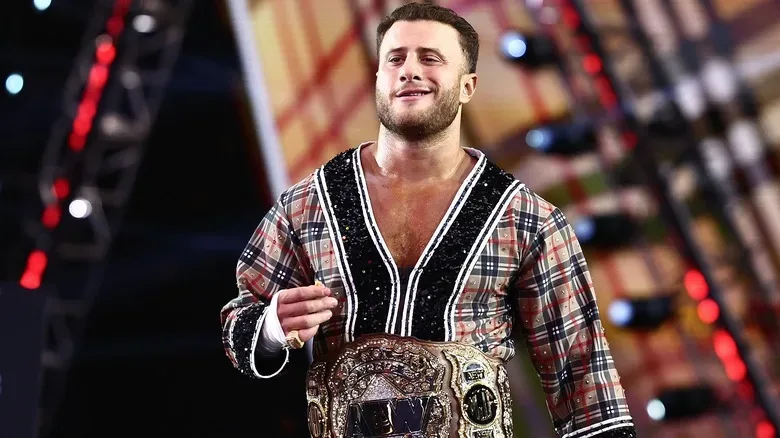
When the conversation shifted to active wrestlers, Bischoff singled out MJF as a “perfect example” of a modern performer who lives his character. Friedman has built his AEW reputation around a brash, antagonistic persona that routinely blurs the boundary between storyline conflict and audience interaction.
“Perfect example of a guy who lives his character, who’s a method actor,” Bischoff said of MJF on 83 Weeks.
Bischoff stressed that audiences understand the nature of professional wrestling. Yet he argued that MJF still generates a more organic negative response than many wrestlers positioned as villains. He described that reaction as “real, honest, heel heat,” contrasting it with what he called “Pavlov’s Dog Heat.”
Bischoff used that phrase to describe a crowd reaction in which fans boo largely because a performer has been assigned the role of heel. In that scenario, the audience follows the expected script: this wrestler is presented as the bad guy, so the crowd responds with boos. There can be value in that traditional dynamic, but Bischoff believes it is not the same as an audience actively rejecting a character because the performer’s words and actions have made that reaction feel personal.
MJF’s character work has frequently relied on exactly that kind of direct engagement. Whether he is insulting an opponent, addressing a specific city or leaning into an arrogant self-image, his presentation is designed to make fans respond to the individual rather than merely the label of “heel.” Bischoff’s praise suggests that MJF’s effectiveness comes from his consistency. The persona is not just a device for a particular segment; it informs the way he speaks, reacts and relates to the audience.
Roman Reigns and the value of character detail
The other current star Bischoff praised was Roman Reigns. Bischoff called Reigns a method actor and also credited Paul Heyman with helping “The Original Tribal Chief” learn how to live his gimmick.
Reigns’ Tribal Chief presentation has been defined by measured delivery, authority, family-centered language and an expectation of acknowledgment from those around him. Unlike a character dependent on constant shouting or overt theatrics, Reigns’ act often gains strength from restraint. A pause, a stare or a short command can communicate as much as a lengthy promo. That level of detail has helped distinguish his persona and made his character’s authority feel intentional.
Heyman’s presence has also been a significant part of that presentation. As Reigns’ adviser and one of wrestling’s most experienced on-screen talkers, Heyman has helped establish the atmosphere around the Tribal Chief. Bischoff’s comments credit him not simply as a manager, but as someone who helped reinforce the discipline required to make a character resonate beyond the surface level.
Bischoff contrasted Reigns and MJF with what he sees as a widespread problem in the industry. “To 90% of the talent out there, your character is what you wear to your ring or your music, or your ring entrance in general,” he said on 83 Weeks. In his view, too many wrestlers stop developing a distinct personality once the bell rings, leaving little that separates them from the rest of the roster.
That criticism does not dismiss the importance of entrances, music or visual branding. All of those elements can be vital tools in wrestling. They introduce a character, establish expectations and create immediate emotional associations. But Bischoff’s argument is that they cannot carry a character by themselves. Once the entrance is over, a wrestler still needs a recognizable voice, body language, motivation and presence.
Why the concept still matters
Bischoff concluded that the next level of character work begins when a wrestler becomes the character. “When you take that to the next level and become your character, that’s when s*** becomes real, ironically,” he said.
The irony is at the heart of wrestling’s appeal. Fans know the medium involves planned outcomes and constructed rivalries, but emotional investment does not require literal belief. It requires performers who can make the conflict, pride, insecurity, arrogance or defiance behind a character feel genuine in the moment.
For Bischoff, Hogan, Flair, Austin, The Undertaker, MJF and Reigns represent different versions of that same principle. Their characters do not succeed because they are identical. They succeed because each performer developed an identity strong enough to survive changes in opponents, storylines and eras. In an industry overflowing with talented athletes, Bischoff’s comments underline why complete character commitment remains one of wrestling’s most valuable and rare skills.
In pictures

Darryl Polo
Darryl Polo is a passionate wrestling fan covering WWE, AEW, TNA and beyond. He loves great rivalries, breakout stars and the moments that keep fans talking long after the bell. How we work.