
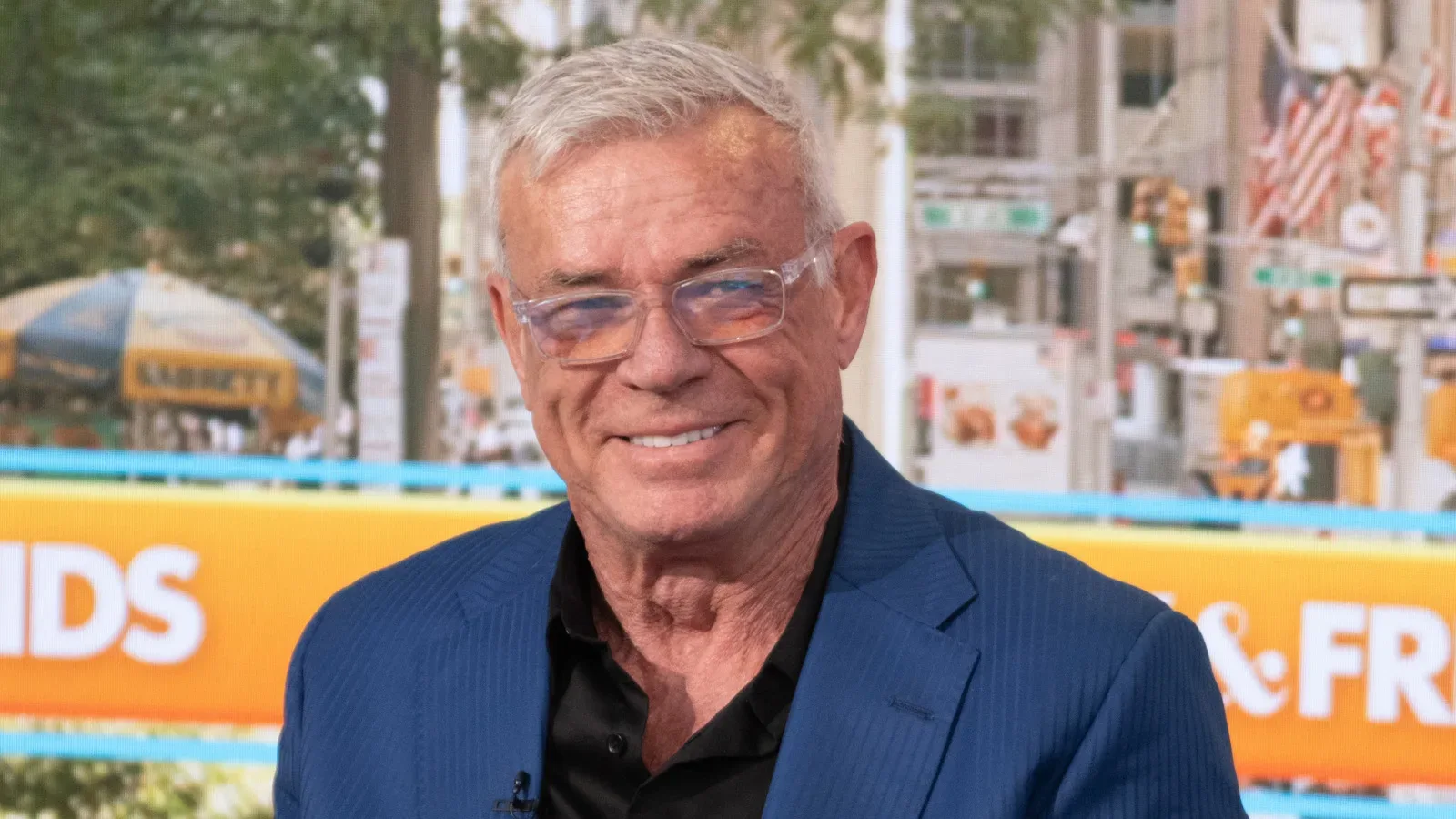
Eric Bischoff’s rise to executive power in WCW during the early 1990s came with a practical mandate: reduce costs and make hard decisions about where the company’s resources should go. Looking back at that period, Bischoff has explained that managers and tag teams were among the areas he targeted as part of a broader effort to streamline the promotion.
On 83 Weeks, Bischoff discussed his thinking behind reducing the company’s reliance on managers. While financial considerations were an undeniable part of the equation, he said his reservations extended beyond the expense of carrying additional on-screen personnel. In his view, a manager often filled a role that a prospective top wrestler needed to learn to handle personally: communicating with the audience.
Bischoff described his mindset bluntly, saying,
“I was thinning them out. I wasn’t trying to come up with ways to utilize them, I was trying to come up with ways to stop utilizing them, because there’s no money in them for the most part.”
That approach was rooted in how Bischoff evaluated a performer’s upside. Wrestling managers have traditionally been vital pieces of the industry, whether they were mouthpieces for intimidating monsters, representatives for technically gifted wrestlers, faction leaders, or antagonists who could generate heat without taking physical risks in the ring. For Bischoff, though, assigning a manager could also mask a key weakness in a wrestler’s presentation.
For more background on this topic, read Indi Hartwell Says WWE NXT Return Brought Closure Before TNA Knockouts Title Victory.
He was not looking to make every talent an instant master of the microphone. Instead, he wanted to see enough potential that WCW could develop a wrestler into someone capable of carrying their own portion of a story. If that foundation was absent, Bischoff believed the company had less reason to make a significant investment in that individual.
As Bischoff put it on 83 Weeks,
“I’m not interested in talent, trying to build talent that can’t speak for themselves. It’s such an important part of it.”
He expanded on that thought by stressing that potential mattered as much as immediate polish. A wrestler did not necessarily need to arrive with a fully formed interview style or a history of memorable promos. However, Bischoff wanted some indication that the performer could improve with coaching and experience. Without that possibility, he did not see a compelling reason to devote additional resources to the act.
The philosophy reveals an important part of the balancing act facing WCW at the time. A wrestling company needs more than in-ring ability to create stars. Television promotions in particular need personalities who can make viewers care about rivalries, establish motives, sell major matches, and create hooks that bring audiences back the following week. In that environment, a manager can be enormously helpful, but Bischoff’s argument was that the long-term ceiling of a wrestler could be limited if someone else always delivered the most important words.
Managers Were Not Completely Removed From WCW
Bischoff’s early stance did not mean WCW abandoned managers altogether. As the promotion grew in profile and popularity, managers and manager-like personalities continued to appear in meaningful roles. The difference was that the company’s use of them became more selective and more tied to specific acts, stories, or television needs.
Bischoff singled out Paul Heyman as an exception to his general view.
“Paul Heyman is ‘Alright, we’re going to put him off to the side. That’s a different thing,’”Bischoff said, acknowledging that Heyman brought a distinctive value as an on-screen personality. The comment reflects the difference between using a manager simply to speak for a wrestler and employing a performer whose charisma, creative instincts, and character presence can add an entirely separate layer to programming.
WCW also featured several well-known figures in managerial or representative roles as the company’s business expanded. Sonny Onoo, a longtime friend of Bischoff, became a familiar television presence. Sherri Martel, later inducted into the WWE Hall of Fame, brought years of credibility and a forceful personality to every appearance. Ted DiBiase, another WWE Hall of Famer, also worked in a prominent managerial capacity during his time with WCW.
Those examples illustrate why managers have never fit into one simple category. A manager can be a spokesperson, but they can also be an attraction unto themselves. They can provide experience to an emerging act, give a stable a clear identity, provoke opponents, manipulate matches, or add immediate significance to a wrestler who has not yet built a strong individual connection with the audience.
At the same time, Bischoff’s comments suggest that he viewed those strengths as situational rather than automatic. The fact that a manager could enhance one act did not mean every wrestler needed one, nor did it persuade him that WCW should maintain a large group of managers without a defined and valuable role on television.
The Promo Question at the Center of Bischoff’s Philosophy
The core of Bischoff’s position was not a rejection of character work. It was an argument that speaking ability is central to making money in wrestling. A wrestler’s in-ring performances may establish credibility, but promos often define personality, sharpen conflict, and turn athletic competition into an emotionally charged event.
That is especially relevant in a major national promotion, where a performer may have only limited television time to explain why a match matters. A convincing interview can elevate a rivalry in minutes. It can create sympathy for a babyface, make a villain feel dangerous, or provide a memorable catchphrase that helps an act stand apart in a crowded roster.
Bischoff’s preference was therefore to seek wrestlers who could ultimately communicate directly with fans. He was willing to accept that development takes time, but not that a lack of verbal potential should be permanently covered by a manager. From his perspective, a manager should enhance a capable act rather than become a substitute for the act’s missing skills.
That outlook also helps explain why his cost-cutting approach covered tag teams as well as managers. Both structures require multiple people to support a single presentation. In a period when WCW was looking to become more efficient, reducing those commitments could create room to concentrate resources on singles wrestlers with the potential to become broader stars.
There is, of course, an inherent irony in Bischoff’s own career arc. After initially taking a skeptical view of managers, he eventually became one of the most visible authority and spokesperson figures in the industry. When Bischoff turned heel in 1996 and aligned himself with the New World Order, he became a major on-screen component of the group’s presentation.
Bischoff was not functioning as a traditional manager in every sense, but his role carried many familiar managerial elements. He spoke on behalf of the group, antagonized opponents, drove storylines, and used his executive persona to add another dimension to the NWO’s power. His presence demonstrated that the right talking figure, attached to the right act at the right time, can be one of the most effective tools in wrestling.
A Selective Rather Than Absolute View
Bischoff’s retrospective does not erase the influence managers had in WCW or throughout wrestling history. Rather, it clarifies that his early WCW policy was designed to identify which supporting acts were truly essential. He did not believe that managers should be retained simply because wrestling had always used them. He wanted performers to justify their place through tangible value, whether that came from their speaking ability, their unique character, or their importance to a featured storyline.
His later use of Sonny Onoo, Sherri Martel, Ted DiBiase, Paul Heyman, and his own NWO role underscores the practical flexibility of that view. Managers could work when they offered a distinct asset. But Bischoff’s priority remained the same: build wrestlers who could become complete performers, capable of connecting with an audience without relying entirely on another person to tell their story.
For Bischoff, that was both a financial decision and a creative one. In the competitive television environment WCW was entering, he wanted investments focused on talent with the widest possible range of star potential. The manager’s role could still be valuable, but only when it added something that the wrestler and the program could not effectively supply on their own.
In pictures

Darryl Polo
Darryl Polo is a passionate wrestling fan covering WWE, AEW, TNA and beyond. He loves great rivalries, breakout stars and the moments that keep fans talking long after the bell. How we work.