
The wrestling world has been dealing with two painful reported losses in rapid succession, as AEW’s Andy Williams, known to fans as The Butcher, died at the age of 48, followed three weeks later by the death of Benjamin Satterley, better known internationally as Pac, at age 40.
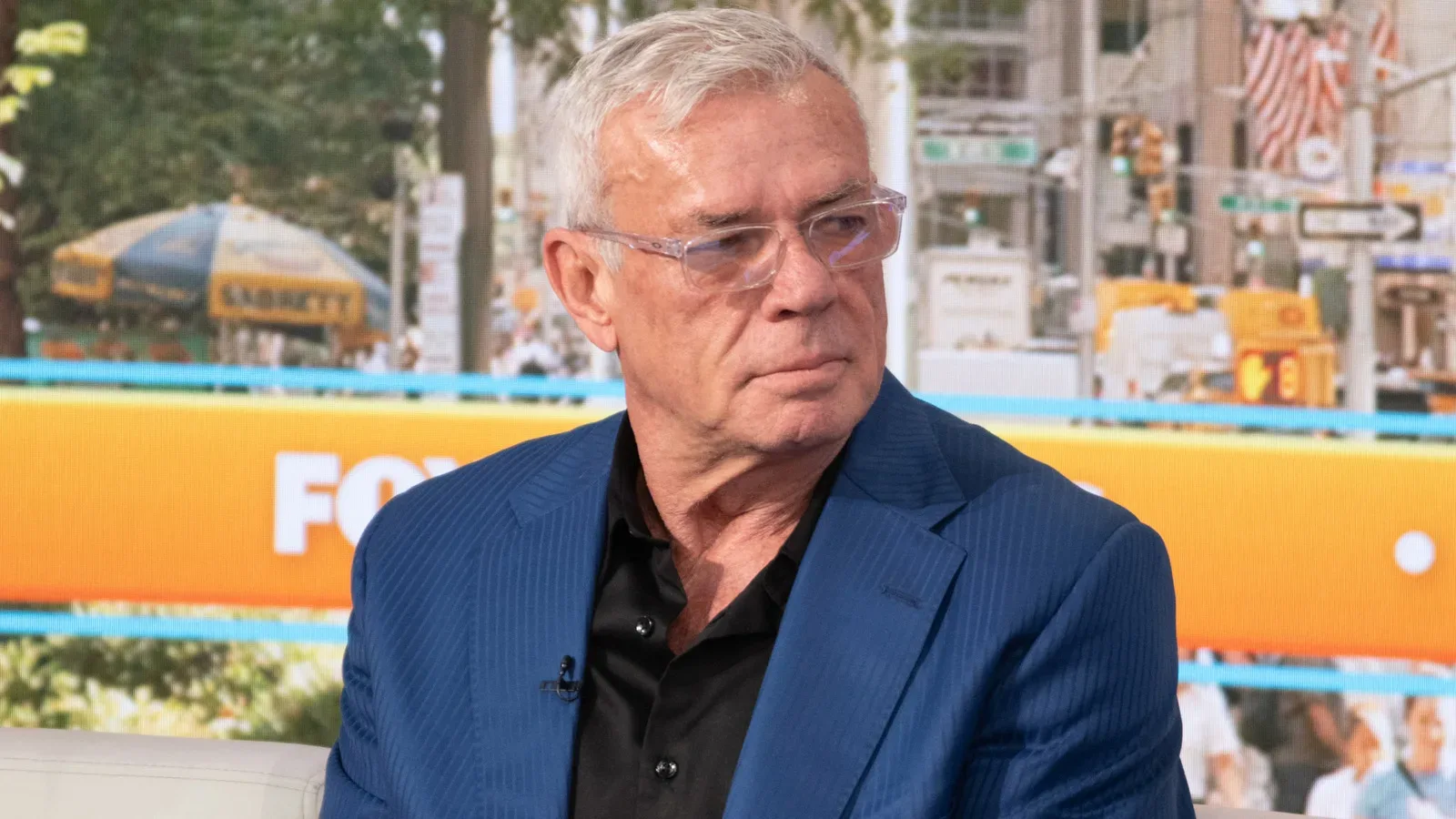
The impact of those losses has extended well beyond the people who knew Williams and Satterley most closely. In professional wrestling, a locker room is often asked to continue operating through grief, with performers still expected to travel, appear before fans, and safely execute demanding matches while processing devastating news. That difficult reality was at the center of Eric Bischoff’s recent comments on 83 Weeks.
Bischoff discussed the emotional challenge of tribute programming and the pressure placed on wrestlers who must continue performing following the death of a colleague. While he acknowledged that not every person in a locker room will have shared a close personal relationship with the wrestler who has died, he said the collective emotional weight is still felt throughout the group.
“You still feel the emotion everybody else is feeling,” Bischoff said on 83 Weeks. “To have to go out and perform as a character and focus on what you’re doing in the ring for your own safety as well as the person you’re in there with, has got to be challenging.”
For more background on this topic, read MJF Calls Kenny Omega vs. Will Ospreay at AEW All In ‘Very Underwhelming’.
That observation speaks to one of the most difficult parts of wrestling’s culture. The industry has long been built around performers pushing forward under extraordinary circumstances. Shows frequently continue in the aftermath of major personal and professional losses, and tribute events can provide a meaningful outlet for both the roster and the audience. At the same time, the responsibility of maintaining focus inside the ring does not disappear simply because the people involved are grieving.
Professional wrestling requires constant communication, physical precision, awareness of timing, and trust between opponents. Even a routine match depends on wrestlers being attentive to positioning and the well-being of the other person in the ring. Bischoff’s point was not that a grieving wrestler cannot perform, but that being required to balance that responsibility with profound emotion presents a unique and serious challenge.
Two losses in a short period
The proximity of the two reported deaths has also prompted understandable concern. Williams was 48 years old, while Satterley was 40. Their deaths came only weeks apart, creating a difficult period for AEW and for the larger wrestling community that knew both men through their work in the ring.
During the discussion, Conrad Thompson raised the possibility that life can sometimes deliver tragic and unexpected events without an obvious broader explanation. He noted that the recent losses brought to mind periods during the 1990s and early 2000s when wrestling saw a number of deaths involving relatively young performers.
Bischoff, however, said he was uneasy with treating two losses involving men in their 40s as something that should simply be brushed aside as random misfortune. He was careful not to identify a cause or make a specific allegation, but he expressed concern about what the timing and ages involved could represent.
“Every once in a while, someone will get struck by lightning, but you’ve got two guys, at 40 years old, something’s going on,” Bischoff said. “It is not natural. It’s not something that you can just go, ‘Sometimes, something happens.’ It’s concerning and hopefully we’re not seeing a pattern like we experienced back in the 90s when it was common, I guess. Relatively speaking. It happened too often, let’s put it that way. Let’s hope we’re not revisiting that. But, you know, somebody might want to take a look at that.”
Bischoff’s comments reflect concern rather than a conclusion. Causes of death for Williams and Satterley have not been released by officials. Initial reporting on Satterley’s death indicated that it did not appear to be suspicious. Without official findings, it would be irresponsible to draw connections between the deaths or to speculate about medical, personal, or professional factors.
Still, Bischoff’s central point is rooted in the industry’s difficult history. Wrestling has previously been forced to reckon with the toll taken on performers, particularly during eras when demanding schedules, physical punishment, travel, and inadequate attention to long-term wellness were frequent topics of discussion. Those past losses remain part of the industry’s collective memory, especially for veterans who lived through those periods.
The emotional demands of tribute shows
Tribute shows occupy a complicated place in wrestling. They are designed to honor a performer’s life and career, allow colleagues to speak through their work, and give fans a shared space to mourn. They can also be emotionally exhausting for everyone involved.
For the wrestlers taking part, the format creates an unusual dual obligation. A tribute event is personal, but it is also still a live wrestling show. The performers must honor someone they cared about while protecting themselves and their opponents in an environment where distraction can create real danger. Bischoff’s remarks focused on that tension: the need to remain present emotionally without losing the concentration that wrestling demands.
That is particularly relevant following the loss of Pac, whose work made him one of the most recognizable high-level performers of his generation. Satterley competed across major promotions and in front of audiences around the world, earning respect for his intensity, athleticism, and distinctive in-ring style. His reported death at 40 has clearly resonated throughout the wrestling community.
Williams, meanwhile, was known to AEW audiences as The Butcher. His presence, look, and work as part of the Butcher and the Blade pairing made him a familiar figure on the company’s programming. The loss of a wrestler with an established place in a promotion’s locker room affects not only tag partners, opponents, and close friends, but also coaches, production personnel, referees, and everyone who shared the road with that person.
In that respect, Bischoff’s observation about communal grief carries weight. Wrestling careers can create deep connections through constant travel, long days, shared physical risks, and the experience of performing before live crowds. Even those who were not personally close to Williams or Satterley may still feel the magnitude of the losses because they understand the work, the sacrifices, and the bonds that come with the profession.
Concern must be balanced with facts
The discussion also highlights the importance of separating concern from speculation. Two deaths involving wrestlers in their 40s over a brief period are understandably alarming, and Bischoff has every reason to voice unease based on his experience in the business. But concern is not evidence of a shared cause, and there is currently no official information establishing a connection between the deaths of Williams and Satterley.
Until officials release more information, the focus should remain on the people who are grieving and on honoring the lives and careers of both men. Public conversations about wrestler health, safety, scheduling, and wellness are worthwhile, particularly given the industry’s history. Those conversations must also be grounded in verified information rather than assumptions made in the immediate aftermath of tragedy.
For AEW, the challenge is both public and deeply personal. The company must honor two members of its broader family while supporting the performers and staff affected by the losses. Fans, meanwhile, are left mourning wrestlers whose work gave them memorable moments and who, in different ways, left a mark on the promotion.
Bischoff’s comments on 83 Weeks did not offer answers, nor did they attempt to assign blame. Instead, they conveyed the unease felt when a business that has experienced too many losses in the past is confronted with another pair of tragedies in such a short span. His message was ultimately one of caution: the industry should not ignore the emotional impact on its people or the seriousness of losses involving performers who were still far too young.
As more information becomes available from officials, the facts will remain essential. Until then, AEW’s immediate priority is clear: remember Andy Williams and Benjamin Satterley, support those closest to them, and give the locker room the space it needs to grieve.
In pictures

Darryl Polo
Darryl Polo is a passionate wrestling fan covering WWE, AEW, TNA and beyond. He loves great rivalries, breakout stars and the moments that keep fans talking long after the bell. How we work.