
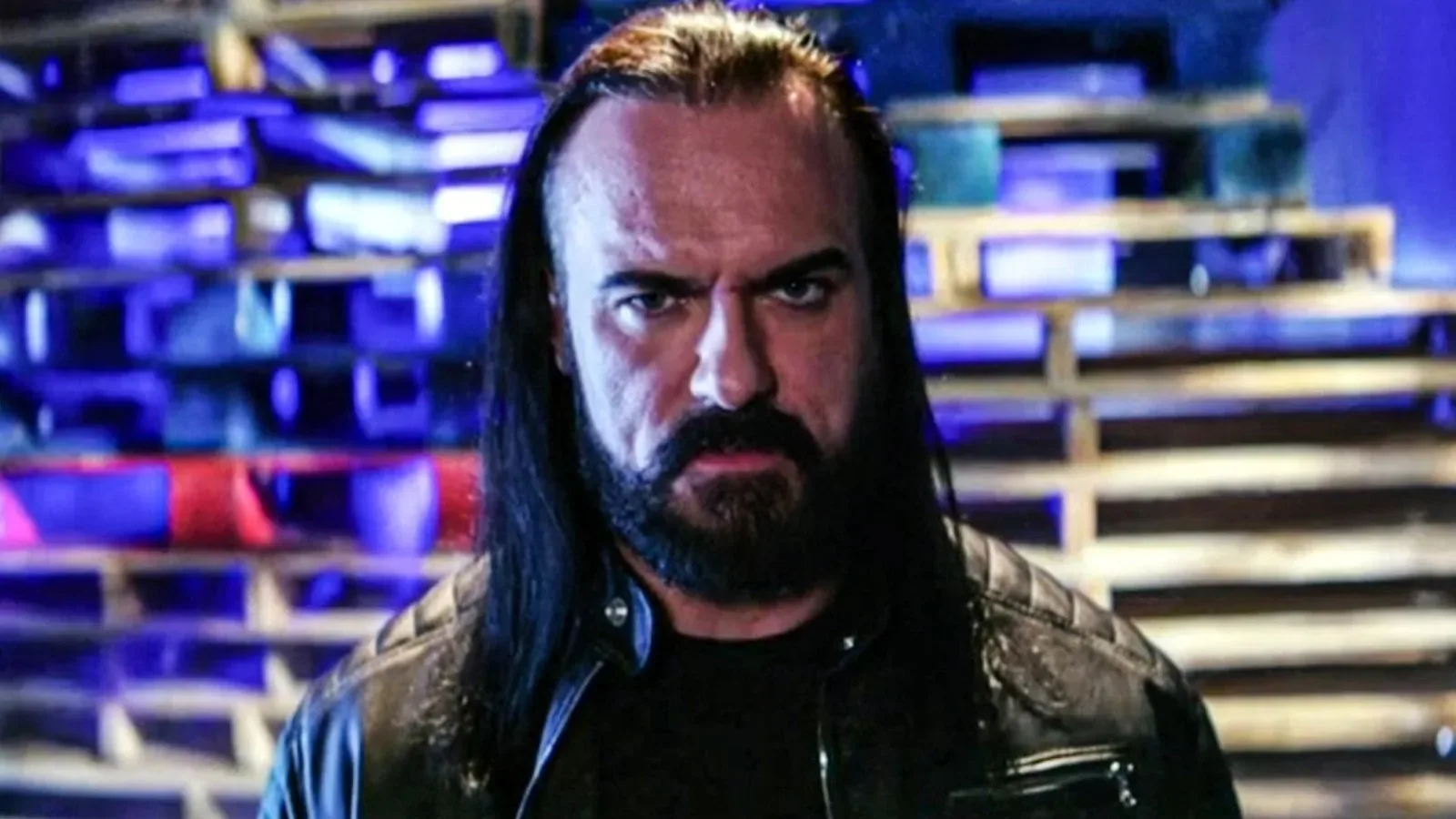
Drew McIntyre has made it clear that his current absence from WWE television should not be mistaken for a departure from the company or a step away from professional wrestling. While the Scottish star is focused on a growing slate of Hollywood work, he has teased that his WWE return is a matter of timing rather than uncertainty.
McIntyre is presently occupied with film commitments, including The Last Druid and Highlander. The projects have taken him away from WWE programming, but he says he remains fully invested in his in-ring future. In fact, McIntyre has presented his time away as an opportunity to build toward an even more formidable version of himself when he does reappear.
At 41 years old, McIntyre says he feels physically better than ever. He has continued training during his acting work and has recently shown himself running the ropes, an image that carries an obvious message for the WWE roster: the work outside the ring has not diminished his readiness for the ring.
McIntyre says WWE's approach has changed
A major part of McIntyre's ability to take on outside projects, he explained, is WWE's willingness to consider opportunities that can benefit both the performer and the company. He contrasted that attitude with the demanding travel and live-event schedules that defined much of his earlier career.
For more background on this topic, read Bronson Reed Details 50-Pound Transformation During WWE Injury Layoff.
“I think a lot of people have talked about it, like Vince was very much like, I need you here. And to be fair, we had so many live events back in the day. My entire life up until the past few years was wrestling every single week, 52 weeks a year, three times a week, minimum,” McIntyre said.
That workload shaped McIntyre's development in WWE. The company schedule traditionally required performers to be constantly available for television, non-televised events, media commitments and international touring. For someone whose career has included multiple runs with WWE and a long road back to the top of the roster, the chance to broaden his professional portfolio represents a significant shift.
McIntyre credited WWE President Nick Khan and Chief Content Officer Paul “Triple H” Levesque with supporting an arrangement in which a major talent can pursue a high-profile project when the circumstances make sense. His comments do not suggest that WWE's performers have unlimited freedom to leave for external work. Instead, he framed the approach as a business decision built around mutual value.
“But you know, as I said, Nick [Khan] and Paul [Levesque] are very much of the mindset, like if it makes sense, if it helps everybody and helps your brand, which in turn helps our brand [it's good], because I'm not going anywhere anytime soon.”
That final point is particularly important. McIntyre directly addressed the idea that outside acting assignments could signal a permanent change in career direction. He stated that he is not going anywhere, indicating that his Hollywood ambitions and WWE future are intended to exist alongside one another rather than compete for his long-term commitment.
Hollywood work is becoming a bigger part of WWE's landscape
McIntyre is not alone among prominent WWE names taking roles beyond wrestling. Roman Reigns, Becky Lynch and Cody Rhodes have also recently pursued acting opportunities. Their involvement reflects a broader reality for a company with internationally recognizable personalities and an increased emphasis on expanding individual stars into mainstream entertainment spaces.
For WWE, that type of exposure can be valuable when it is managed around the needs of its television product. An actor's film role can create a new audience connection, while the wrestler's return to WWE can bring added attention and a refreshed presentation. McIntyre's description of the current leadership philosophy suggests that this is how the company views the potential upside: a performer's personal profile can strengthen WWE's profile in turn.
The arrangement also gives established talent room to develop skills and opportunities that may not be available within a traditional full-time wrestling schedule. McIntyre's own path illustrates why that flexibility matters. He has already spent years performing at a high level, carrying the expectations that come with being one of WWE's most physically imposing and recognizable stars. A film schedule may remove him from weekly television, but it also creates a different kind of platform for him.
There is still an unavoidable wrestling consequence, however. Any absence by McIntyre leaves a major presence off WWE programming. His size, intensity and ability to present himself as a credible threat have made him a natural fit for top-level rivalries. Whenever he returns, WWE will have an established star capable of being placed immediately into a prominent situation.
McIntyre is confident his WWE return will be a powerful one
McIntyre did not announce a date for his return, and he did not identify a particular opponent or storyline waiting for him. What he did offer was an emphatic assessment of his present condition. He stressed that, despite having already shared the ring with several generations of wrestling greats, he is only 41 and believes he remains in peak form.
Reflecting on the early stages of his WWE career, McIntyre noted the unusual experience of working around talents such as Triple H and Shawn Michaels, both of whom were from an earlier generation, as well as Ric Flair. Those memories underline the length of McIntyre's association with WWE and the amount he has already experienced inside the company.
“I remind everyone my age all the time. I just turned 41 the other week. I'm 285 pounds. I'm the biggest I've ever been. You see the way I'll be hitting ropes, I'm the fastest I've ever been. My body feels fantastic. My mind's right. My body's right. It's just whenever I decide to bring Hollywood Drew back to WWE, it's going to get rolling,” McIntyre said.
The phrase “Hollywood Drew” is a notable way to frame his next chapter. It points to a potentially evolved presentation shaped by his time in film, while also maintaining the core identity that has made McIntyre such a dangerous WWE competitor. His comments were not the words of a wrestler easing into a reduced role. They were a warning that he expects to return with confidence, size and momentum.
McIntyre's claim that he is the biggest and fastest he has been is, naturally, part of the competitive language wrestlers use when preparing for a return. But it is also consistent with the visual message he has shared while continuing his ring training. He has not simply stepped away from physical preparation while filming. He is staying connected to the demands of wrestling, including rope work, as he balances the two careers.
No timetable, but a clear statement of intent
For now, the key detail is that McIntyre remains focused on completing his Hollywood commitments. There is no confirmed WWE return date, no announced match and no indication of the exact program that could greet him when he is back on television. That uncertainty will naturally invite speculation, especially given his status and the confidence with which he has discussed his condition.
Still, McIntyre's own message is straightforward. He sees his acting work as compatible with his WWE role, not as an exit from it. He believes WWE's current leadership understands the benefit of allowing talent to explore the right outside opportunities. And he wants the locker room and fans to know that he has continued preparing for the moment he comes back.
When that moment arrives, McIntyre will return carrying the added visibility of his film projects and the certainty that he has not lost faith in what he can accomplish in WWE. Until then, his warning stands: Hollywood Drew is training, feeling healthy and expecting things to move quickly once he decides it is time to bring that version of himself back to WWE.
In pictures

Darryl Polo
Darryl Polo is a passionate wrestling fan covering WWE, AEW, TNA and beyond. He loves great rivalries, breakout stars and the moments that keep fans talking long after the bell. How we work.