
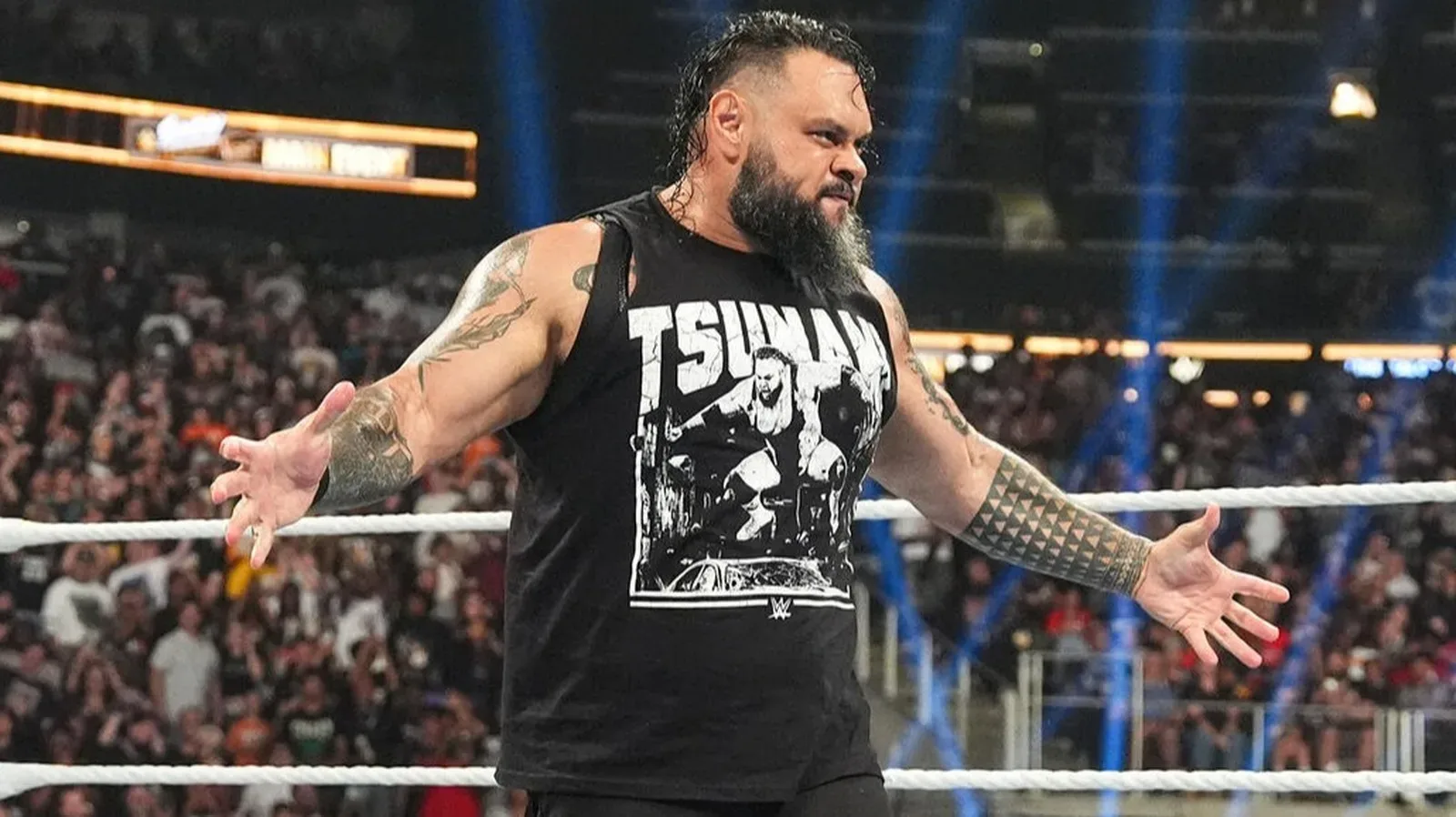
Bronson Reed did not intend for his return to WWE to be defined only by recovering from a torn bicep. The powerhouse used the injury absence as an opportunity to make a visible change, shedding 50 pounds while rebuilding his strength and conditioning ahead of his September comeback.
Reed suffered the bicep injury this past February, placing a major obstacle in front of a performer whose style is built around overwhelming size, power, and impact. Rather than simply waiting to be medically cleared, Reed focused on finding a way to make his eventual return feel different. The result was a noticeably leaner presentation when he resurfaced at WWE's first-ever Sunday Night's Main Event on September 6.
In an appearance on Cheap Heat with Peter Rosenberg, Reed explained that the severity of the injury pushed him to consider how he could distinguish himself once he was ready to compete again. He said he committed fully to the process and worked with a coach in Australia on nutrition, strength training, and overall conditioning.
That six-month period produced a dramatic result. Reed revealed that he lost 50 pounds during the time he was sidelined, while maintaining the physical foundation necessary for his hard-hitting in-ring approach. A photo Reed shared before his WWE return had already shown a much more defined version of the wrestler known as “Big” Bronson Reed, but his comments offered greater context about the work behind the change.
For more background on this topic, read Sami Zayn Reflects On WWE Elimination Chamber 2023: ‘I Don’t Think It’s Ludicrous’ To Say He Should Have Won.
A Return Built Around Standing Out
Reed’s transformation was not framed as a short-term effort to look different in a single social-media post. It was a response to an enforced pause in his career and a deliberate plan for what would come next. Serious injuries can interrupt momentum, especially for wrestlers whose roles depend on physical credibility, but Reed looked at the layoff as a chance to alter the conversation around his return.
He has dealt with significant injuries before, but described the torn bicep as a particularly serious setback. That perspective appears to have informed his decision to attack the rehabilitation period from more than one angle. The goal was recovery, but it was also reinvention: returning healthy, stronger, better conditioned, and visually distinct from the version of Reed WWE audiences had last seen.
For a performer with Reed’s build, losing 50 pounds without sacrificing presence is an especially notable accomplishment. His identity has long been tied to being one of the most imposing athletes in the ring. The “Big” Bronson Reed name, the Tsunami splash, and the physical force behind his matches all rely on the sense that opponents are dealing with an unusually difficult challenge.
The recent change does not remove that identity. Instead, it gives Reed another dimension. A leaner Reed can still present the same power-based threat while potentially adding greater endurance and mobility. That combination could be important as he looks to re-establish his standing in a WWE roster filled with high-level athletes and increasingly competitive factions.
Reed’s Place in The Vision
Reed’s WWE direction is also connected to The Vision, the group that includes Bron Breakker and Austin Theory. Reed referenced his previous return from injury leading to his involvement with the faction, a move that placed him alongside two younger stars with championship ambitions and major momentum.
At present, Breakker and Theory are carrying the World Tag Team Championships, giving The Vision a tangible measure of success. Their title reign places the faction prominently in WWE’s tag team picture, while Reed continues to seek a defining breakthrough on the singles side.
That contrast gives Reed a clear motivation. He is aligned with champions, but the group’s recent championship hardware belongs to Breakker and Theory. Reed’s physical transformation can therefore be seen as part of an effort to ensure he is not merely viewed as added muscle within the unit. He wants to be a standout force in his own right.
Reed has never lacked the tools to command attention. His size, explosive offense, and willingness to throw his body through the air for the Tsunami splash make him difficult to overlook. Still, WWE’s roster does not allow many opportunities for performers to remain static. A substantial visual change can provide a fresh narrative hook, particularly after months away due to injury.
His conditioning work also arrives at a useful time for The Vision. With Breakker and Theory holding the World Tag Team Championships, every member of the group has added reason to maintain momentum. Reed’s return creates another possible avenue for the faction to influence major matches, whether through his own singles pursuits or his role alongside the titleholders.
Money in the Bank Loss Adds More Motivation
Reed’s road back has not been without frustration. Earlier this month, he was unable to secure a singles victory over Oba Femi at Money in the Bank. The defeat kept Reed from immediately converting his return and his new physical condition into a signature win.
However, the loss does not diminish the significance of the transformation or the work it took to complete it. If anything, it sharpens the stakes around Reed’s next steps. He has already shown that he can make a major commitment away from the ring. The remaining challenge is translating that commitment into victories against opponents at the top of WWE’s singles landscape.
Femi represents precisely the kind of opponent against whom a wrestler needs to make a statement. Reed’s inability to defeat him at Money in the Bank may have delayed that statement, but it also gives Reed an obvious source of competitive fuel. A wrestler returning from a lengthy injury absence often needs time to regain rhythm and rebuild match-to-match momentum, regardless of how impressive the physical preparation may be.
There is also a larger point in Reed’s comments: the transformation was never presented as a guarantee of immediate results. It was about preparation and differentiation. By changing his physique during a difficult period, Reed gave himself a new platform from which to pursue those results. The next phase is proving that the new look is accompanied by the same or greater level of in-ring effectiveness.
Why the Change Matters for Reed’s WWE Future
Professional wrestling is a visual medium, and performers often have limited time to establish a clear identity when they return from injury. Reed understood that reality. He did not want his comeback to be treated as simply another name re-entering the rotation. He wanted there to be an immediate sign that he had used his time away constructively.
The 50-pound weight loss gives WWE another way to present Reed, but it does not require him to abandon what made him successful. His greatest strengths remain obvious: he is a heavyweight capable of sudden bursts of athleticism, he can dominate opponents with raw power, and his finishing splash remains one of the most devastating-looking moves in the company.
What has changed is the potential range of his performance. Better conditioning can be valuable in longer matches, faster-paced situations, and the kind of multi-person contests where stamina can become a deciding factor. It can also help Reed sustain a more aggressive pace if he is placed in a prominent singles rivalry or expected to support The Vision’s title ambitions across multiple programs.
Reed’s public image leading into his return already made clear that something had changed. His explanation now confirms the scale of the effort. Working with a coach in Australia, he focused on the elements that often determine whether an athlete can turn rehabilitation into a genuine reset: disciplined nutrition, consistent strength work, and conditioning suited to the demands of competition.
The torn bicep was a setback, but Reed has positioned it as a turning point. He is back in WWE, he is visibly different, and he has an added incentive after falling short against Oba Femi at Money in the Bank. Meanwhile, Breakker and Theory’s World Tag Team Championship reign ensures that The Vision remains a factor in WWE programming.
For Reed, the objective now is straightforward. The work during his absence has created attention. The next task is converting that attention into wins, momentum, and a place near the top of WWE’s singles scene. If he can do that, the 50-pound transformation will be remembered as more than an impressive recovery story. It could become the foundation for the most important chapter of his WWE run.
In pictures

Darryl Polo
Darryl Polo is a passionate wrestling fan covering WWE, AEW, TNA and beyond. He loves great rivalries, breakout stars and the moments that keep fans talking long after the bell. How we work.