
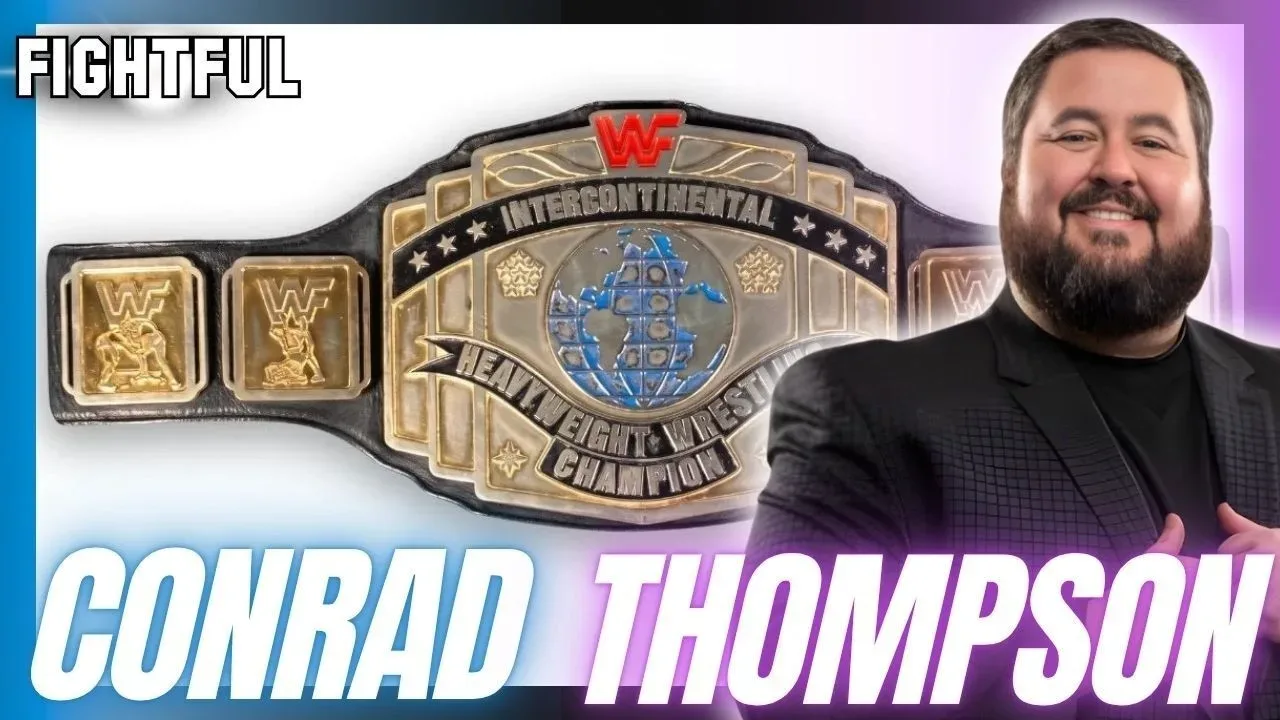
Conrad Thompson has shared a sobering story about an attempted purchase of memorabilia tied to one of his biggest childhood wrestling heroes, saying belt maker and authenticator Dave Millican helped prevent him from completing a deal for title belts allegedly used by The Ultimate Warrior.
Thompson, a prominent wrestling memorabilia collector and podcast host, discussed the experience during a recent interview. The proposed transaction involved belts that Warrior represented as show-worn pieces, including titles associated with some of the most recognizable moments of his WWE career. But after Thompson sought expert input from Millican, the deal unraveled.
The situation was particularly personal for Thompson because the items being offered were connected to the period when Warrior was at the height of his popularity. The yellow Intercontinental Championship and the WWE Championship associated with WrestleMania VI are not simply vintage championship belts to many fans. They represent the defining visuals of Warrior's run: his colorful entrance gear, explosive ring presence, and his landmark victory over Hulk Hogan at Toronto's SkyDome.
For Thompson, those memories went back to childhood. That emotional connection was why he initially took the opportunity seriously, while also taking the proper steps to verify what he was being offered.
For more background on this topic, read Kelani Jordan Calls WWE Raw In-Ring Debut an ‘Awesome Experience’ Ahead of Halloween Havoc.
A SummerSlam 1990 Belt Raised the First Questions
Thompson said he was put in contact with Warrior through the former champion's website. While looking through photographs, he found one image that was no longer directly linked on the site but was said to depict the belt Warrior wore at SummerSlam 1990 against Ravishing Rick Rude.
Warrior and Rude met in a Steel Cage Match at that event, one of the major WWE championship bouts of the era. A genuine belt from that match would naturally be a high-profile collector's item. Yet Thompson did not rely solely on the description attached to the photo.
Instead, he forwarded the images to Millican, a noted belt maker whose work and knowledge have made him a trusted voice among championship-belt collectors. Thompson recalled asking Millican whether the identification was accurate. Millican's response, as Thompson told it, was immediate and clear:
“Absolutely not. That’s not the ring used belt.”
Thompson then confronted Warrior with that assessment via email. He said Warrior rejected Millican's conclusion and argued that Thompson's friend did not know what he was talking about. Thompson noted the irony of that response: Millican was not simply a fellow collector offering an opinion, but the belt maker Thompson believed would have made the relevant belts.
The exchange did not end there. Thompson said Warrior asked him what he was actually looking for. Thompson responded that his primary interest was the yellow Intercontinental Championship and the WWE title tied to WrestleMania VI.
Those two belts carried enormous nostalgic value. At WrestleMania VI in 1990, Hulk Hogan entered as WWE Champion while Warrior arrived as Intercontinental Champion. Their “Ultimate Challenge” match put both championships on the line, and Warrior won after pinning Hogan. The image of Warrior holding both titles became one of the signature images of WWE's late-1980s and early-1990s boom.
Thompson said that period represented wrestling at its absolute best from the perspective of his younger self. Hogan and Warrior were his heroes, and WrestleMania VI held a special place in his fandom. That made the prospect of owning championship belts from that era especially enticing.
Millican Was Asked to Authenticate the Proposed Purchase
Thompson said he and Warrior eventually reached a tentative agreement involving the two sought-after title belts. The proposed setup itself was unusual: Warrior wanted Thompson to bring cash and meet at an airport.
Rather than attend alone, Thompson asked Millican to come with him and authenticate the belts before any money changed hands. It was not Thompson's first time using Millican's expertise. He said Millican had previously assisted in authenticating Thompson's purchase of the famed Big Gold Belt.
That prior experience made Millican the logical person to consult again, particularly with major money and historically significant memorabilia at stake. The authentication process became decisive.
According to Thompson, Millican told him that Warrior had already sold the yellow Intercontinental Championship years earlier. Millican said the genuine piece was on the shelf of a private collector. If true, that meant the belt being discussed could not have been the original show-worn championship Warrior was presenting it as.
Thompson said he challenged Warrior on that point. In response, Warrior allegedly sent a photograph from another collector's collection. Thompson characterized sharing a private collector's display in that manner as a major breach of etiquette within the memorabilia world.
Collectors often value discretion as much as provenance. Some own rare pieces privately and do not want their collections photographed, identified, or circulated without permission. Thompson acknowledged that he has been unusually open about his own collection, but said that does not change the general expectation that another collector's items should remain private unless that person chooses otherwise.
The image did not reassure Thompson. It instead reinforced the concern that the Intercontinental title in question was no longer Warrior's to sell. Thompson said it was disappointing to confront the possibility that someone he admired as a child had been attempting to sell an item that had already been sold to somebody else.
Deal Collapses After Thompson Challenges Warrior
Thompson said he put the information in front of Warrior and that Warrior reacted angrily. The transaction went no further.
In telling the story, Thompson did not hide his frustration. He described the experience in blunt terms, saying he came away believing he had been misled. Still, he also separated his adult assessment of the business interaction from the powerful memories Warrior created for him as a fan.
Thompson said he had an Ultimate Warrior birthday cake when he was nine years old. His conclusion was that Jim Hellwig, Warrior's real name, may have left him disappointed on a personal level, but the Ultimate Warrior character still meant something significant to him. As Thompson put it,
“Jim Hellwig may have been a turd, but the Ultimate Warrior ruled.”
That distinction will be familiar to longtime wrestling fans. Warrior was one of the industry's most magnetic and divisive figures. His performances, look, entrance, promotional style, and WrestleMania VI triumph made him an enduring icon. At the same time, accounts of his dealings away from the ring have frequently generated intense debate among those who worked with him and those who encountered him in business.
Warrior died in April 2014, days after appearing during WrestleMania 30 weekend and delivering an emotional speech on WWE Raw. He was inducted into the WWE Hall of Fame that same weekend. His legacy remains complex, but his place in the visual history of WWE is unquestionable.
The Importance of Provenance in Wrestling Memorabilia
Thompson's account also serves as a reminder of how essential authentication is in the wrestling memorabilia market. Championship belts are among the most sought-after artifacts in the hobby, particularly when they can be connected to a famous wrestler, a championship reign, or a specific landmark match.
But appearance alone cannot establish authenticity. Wrestling title belts may have multiple versions, including television-used belts, touring replacements, replicas, developmental pieces, remade plates, and belts altered over time. An item may resemble an iconic championship closely while possessing none of the match history claimed by a seller.
For that reason, documentation, photographs, chain of ownership, manufacturing details, and knowledgeable examination all matter. An expert can compare plates, tooling, leather work, snaps, side plates, repairs, and other characteristics against known examples. In the case described by Thompson, Millican's familiarity with the belt-making process and the location of a previously sold title appears to have been crucial.
Thompson was candid that he had been emotionally invested in the possibility of acquiring the WrestleMania VI-related pieces. Yet his willingness to bring in an independent expert ensured that sentiment did not override verification.
There is also a wider lesson for collectors at every level. A seller's fame, direct personal association with an item, or persuasive story should not substitute for due diligence. The bigger the claimed historical importance and financial value of a piece, the more important it becomes to obtain qualified authentication before completing a purchase.
For Thompson, that decision meant walking away from a dream deal rather than risking a costly mistake. The belts may have represented the peak of his childhood fandom, but Millican's intervention gave him reason to believe the items did not match the claims being made.
The result was an unpleasant experience involving a wrestling legend Thompson once idolized. Even so, his recollection makes clear that the larger-than-life Ultimate Warrior character retains its hold on the fan who watched Hulk Hogan and Warrior collide at WrestleMania VI. The memorabilia deal fell apart, but the memories of that era remain intact.

Darryl Polo
Darryl Polo is a passionate wrestling fan covering WWE, AEW, TNA and beyond. He loves great rivalries, breakout stars and the moments that keep fans talking long after the bell. How we work.