
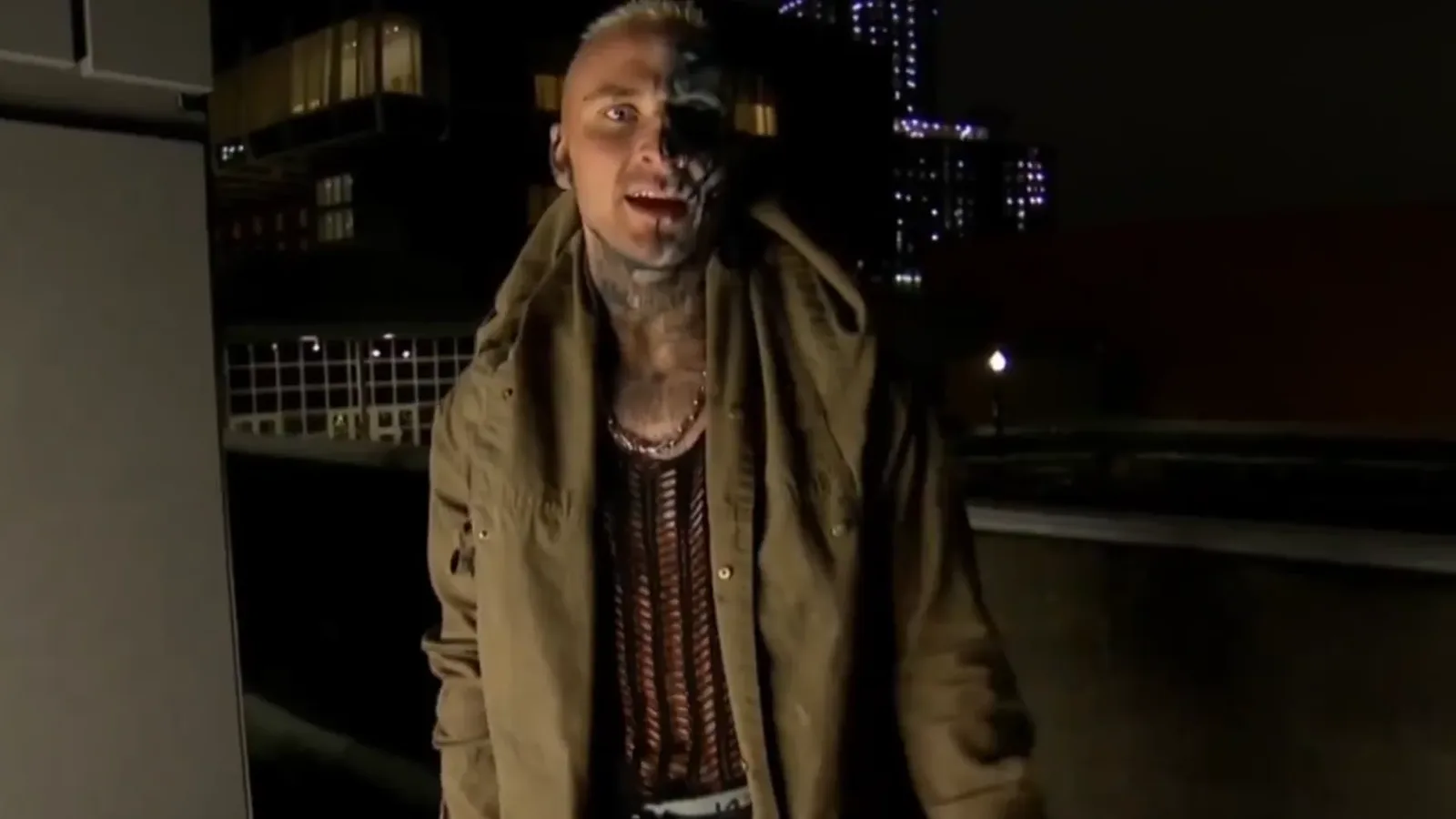
Darby Allin has built one of the most distinctive identities in All Elite Wrestling by refusing to make himself easier to categorize. His presentation, his willingness to absorb punishment, his high-risk in-ring style and his intensely personal connection with audiences have all made him one of AEW’s most recognizable performers since the company launched in 2019.
For Allin, that consistency is not accidental. He recently discussed the principle that has guided him since he first entered wrestling school in 2014: he did not want success to come at the cost of becoming somebody else. Allin said that remaining authentic has been his most important objective in professional wrestling, even as the industry can present performers with countless different routes toward prominence.
“It’s really interesting because I feel the most important thing to me in wrestling in general was leaving the same person I came in, and there’s a million routes you could take to make it to the top of this wrestling game, and a lot of that involves compromising your beliefs and how you perceive yourself, and it’s really intimidating to stay true to yourself.”
That philosophy has long been visible in Allin’s AEW work. He has been a central part of the promotion’s identity from its formative years, developing from a compelling underdog into a former TNT Champion, a major pay-per-view attraction and a performer who has shared the ring with some of wrestling’s biggest names. Through every stage, however, the foundations of the Darby Allin character have remained familiar: resilience, defiance, risk and an unwillingness to be molded into a conventional version of a wrestling star.
For more background on this topic, read Mike Bailey Addresses Ilja Dragunov Loss, Reaffirms AEW Singles Title Ambition.
Allin acknowledged that the pressure to alter oneself can be daunting, particularly for an aspiring wrestler attempting to find a place in an intensely competitive business. His answer to that pressure was formed before AEW existed, when he made a commitment to himself on his first day of training.
“So that’s kind of the first thing I told myself the first day of wrestling school ever back in 2014. I was like, I have to stay true to who I am and I’m not going to change for anybody to make it to the top.”
The message is especially notable coming from a wrestler whose career has often invited debate about what a top-level performer is supposed to look like. Allin does not fit a single traditional template. Rather than attempting to soften his edge, he has leaned into the qualities that made him stand out early in his career. That has included a physical style that frequently places him in dangerous situations and has generated regular concern from observers who believe he should reduce the risk in his matches.
Allin has continued to make risk a defining part of his performances despite those criticisms. While his approach naturally creates discussion, it also reinforces the sincerity at the center of his comments. He is not merely presenting authenticity as a slogan. In his view, being genuine means accepting the difficult parts of that choice, including criticism, uncertainty and the possibility that remaining himself might make the climb harder.
He explained that he would rather endure severe hardship while holding onto his beliefs than reach a position of success and no longer recognize the person he has become.
“I’d rather be homeless under the bridge like I was a few years ago, but stay true to myself as opposed to change everything about myself and I’m looking at myself in the mirror and I don’t even know who I’m looking back at.”
That statement provides significant context for why Allin considers personal integrity a greater achievement than simply accumulating accomplishments. Championships, main events and visibility carry obvious value in wrestling, but Allin’s standard for success extends beyond those measurable markers. He does not want the destination to erase the reason he pursued the journey in the first place.
Allin described wrestling as a brief opportunity, referring to it as “a 15 minute ride.” The phrase underscores the urgency with which he approaches his career. For a performer who regularly wrestles with an all-or-nothing intensity, there is a clear connection between that outlook and the way he works. Every appearance is treated as valuable because the chance to perform at this level is not guaranteed to last forever.
AEW Success Without Reinvention
Allin said reaching a prominent place in AEW while retaining the identity he began with has been among the greatest feelings of his career. His rise is a meaningful example of the idea he hopes younger wrestlers will embrace. He did not frame authenticity as the easiest route, nor did he suggest there is only one way to make it in the industry. Instead, he recognized that there are many possible paths while emphasizing that his own path had to remain rooted in who he genuinely was.
“So to kind of climb to the top of AEW without changing anything has been the greatest feeling in the world.”
That distinction matters. Professional wrestling demands adaptation from everybody who enters it. Performers evolve in the ring, learn how to communicate with crowds, adjust to television production and respond to the changing needs of a promotion. Allin’s comments are not a rejection of growth. Rather, they address the difference between evolving as an artist and abandoning the core beliefs that make an artist distinct.
For Allin, success achieved through a persona or philosophy he did not believe in would create its own emptiness. He questioned what it would mean to reach the top of a profession while feeling detached from the work that put him there. The concern, as he presented it, is not simply whether an audience accepts a performer. It is whether that performer can look at their own career and understand what they stand for.
That outlook has helped make Allin an important figure for fans who see value in wrestlers who are unconventional, uncompromising and visibly invested in their craft. AEW has featured an array of styles and personalities since its inception, and Allin has remained one of the promotion’s clearest examples of an act whose appeal comes from feeling personal rather than manufactured.
Inspiring the Wrestlers Who Come Next
Allin said his ultimate ambition is to encourage the next generation of wrestlers to trust themselves. He wants future performers to understand that their real identity can be an asset, not an obstacle, if they bring it fully to their work. In his view, audiences can recognize when a performer is offering something sincere.
“I just want to inspire the next generation be like, ‘Hey, you don’t have to change who you are,’ because if you bring the real thing and what’s in this soul, like what’s in here to the world, it shows.”
It is a message that reaches beyond a specific style of wrestling. Allin is not asking every young performer to wrestle like him, dress like him or build the same kind of character. The central point is that individuality has value. A wrestler’s voice, experiences, convictions and instincts can be the very things that separate them from everyone else competing for the same opportunities.
He also connected that principle to work ethic. Allin said there should be no off night when a wrestler has the opportunity to perform, because the profession is a blessing. That mentality has been apparent in the urgency of his AEW career, where he has consistently been willing to put himself on the line in major moments.
“So that’s my whole goal with AEW is just inspire the next generation of wrestlers just to bring it every single night. There’s never an off night because it is a blessing what we have in front of us.”
Allin’s career has been defined by the willingness to make bold choices, and his latest comments make clear that he sees authenticity as the boldest choice of all. The high-risk moves may draw the most immediate attention, but the deeper risk he described is refusing to compromise when compromise might appear to offer a smoother route forward.
As he continues his run in AEW, Allin’s stated mission is straightforward: prove that a wrestler can achieve major success without abandoning the person they were when they started. For him, that is more than a career preference. It is the legacy he wants to leave for those preparing to take their own first steps into a wrestling ring.

Darryl Polo
Darryl Polo is a passionate wrestling fan covering WWE, AEW, TNA and beyond. He loves great rivalries, breakout stars and the moments that keep fans talking long after the bell. How we work.