
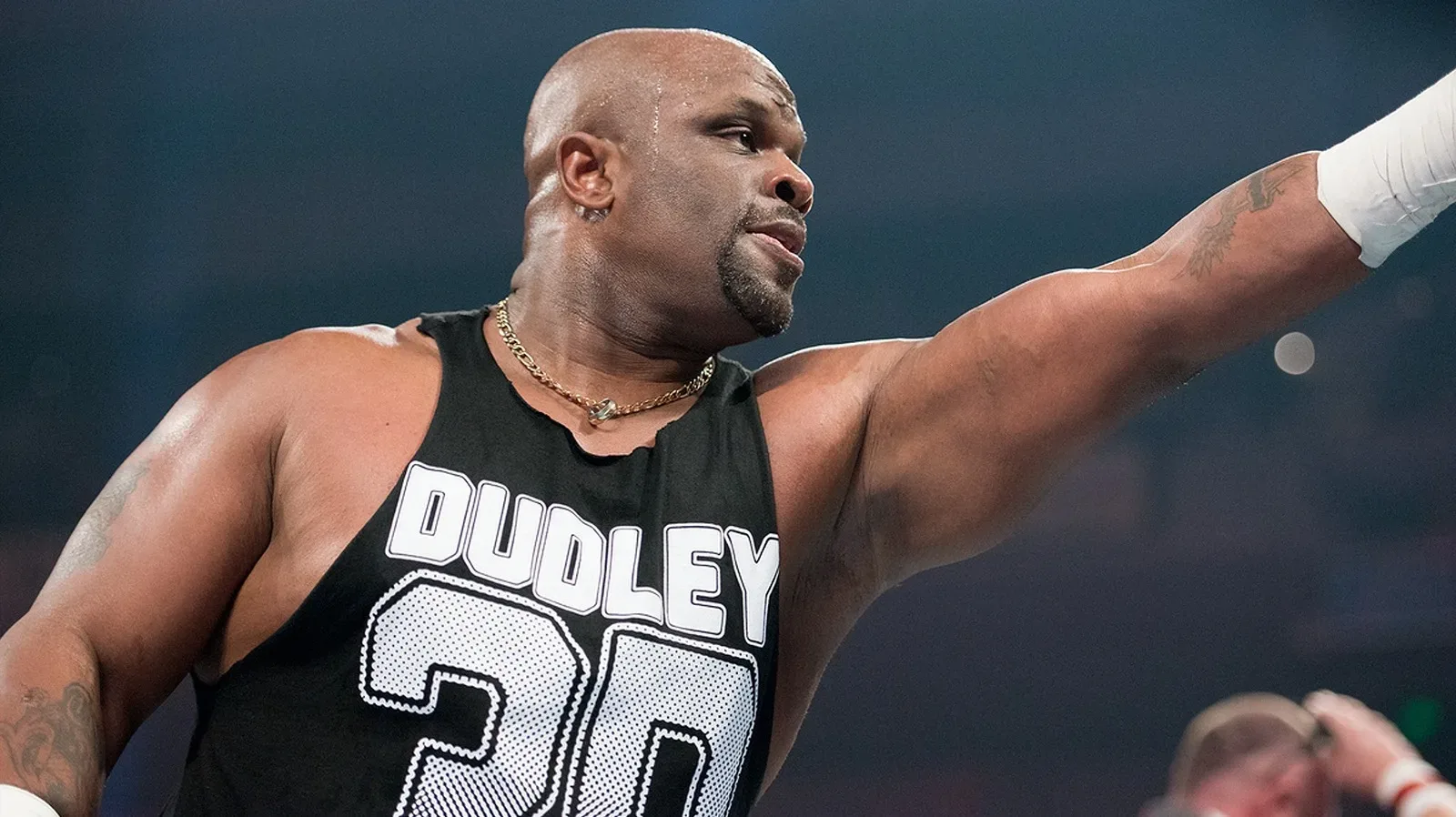
For D-Von Dudley, the passage of time has not diminished the emotional weight of September 11, 2001. The WWE Hall of Famer, a New York native whose career has long been associated with some of the most important eras in company history, recently reflected on the attacks and the deeply personal impact they had on him even while he was far from home.
The 25th anniversary of the September 11 attacks brought renewed reflection across the United States, particularly in New York City, where the World Trade Center attacks reshaped the lives of families, communities and the country as a whole. D-Von was under WWE contract in 2001, and he and the rest of the roster were in Houston, Texas, where WWE was taping television at the time. The physical distance from Manhattan did not make the news any less devastating.
Madison Square Garden had, for generations, stood as one of WWE's most significant venues. It was a building tied closely to the company's identity, its history and many of its biggest moments. For a New Yorker such as D-Von, the attacks on the World Trade Center carried an especially painful connection to home. His recollection underscores how the tragedy reached people across the country and around the world in real time, leaving many struggling to comprehend what they were seeing.
A Call From Bubba Ray Dudley
D-Von recalled learning of the unfolding situation through his longtime tag team partner, Bubba Ray Dudley. The two men had built one of professional wrestling's defining teams as The Dudley Boyz, but the familiar bond between traveling partners took on a far different meaning that morning.
For more background on this topic, read Oba Femi Confronts Omos After WWE x AAA Worlds Collide Main Event.
Bubba Ray called and urged D-Von to turn on the television. At first, D-Von had difficulty accepting that the images on the screen were real. In his recollection, the footage appeared so unbelievable that it resembled a disaster movie rather than a live news broadcast. Once the reality of the attacks became clear, however, the shock gave way to a crushing sense of fear and grief.
He described the feeling as one that still does not become easier to revisit. That sentiment is central to the enduring legacy of September 11: the event remains not merely a historical date, but a moment remembered with vivid detail by those who experienced its immediate uncertainty. For D-Von, the repeated television images and the scale of what was happening left him wondering whether he was witnessing the end of the world.
The response was understandable in a moment when confirmed information was limited, live coverage was relentless and the entire country was trying to make sense of an unprecedented attack. Wrestlers, production staff and fans were all part of that broader public experience. Though WWE was away from New York that day, its performers were not insulated from the same grief, anxiety and confusion felt throughout the nation.
An Empty Road in Houston
After learning what had happened, D-Von eventually met with Bubba Ray and Dwayne “The Rock” Johnson. The three were traveling together and went out in search of a restaurant that remained open. What stayed with D-Von was not only the news coverage, but the atmosphere outside.
He remembered Houston's streets as empty and desolate, creating the impression that normal life had abruptly stopped. In his mind, the roads felt abandoned, as though he and the people traveling with him were alone in a world that had suddenly changed. It was a small but telling detail from a day defined by enormous events: public spaces that would ordinarily be busy instead became quiet, uncertain places.
That image offers a reminder of how September 11 altered everyday routines far beyond New York. Flights were grounded, businesses closed, television programming changed and people sought out loved ones. Across the country, the normal rhythm of a weekday morning disappeared. For those on the road, including WWE talent working far from their own homes and families, the separation added another layer to the experience.
D-Von's memories do not center on wrestling results or the business of the industry. Instead, they focus on the basic human reaction to tragedy: receiving an alarming call, seeing incomprehensible images on television, finding trusted friends and moving through a city that no longer felt familiar. His account is personal, but it reflects emotions shared by countless people who remember exactly where they were when they heard the news.
A New Yorker Carrying the Memory Forward
D-Von's connection to New York gives his reflection particular resonance. The Dudley Boyz became one of the most celebrated tag teams of their generation, earning induction into the WWE Hall of Fame and leaving a legacy that stretched from ECW to WWE and beyond. Yet the accomplishments of a wrestling career do not erase the identity and hometown ties that shape a performer away from the ring.
For New Yorkers, September 11 remains a wound tied to a specific skyline, a specific city and the people whose lives were lost. The World Trade Center was more than a collection of buildings; it was a defining symbol of lower Manhattan and a workplace for thousands. The attacks also affected first responders, survivors, families and every community connected to those who were lost.
WWE itself has repeatedly been linked to New York through its history at Madison Square Garden, an arena that helped establish the scale and cultural reach of the company. That history makes the tragedy's proximity to WWE's traditional home especially meaningful, even though the roster was in Texas when the attacks occurred. D-Von's recollection places a familiar wrestling figure within a much larger national story.
His comments also illustrate why anniversaries can be difficult. A quarter-century can pass, but a memory rooted in sudden fear and loss may remain immediate. D-Von made clear that thinking about that day still brings emotional pain. There is no suggestion that time has made the event easier to process; rather, the anniversary provides another occasion to remember the enormity of what happened.
Remembering Beyond the Ring
Professional wrestling is often built around spectacle, conflict and larger-than-life personalities. On September 11, 2001, those usual boundaries disappeared as performers and audiences alike confronted a moment of national trauma. D-Von's account is a reminder that wrestlers who appear before millions of viewers are also people processing the same events, losses and uncertainty as everyone else.
The fact that he traveled with Bubba Ray and The Rock on that day adds a human dimension to names known around the world. In ordinary circumstances, their time together would have been part of the routine of life on the road. Instead, it became connected to an unforgettable day of watching events unfold, looking for an open place to eat and driving through streets that felt startlingly empty.
As the 25th anniversary has prompted reflection, D-Von's memories stand as an account of disbelief giving way to reality. They also serve as a tribute to the lasting impact of those attacks on New York, on the United States and on people who were nowhere near the World Trade Center when they learned what had happened.
For D-Von Dudley, September 11 is not a distant chapter that can be cleanly separated from the present. It remains a day of profound personal and collective sorrow, remembered through a phone call from his partner, the haunting images on television and an empty drive through Houston while the world attempted to understand an unimaginable tragedy.
In pictures

Darryl Polo
Darryl Polo is a passionate wrestling fan covering WWE, AEW, TNA and beyond. He loves great rivalries, breakout stars and the moments that keep fans talking long after the bell. How we work.