
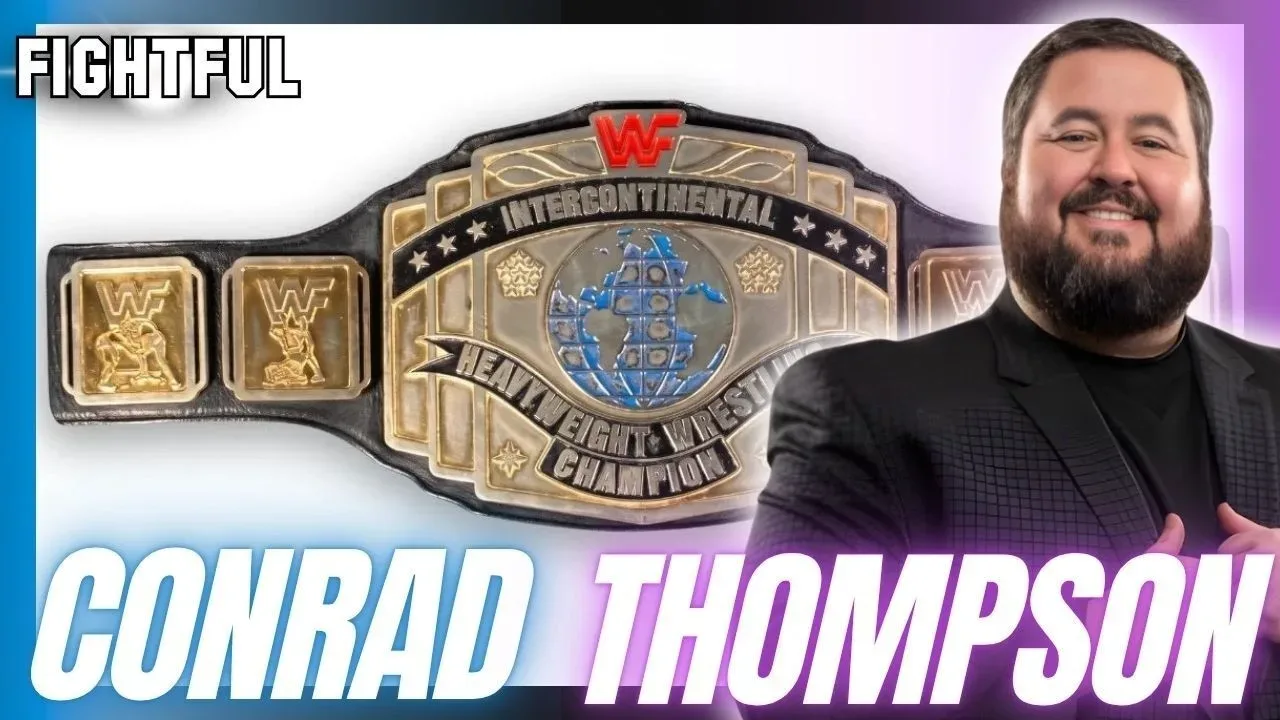
Conrad Thompson has not given up on the possibility of hosting a podcast centered on Extreme Championship Wrestling with Joey Styles.
Styles, whose unmistakable play-by-play call became synonymous with ECW during the promotion’s rise and turbulent final years, has maintained a limited public connection to professional wrestling since leaving the industry in 2016. That relative absence is precisely why Thompson believes a conversation-driven series with Styles could be especially compelling for fans interested in ECW’s history.
Thompson said he and Styles remain in contact periodically, and that their conversations routinely return to the idea of podcasting. However, Thompson indicated that Styles is currently prioritizing his career outside wrestling and is not prepared to make a commitment that could distract from larger professional objectives.
“We keep in touch a few times a year and the conversation eventually circles back around to pods,” Thompson said. “I think he’s waiting for some milestones in his current career before he can make such a decision. Doesn’t want to risk the big bag for the small bag and I get that. Let’s let the main thing by the main thing for a bit.”
For more background on this topic, read Rey Pegasus Says Innovation in the Air Has Defined His Rise in WWC.
That answer does not close the door on the concept. Instead, it frames the proposed project as one that may happen later, should Styles decide the time is right to revisit his wrestling past in a substantial public forum.
For Thompson, the appeal is straightforward. ECW has remained one of the most discussed and influential promotions in modern wrestling history, but many of the people most closely associated with its day-to-day presentation have told their stories in only limited settings. Styles would bring the perspective of a central on-air figure who witnessed the company’s evolution from a regional group into a national alternative that helped alter the direction of the industry.
Why Joey Styles’ Perspective Stands Apart
Styles was more than an announcer for ECW. His voice was part of the promotion’s identity. He called the action with urgency, knowledge, and a rapid-fire intensity that matched the atmosphere inside ECW Arena and at the company’s events around the country. His work helped explain the significance of matches that could move from technical wrestling to brawling, high-risk offense, and crowd-fueled chaos in a matter of minutes.
In a company built around distinctive personalities, Styles occupied a unique role. He was tasked with presenting the action, supplying context for newer viewers, and capturing the sense that ECW was different from what major national wrestling companies were offering. That made him a witness not only to matches and storylines, but also to the changing creative identity of the promotion.
Thompson suggested that Styles has not yet extensively explored those experiences through the typical avenues associated with wrestling retrospectives. He noted that Styles has not written a book and has not built a large public archive of shoot interviews. As a result, there remains considerable curiosity surrounding the stories he could tell about the performers, events, production challenges, and decisions that defined ECW.
“But I loved ECW and I thought he could be those voices,” Thompson said. “He hasn’t written a book, he hasn’t done a bunch of shoot interviews. Much like the world hadn’t heard Bruce Prichard’s stories, and they hadn’t heard any of Tony Schiavone’s stories, Joey could sort of be the ECW equivalent. I would still love to do that when the time is right.”
The comparison to Bruce Prichard and Tony Schiavone speaks to the format Thompson has helped establish across wrestling media. Long-form audio discussions can offer room to revisit a particular show, era, angle, or professional relationship in greater detail than a brief interview often permits. A potential series with Styles could allow for that same episode-by-episode or event-by-event approach, with ECW serving as the central subject.
An Untold Archive of ECW History
ECW’s legacy is frequently discussed through its best-known moments: its passionate fan base, its willingness to embrace an edgier presentation, and the talent who used the promotion as a stage to redefine themselves. Yet the company’s story also includes the practical realities of operating outside the resources available to larger competitors.
Styles’ potential value to an ECW-focused podcast would extend beyond recollections of famous matches or recognizable names. As the company’s broadcaster, he was positioned near the creative and production side of the operation. He could potentially speak to the challenge of communicating ECW’s identity to audiences, the atmosphere surrounding major events, and the process of giving emotional weight to a product that was intentionally unpredictable.
That does not mean every question surrounding ECW would necessarily be answered, or that a podcast would need to become a complete historical record. But Thompson’s comments reflect the belief that Styles has a viewpoint fans have not heard often enough. In an era when wrestling audiences have access to countless interviews and documentaries, a less frequently heard voice can carry particular intrigue.
The timing remains the key issue. Thompson’s remarks make clear that he understands Styles’ reluctance to take on a wrestling-media project while pursuing significant goals elsewhere. Rather than portraying the delay as a rejection, Thompson described it as a reasonable decision to keep attention on the larger opportunity in front of Styles.
That patience may also be important for the eventual project itself. If Styles elects to participate, the series would likely benefit from being undertaken because he is ready to engage fully with the material rather than because of pressure to capitalize on nostalgia. For a subject as broad as ECW, commitment and preparation would matter as much as the initial announcement.
ECW’s Continuing Place in Wrestling Conversation
The continued interest in an ECW podcast is another reminder of the promotion’s enduring footprint. Although ECW ceased operations more than two decades ago, its ideas remain part of wrestling’s modern vocabulary. The promotion gave a national platform to performers with varied styles, treated audience reaction as an essential part of the presentation, and proved that a smaller company could cultivate intense loyalty through a clear identity.
Its influence can be seen in the value placed on distinctive character work, alternative match structures, intimate crowd environments, and talent willing to blur the line between athletic competition and personal conflict. ECW was not simply defined by its most extreme moments. Its appeal also came from the sense that its performers and audience were participating in something that did not feel manufactured in the same way as the industry’s biggest productions.
That identity makes the prospect of hearing from Styles especially notable. He was among the people responsible for translating the energy in the building to viewers at home. An announcer’s role is often underestimated in historical discussions, but the broadcast call can shape how generations of fans remember a promotion. Styles’ delivery helped give ECW its urgency, and his perspective could add another layer to the company’s history.
There is no timetable for a podcast, and Thompson did not suggest that an agreement has been reached. The idea remains aspirational rather than official. Styles’ current career milestones will determine whether he chooses to take on such a project, and Thompson appears willing to wait rather than force the matter.
For now, the possibility remains an intriguing one for fans of ECW and long-form wrestling storytelling. Thompson clearly sees Styles as someone with a rare collection of memories and observations, while Styles has continued to keep his wrestling appearances limited. If those circumstances change, an ECW-focused podcast could offer a significant platform for one of the promotion’s most identifiable voices to revisit an era that continues to resonate throughout professional wrestling.
Until then, Thompson’s position is clear: the interest is still there, the lines of communication remain open, and the project is one he would gladly pursue when Styles believes the timing makes sense.

Darryl Polo
Darryl Polo is a passionate wrestling fan covering WWE, AEW, TNA and beyond. He loves great rivalries, breakout stars and the moments that keep fans talking long after the bell. How we work.