
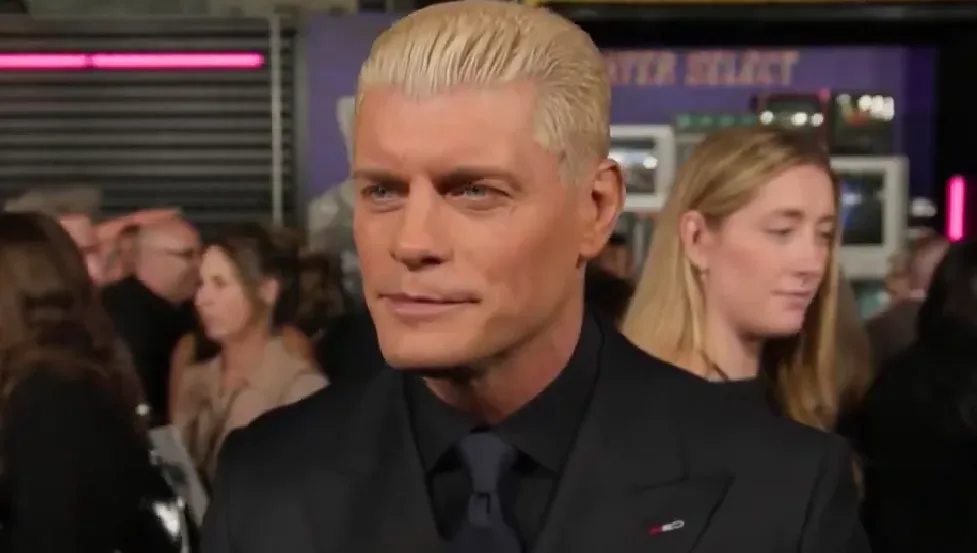
Cody Rhodes has once again addressed one of the most persistent questions surrounding his current WWE run: whether the company will eventually turn him heel.
Since returning to WWE at WrestleMania 38, Rhodes has been positioned as one of the promotion’s defining heroic figures. His second WWE tenure has included multiple title reigns and a sustained place near the center of the company’s biggest stories. Yet even with that firmly established babyface presentation, speculation about a potential villainous shift has continued to follow him.
Rhodes did not rule out the possibility during a recent appearance on Unsportsmanlike. Instead, he explained that he remains receptive to whatever WWE believes is best, while making clear that a heel version of Cody Rhodes may not resemble the straightforward character turn many viewers have imagined.
View the referenced post on X
“Whatever’s best for WWE to be,” Rhodes said when discussing whether he should remain a babyface or make a change. “But we are starting to get into an area where if you think I’m a heel, then I’m already a heel.”
For more background on this topic, read Royce Keys Says 946’s Bloodline Feud Has Drawn Threats, Beer Tossing and Intense WWE Crowd Reactions.
That observation gets to the core of Rhodes’ current situation. Major WWE stars rarely receive one uniform reaction from every part of the audience, and Rhodes acknowledged that different viewers can interpret the same performance in entirely different ways. A fan who supports him may see confidence, conviction, and a willingness to speak plainly. Another fan may see arrogance, self-importance, or a hero who has become too aware of his own status.
For Rhodes, that split means the traditional signals of a turn do not necessarily guarantee the response performers and creative teams expect. He pointed to a recent moment in which he spoke about enjoying a punt to Randy Orton and attempted to give the line an intentionally harsher edge. Rhodes expected the crowd to boo, but the reaction was instead positive.
“I said, I loved punting Randy Orton. I loved it,” Rhodes said. “And I tried to put a little like growl in it. I loved it, and they just cheered, and I thought, ‘Oh, I thought they were going to boo.’”
The response reinforced Rhodes’ point that WWE crowds cannot always be directed as easily as a performer might hope. Fans can cheer ruthless behavior from a favorite, particularly when it comes against another major name in a heated rivalry. The same action may be viewed as villainous by one segment of the audience and justified by another depending on the story, the opponent, and the atmosphere in the building.
Paul Heyman Adds Another Layer to the Discussion
The question posed to Rhodes also involved the prospect of a possible alignment with Paul Heyman. Such a pairing would naturally invite attention because Heyman has long been associated with some of WWE’s most formidable and controversial acts. Rhodes said he has a distinct relationship with Heyman, one rooted in part in Heyman’s connection with Rhodes’ late father, Dusty Rhodes.
Rhodes noted that Heyman recently appeared on his podcast, with that episode expected to air the week after Thanksgiving. He said the conversation explores why the two men get along and touches on the loyalty involved in their relationship.
That history makes the idea of Rhodes and Heyman working together more intriguing than a simple manager-client arrangement. Heyman’s reputation in professional wrestling is built around influence, strategy, and his ability to amplify the personalities he represents. Meanwhile, Rhodes is one of WWE’s most recognizable current stars and has built his presentation around a deeply personal connection to family legacy, ambition, and responsibility.
Rhodes suggested, however, that bringing Heyman into his orbit—or introducing another major figure—would come with a cost as well as potential benefits.
“Me as a heel would take a lot away from what I currently do, and it would probably add in its own way,” Rhodes said. “I think it looks different than people think.”
That is an important distinction. A heel turn is often discussed as though it is automatically an upgrade in edge or unpredictability, particularly for a wrestler with the verbal ability and intensity Rhodes possesses. But Rhodes appears conscious of the elements that could be lost if the character were recast too abruptly. His existing role has been built around accessibility and a broad emotional connection with WWE’s audience. A darker direction could create fresh material, but it could also alter the qualities that have made his current position effective.
What Would a Different Heel Cody Look Like?
Rhodes did not lay out a blueprint for a future heel character, and he did not claim such a turn is imminent. Still, he offered some insight into the attitude he believes a more villainous version of himself could carry.
He referenced his current concern with “Team Mexico, Team USA” and the diplomacy involved, contrasting that outlook with how a “bad version” of himself might operate. Rhodes also discussed the climate surrounding public figures in 2026 and heading into 2027, saying that a heel Cody might be willing to say thoughts aloud that his present-day persona would keep contained.
“Everyone’s got that in them, and then you start saying some of the things you think out loud, and it’s like, ooh,” Rhodes said.
The comments leave considerable room for interpretation, but they underline why Rhodes believes the character would need to be handled carefully. He is not simply describing a change in wardrobe, entrance presentation, or a more aggressive in-ring style. He is suggesting that a heel turn could alter the way he speaks, the subjects he addresses, and the degree to which he is willing to embrace discomfort.
In modern WWE, the most effective character changes tend to work when they grow from behavior viewers have already seen rather than appearing without warning. Rhodes’ comments acknowledge that fans are already debating his motivations and reactions. In that sense, the seed of a potential shift may already exist in the audience’s perception, even if WWE has not formally positioned him as a villain.
At the same time, Rhodes was clear that fan interpretation should not be treated as a demand for an immediate turn. WWE’s audience includes viewers who still strongly embrace him as a babyface, and he emphasized that there is no incorrect way to follow or react to the product.
Rhodes Leaves the Decision to WWE Creative
Ultimately, Rhodes placed the decision in the hands of WWE’s creative leadership. He identified Triple H as the person guiding the company creatively and said WWE would not miss the opportunity if the correct moment for a shift presents itself.
“I’m very open to it,” Rhodes said. “I think everyone in creative always, you know, Triple H is the one guiding the ship here, and I think when something like that, when it’s time, we won’t miss that opportunity. But if it’s never time, I’m sorry. I don’t know.”
That answer does not confirm a turn, an alliance with Heyman, or any particular future storyline. It does establish that Rhodes is not dismissing the concept outright. He appears willing to explore the direction if WWE determines it can create a meaningful change without sacrificing what currently works about his role.
For now, the conversation remains compelling precisely because Rhodes is not presenting an easy answer. A heel turn could be a major development, but it would need to account for the audience’s existing attachment to him, the unusual cheers that can accompany his more ruthless moments, and the personal history that informs his place in WWE.
Rhodes’ central message is simple: if the day comes for him to cross that line, fans should not assume they already know what it will look like. And if the right story never materializes, he is equally prepared to continue in the role that has made him one of WWE’s leading babyfaces since his return.

Darryl Polo
Darryl Polo is a passionate wrestling fan covering WWE, AEW, TNA and beyond. He loves great rivalries, breakout stars and the moments that keep fans talking long after the bell. How we work.