
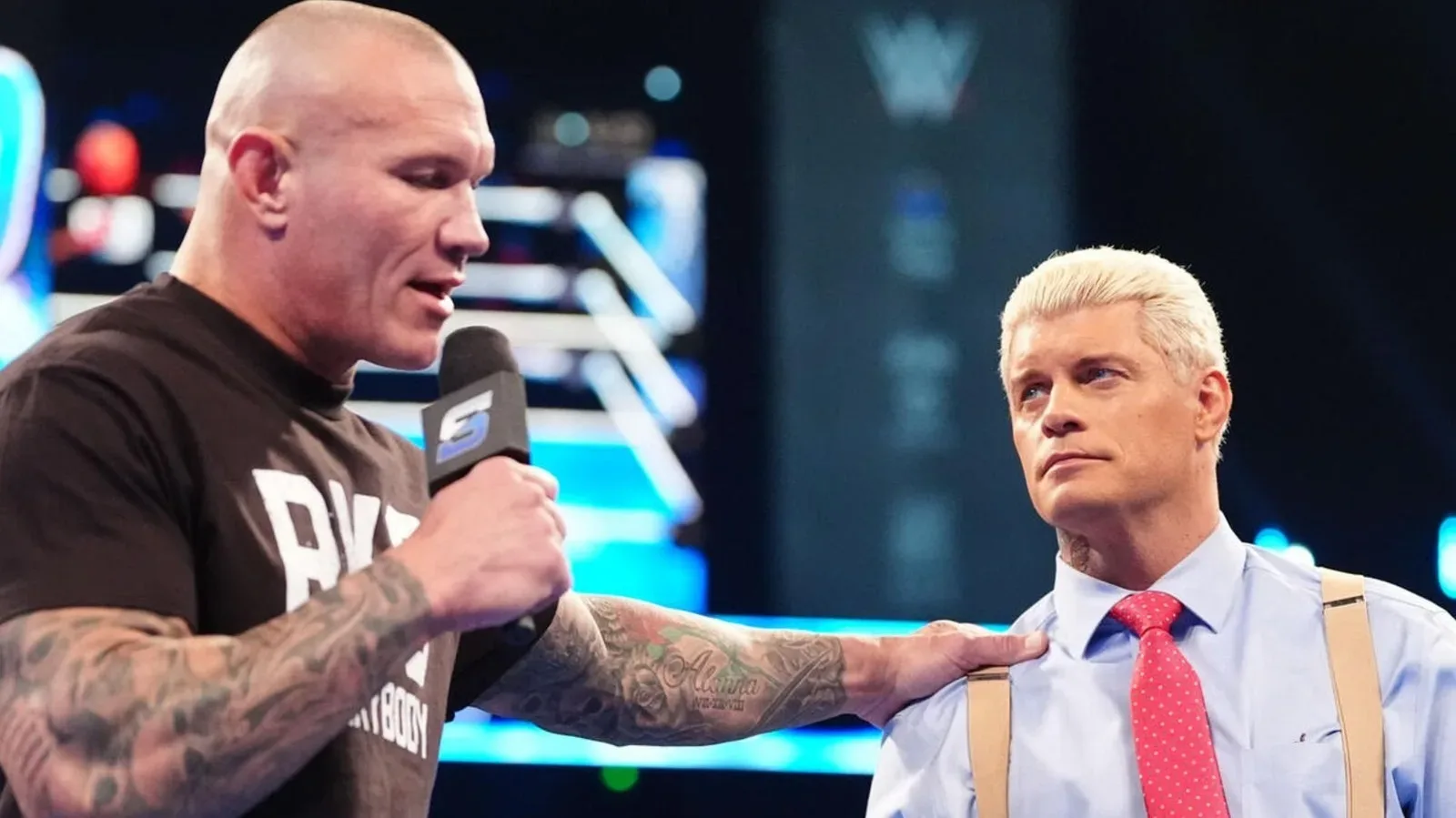
Cody Rhodes and Randy Orton may be embroiled in a bitter WWE rivalry on screen, but Rhodes has made it clear that his respect for “The Viper” has not disappeared. The former WWE Champion recently reflected on Orton’s standing among the greatest opponents he has shared a ring with, placing his rival in what he described as an exclusive “golden circle” of wrestling talent.
Rhodes did not attempt to settle the impossible debate over whether Orton is the single greatest wrestler he has ever faced. Instead, he pushed back on the idea that professional wrestling history can be neatly reduced to one GOAT or one Mount Rushmore. In Rhodes’ view, the conversation is too broad, too dependent on era, and too full of extraordinary performers to have a simple answer.
But Orton, he said, absolutely belongs among a tiny group of names that represent something beyond longevity or accomplishments alone. Rhodes attributed the phrase to Arn Anderson, explaining that the “golden circle” is a select level reserved for performers who combine a major legacy with the ability to produce a special performance whenever the moment calls for it.
“He’s in that golden circle,” Rhodes said. “That’s a count on one hand, the golden circle, and maybe it’s just three.”
For more background on this topic, read Solo Sikoa Joins Seth Rollins and LA Knight for Too Cool Tribute at WWE Live Event in Chile.
That is substantial praise considering Rhodes’ lifelong connection to wrestling and the range of talent he has watched, studied, and competed against. Rhodes noted that he is constantly consuming wrestling from both past and present, which makes him especially reluctant to offer definitive all-time rankings. Rather than naming a single greatest performer, he emphasized the depth of wrestling’s history and the amount of “equity” built by stars from different generations.
For Rhodes, John Cena is another example of the level he is describing. The point is not merely that a wrestler has spent decades in the spotlight or assembled a résumé full of championship victories. A true member of that rare group can enter the ring with a reputation already established and still create something exceptional on a particular night.
Rhodes explains what separates Orton
Orton’s RKO has long been one of WWE’s most recognizable finishers, in part because it can be delivered with little warning. The move’s suddenness has helped define Orton’s persona for years. Rhodes, however, sees unpredictability in Orton’s wider in-ring approach as well.
The American Nightmare stressed that Orton is capable of finding another level at any time. That makes preparation against him uniquely difficult, because an opponent is not simply planning for a famous finishing move. They are facing a wrestler who can potentially offer the best version of himself on any given occasion.
It is a distinction that speaks to Orton’s reputation as a performer. Plenty of wrestlers can have a great match under ideal circumstances, with the right opponent, story, crowd, or stipulation. Rhodes’ comments suggest that Orton belongs in a much smaller category: wrestlers who carry the expectation of excellence regardless of when they are called upon.
That ability is particularly important in WWE, where rivalries can shift direction quickly and major matches often demand that performers immediately rise to the occasion. A wrestler with Orton’s experience may be known for a signature move, a distinctive character, or a long list of career highlights, but Rhodes’ praise focused on the enduring quality behind all of those elements.
Orton is not being celebrated by Rhodes strictly as a decorated name from a previous era. Rhodes described him as someone still capable of greatness in the present. That framing is significant amid their active rivalry, as it recognizes that Orton remains a dangerous and elite opponent rather than simply an established legend revisiting a familiar role.
A rivalry that has become increasingly personal
The public respect between Rhodes and Orton stands in sharp contrast to the issues between them in WWE storylines. Their rivalry has stretched across several months, beginning at WrestleMania. Since that point, the two have met three times, with Rhodes winning two of those matches.
The latest chapter came at Sunday Night’s Main Event, where Orton defeated Rhodes. The victory gave Orton an important result against a rival who had held the overall edge in their series, while also making it clear that the feud has not reached a final conclusion.
Rhodes and Orton’s history has naturally added another layer to the conflict. Rhodes described their real-life friendship while discussing Orton’s greatness, even as WWE has portrayed them as being far from friendly in recent months. That divide between their relationship away from the ring and the hostility presented in the ring can give their clashes additional weight. The audience is watching two wrestlers with clear familiarity, strong chemistry, and a competitive issue that has continued to escalate.
Rhodes’ acknowledgment of Orton’s standing does not lessen the stakes between them. If anything, it explains why an Orton victory matters so much. Rhodes is not treating Orton as just another challenger or obstacle. He sees him as one of the few wrestlers who occupies wrestling’s highest tier, a performer whose legacy and present-day capabilities demand full attention.
That makes the Sunday Night’s Main Event result more than a statistical adjustment in their three-match series. Orton’s win was a statement from a rival Rhodes plainly believes can deliver greatness whenever he steps into the ring.
The difficulty of GOAT conversations in wrestling
Rhodes’ answer also touched on a familiar wrestling debate: how should fans compare performers across eras? The industry has changed repeatedly in style, presentation, television exposure, event structure, and audience expectations. Measuring one wrestler against another is difficult when their careers were built under entirely different circumstances.
Rhodes did not dismiss those debates. His comments instead reflected why he struggles with them. There are too many names, too many years, and too many forms of success for a single answer to fully capture wrestling’s history. Some performers are remembered for drawing power, some for championship reigns, some for in-ring output, and others for characters that reached beyond wrestling itself.
The “golden circle” concept offers a different way to discuss greatness. It does not require declaring one wrestler superior to every other figure who has ever entered the business. It identifies a remarkably limited group of performers who have earned historic stature while retaining the ability to make any given match feel important.
Rhodes’ inclusion of Orton in that group is therefore not a casual compliment. He suggested the group could fit on one hand and perhaps contain only three people. Whether fans agree with that exact number will be debated, but the central point was unmistakable: Rhodes sees Orton as a genuinely exceptional talent.
He also presented greatness as something active rather than static. A legacy matters, but it is not enough on its own. The wrestlers Rhodes values most highly are those who can pair a remarkable career with the capacity to produce at the highest level in the moment.
What Orton’s win means moving forward
With Orton coming out on top at Sunday Night’s Main Event, the Rhodes-Orton rivalry appears set to continue. Rhodes still owns two wins in their three matches, but Orton now has the latest victory and fresh momentum. The split in recent results creates a straightforward reason for neither man to consider the issue resolved.
For Rhodes, the challenge is now to respond against an opponent he openly rates among wrestling’s elite. For Orton, the win reinforces the threat he has represented throughout the rivalry. He has already shown that he can defeat Rhodes, and Rhodes’ own assessment of Orton’s ability only underlines why another encounter would be so compelling.
There is no indication that the respect Rhodes expressed will soften the on-screen conflict. WWE has portrayed the relationship as increasingly tense, and Orton’s victory gives the story another major turning point. Their personal familiarity may remain real, but it has not prevented either man from pursuing the advantage when the bell rings.
Rhodes’ comments ultimately capture the unusual dynamic at the center of this feud. He is facing someone he knows well, someone he respects deeply, and someone he believes belongs in one of wrestling’s most exclusive classes. At the same time, Orton has just beaten him and remains positioned as a formidable rival.
That combination of admiration, history, competition, and unfinished business leaves plenty of room for the rivalry to move forward. Rhodes has already made his view clear: Randy Orton is in the golden circle. The next question is whether Rhodes can regain control of a feud that has once again swung in The Viper’s favor.
In pictures

Darryl Polo
Darryl Polo is a passionate wrestling fan covering WWE, AEW, TNA and beyond. He loves great rivalries, breakout stars and the moments that keep fans talking long after the bell. How we work.