
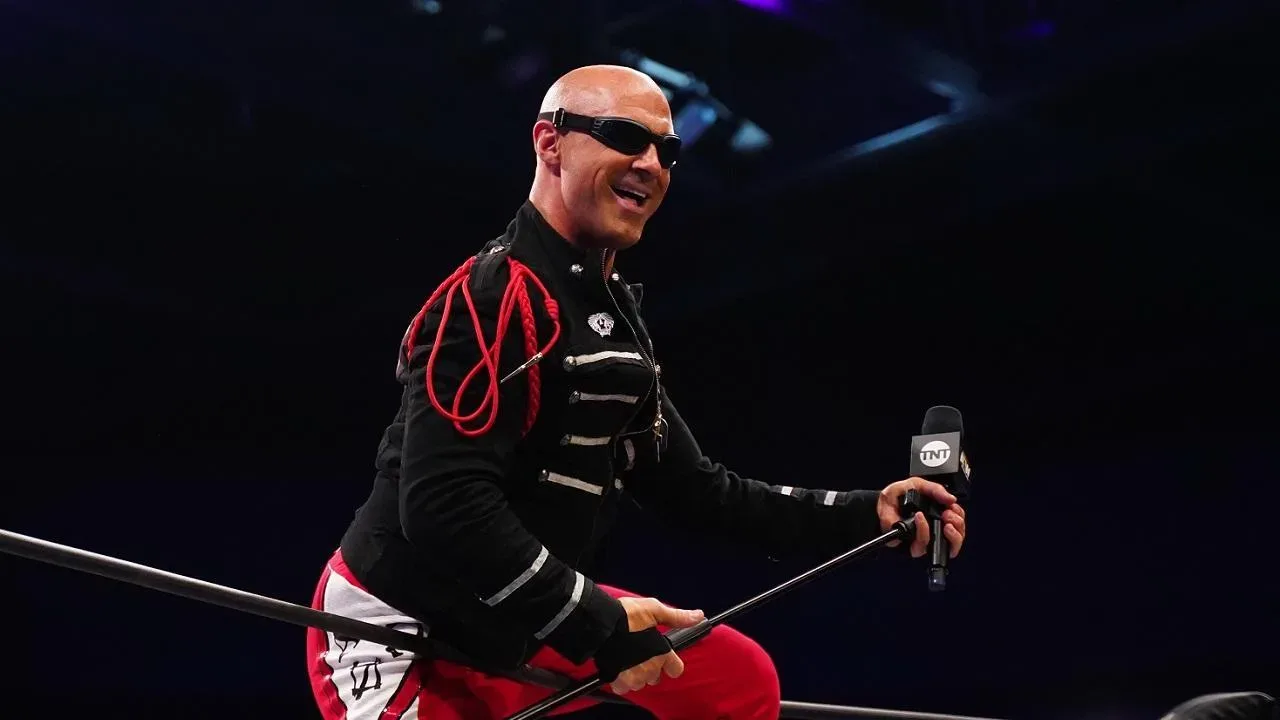
Christopher Daniels has offered a straightforward response to one of modern wrestling fandom’s most persistent debates: fans do not have to choose only one promotion to support.
As online discussion around WWE and AEW continues to produce intense loyalty, frequent criticism, and constant comparisons between the two companies, Daniels argued that the wider health of professional wrestling should matter to anyone who considers themselves a fan of the medium. The longtime wrestler and AEW figure acknowledged WWE’s enduring stature in the business while emphatically making the case for AEW as another major destination delivering strong wrestling on a weekly basis.
Speaking with Going Ringside, Daniels addressed the tribalism that has become increasingly visible in professional wrestling discourse. His message was not framed around minimizing competition. Instead, it centered on the idea that competition, variety, and multiple thriving companies all give wrestling fans more opportunities to enjoy the kind of product they prefer.
“If you’re a professional wrestler, professional wrestling fan, I think you should support all professional wrestling, and, WWE is, they’re the the oldest game in the in the game, they’re the oldest group in the game. But AEW is coming along strong. AEW is great, and hopefully if you like professional wrestling, AEW presents tremendous professional wrestling week in and week out. So if you’re against that, I don’t know what to tell you. Go watch something else. That’s fine. But we’ve got plenty of fans, and we’re making more fans along the way. And I look forward to showing them professional wrestling each and every week.”
For more background on this topic, read Mick Foley Reveals Why He Became an Early Supporter of AEW’s Willow Nightingale.
Daniels embraces a bigger-picture view of wrestling
Daniels’ comments arrive at a time when fans have more major wrestling programming available than at virtually any previous point in the industry’s history. WWE remains the market leader and the most established brand in the business, with decades of history, a global audience, and a deep library that has helped define the public perception of professional wrestling across generations.
AEW, meanwhile, has established itself as a prominent alternative with its own roster identity, presentation, championship structure, and approach to in-ring action. The company’s presence has also intensified the conversation around ratings, attendance, business milestones, creative choices, and the comparative strengths of both promotions. That conversation can be engaging for fans, but Daniels’ point is that appreciation for one company should not require hostility toward another.
For a performer with Daniels’ background, the position fits naturally. His career has unfolded across several eras of wrestling and through a wide range of companies. He is closely associated with the rise of independent wrestling in the United States, his work in Ring of Honor, and a lengthy run in TNA. He has also competed internationally and became part of AEW from the company’s earliest days. That kind of experience makes the case for a broader wrestling ecosystem especially relevant.
The industry has always benefited from different styles and different platforms. Some fans gravitate toward the spectacle and mainstream reach associated with WWE. Others prefer AEW’s in-ring emphasis and its mixture of established names, younger talent, and wrestlers with strong reputations from independent and international scenes. Still others follow promotions outside those two companies. Daniels’ remarks leave room for all of those preferences without treating fandom as a contest that requires a single winner.
WWE’s legacy and AEW’s place in the current landscape
Daniels did not dismiss WWE’s importance while advocating for AEW. He called WWE the oldest group in the game, recognizing the company’s unique history and its longstanding role at the center of the wrestling industry. That acknowledgement is significant because discussions about company rivalry often become less productive when fans deny obvious realities about either side’s achievements or influence.
WWE’s legacy is undeniable, but Daniels also made clear that he believes AEW has earned its place as a major modern promotion. His description of AEW as “coming along strong” reflects the central point of his answer: wrestling can grow when more than one company succeeds. A healthy alternative can create additional stages for wrestlers, additional programming for viewers, and additional reasons for audiences to remain invested in the industry.
Daniels specifically highlighted AEW’s ability to present “tremendous professional wrestling week in and week out.” That statement speaks to the company’s core appeal. AEW has consistently positioned the quality and variety of its matches as a key part of its identity, bringing together talent with backgrounds across American independent wrestling, international promotions, and major televised companies.
That identity will not appeal to every viewer in precisely the same way, just as no wrestling company can be everything to every fan. Daniels did not suggest otherwise. His answer instead emphasized that viewers who do not enjoy a particular product are free to watch something else. The larger concern, from his perspective, is the idea that a wrestling fan should actively oppose another company simply for existing, succeeding, or serving a different audience.
The cost of tribalism in modern fandom
Tribalism is not a new concept in wrestling. Fans have long debated promotions, performers, booking philosophies, and eras. Regional rivalries, the Monday Night War, and the evolution of independent wrestling all created passionate discussion. Social media, however, has made those conversations more immediate and more constant. Every show, segment, match, attendance figure, television metric, and public statement can quickly become material for a larger argument about which company is supposedly winning.
That environment can make it difficult to discuss wrestling on its own terms. A match may be evaluated less for the work performed in the ring than for what it is perceived to mean in a promotional rivalry. A creative decision can become evidence for or against a company-wide narrative. Positive developments are sometimes treated as a threat by fans who view another promotion’s success as something that must be challenged rather than celebrated.
Daniels offered a practical alternative to that mindset. Fans can watch what they enjoy. They can critique shows, wrestlers, and storylines. They can hold strong opinions. But criticism does not have to become reflexive opposition to an entire company or to the people who enjoy it. In an industry built on performers earning a living through opportunities in front of audiences, more viable promotions can be beneficial for talent and fans alike.
His observation that AEW has “plenty of fans” and is “making more fans along the way” also places the focus on the audience rather than on online arguments. The goal of a wrestling promotion is ultimately to create a product that connects with viewers. Some will become devoted followers, some will watch selectively, and some will decide the product is not for them. Those outcomes are normal. What Daniels rejects is the notion that fans should be hostile to the growth of wrestling beyond their personal favorite.
A message rooted in the value of choice
The availability of choice has become one of the defining features of the present-day wrestling scene. Fans can follow weekly national television, major premium events, independent cards, international tournaments, and archival material from previous generations. They can favor one style while still recognizing the value of another. They can be loyal to a promotion without insisting that every other option has no merit.
For wrestlers, a broader industry can mean more opportunities to develop, perform, and find an audience. It can also create a wider range of career paths, whether someone is looking for a national television platform, a schedule centered on independent events, or a chance to work internationally. Daniels’ own career is an example of how meaningful work can be done across multiple promotions rather than through one exclusive definition of success.
For fans, the benefit is equally simple: there is more wrestling to watch, and there are more ways to engage with it. One viewer may prioritize storytelling. Another may want athletic match quality. Another may follow a favorite wrestler from company to company. None of those approaches require tearing down the rest of the industry.
Daniels’ final point was ultimately optimistic. He said he looks forward to showing fans professional wrestling every week, reinforcing his belief that AEW’s job is to keep delivering its version of the sport rather than becoming consumed by the noise surrounding it. The company will continue to be judged by its programming, its talent, and the connection it maintains with its audience.
In that respect, Daniels’ message is a reminder that wrestling fandom can be passionate without becoming restrictive. WWE’s history can be respected. AEW’s growth and weekly output can be celebrated. Fans can have criticisms and preferences while still recognizing that a strong, diverse wrestling landscape serves the people who make the business and the people who watch it.

Darryl Polo
Darryl Polo is a passionate wrestling fan covering WWE, AEW, TNA and beyond. He loves great rivalries, breakout stars and the moments that keep fans talking long after the bell. How we work.