
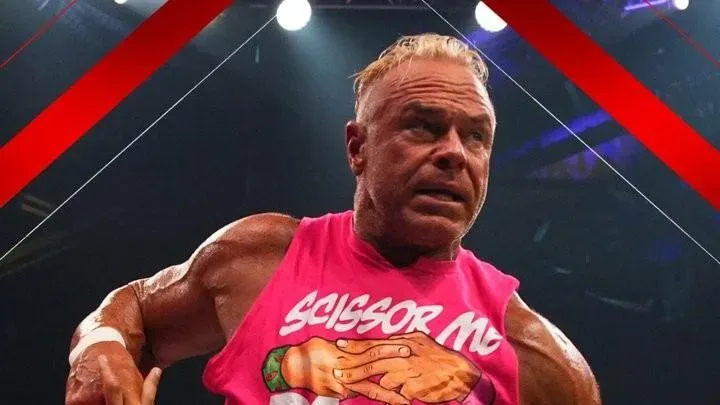
Billy Gunn’s original role in All Elite Wrestling was designed to be significantly different from the one he ultimately took on.
Gunn has revealed that his initial AEW talent contract was structured for only 12 dates per year. The arrangement reflected the expectation that he would principally work behind the scenes as a coach and producer, with occasional wrestling appearances available if the company needed him.
Instead, Gunn became a consistent on-screen and in-ring contributor during AEW’s formative years. The WWE Hall of Famer explained that he was willing to step into the ring when asked, but the volume of work grew far beyond the limited number of dates initially envisioned.
“My contract, I had 12 dates a year. I really wasn’t going to wrestle, but I told Tony, ‘If you need me to, I’ll do it here and there.’”
For more background on this topic, read Ilja Dragunov Sees Kyle Fletcher Rematch as a Meeting of Two Transformed Wrestlers.
Gunn said he held both a talent contract and an employee contract, with the latter covering his production and coaching responsibilities. His talent agreement was comparatively small because there was genuine uncertainty over whether he would even use all 12 contracted dates in the ring.
That uncertainty did not last long. AEW’s needs changed, Gunn’s role expanded, and the veteran became a regular performer across the company’s programming.
“I was mostly producing and coaching. The talent one was little because [I wasn’t sure] if I would even fill those dates. Lo and behold. They cracked me out and I’m working both shows and working all the time, about to fall apart.”
A Behind-The-Scenes Signing Who Became an On-Screen Fixture
Gunn was among AEW’s earliest hires, arriving at a time when the promotion was building not only a roster but also the infrastructure required to run a national wrestling company. His background made him a natural fit for a coaching and producing role. By the time AEW launched, Gunn already had decades of experience in major promotions, both as a tag team specialist and as a singles performer.
That experience made him valuable to a young locker room. A coach or producer can help wrestlers develop matches, refine television pacing, understand positioning, and adjust to the demands of a larger platform. Gunn’s original AEW plan appears to have been centered on bringing that expertise to the company away from the cameras, while retaining the option to wrestle on a selective basis.
However, AEW did not keep Gunn in a strictly backstage position. He quickly became an active part of the company’s presentation and was regularly used in matches. The change was especially notable because the initial 12-date agreement suggested that wrestling was meant to be an occasional supplement to his employee duties rather than a central element of his AEW run.
Gunn’s own remarks underline how dramatically that situation shifted. What began as a limited in-ring commitment became a schedule that had him working “both shows” and appearing far more frequently than he expected when he first signed.
The Match Numbers Show How Quickly the Schedule Changed
The available match totals illustrate the difference between Gunn’s original contractual expectation and his actual AEW workload.
- Gunn wrestled 23 AEW matches in 2020.
- He wrestled 34 AEW matches in 2021.
- His original talent contract was for 12 dates per year.
Even without treating every match as a separate contracted date, those figures show that Gunn was working at a pace substantially beyond the limited arrangement he described. Twenty-three matches in 2020 alone would already be nearly twice the number of dates in the original deal if each bout represented an individual booking. His 34 matches in 2021 further emphasize that AEW was relying on him as a recurring performer rather than simply a veteran available for rare appearances.
That workload is particularly striking in the context of Gunn’s broader job description. He was not solely a wrestler being asked to travel and perform. He also described himself as working in production and coaching, meaning his expanded on-screen role came alongside responsibilities that were meant to be the foundation of his time with AEW.
For a company establishing its identity, experienced hands can become especially important. Veterans can fill different needs at once: they can work with less experienced talent, contribute to match planning, provide dependable television performances, and bring a recognizable presence to a developing roster. Gunn’s AEW tenure appears to have evolved in precisely that direction.
From Occasional Competitor to Regular AEW Presence
Gunn’s comments offer a clear example of how quickly roles can change in professional wrestling. Contracts may establish an initial framework, but creative requirements, roster needs, television plans, and chemistry with other talent can all lead to a very different day-to-day reality.
In Gunn’s case, he entered AEW prepared to help wherever he was needed. His willingness to wrestle “here and there” opened the door to a much more extensive in-ring run than the original deal anticipated. The veteran’s recollection that he was eventually working constantly carries a humorous tone, but it also speaks to the physical demands involved in combining a regular performance schedule with backstage work.
His early AEW match totals demonstrate that the increase was not limited to one isolated program or a few special appearances. Gunn was active through 2020 and became even busier in 2021. That sustained activity established him as more than a coach who occasionally competed; he was part of the company’s active wrestling roster.
The story also highlights the value of flexibility for veterans joining a newer promotion. Gunn’s experience gave AEW an established performer who could contribute in multiple capacities. While the company initially brought him in with a modest talent commitment, the circumstances of the job created a broader role.
Gunn Has Not Wrestled for AEW Since January 2026
Gunn’s account of his original contract comes after years in which his AEW responsibilities became much more visible than first planned. Still, his in-ring activity has more recently slowed. He has not wrestled an AEW match since January 2026.
That fact provides an important distinction between Gunn’s early years with the company and his current position. The 2020 and 2021 numbers reflect a period when he was regularly competing despite the original expectation of a light schedule. His absence from AEW competition since January 2026 shows that his wrestling schedule has not remained at that earlier pace.
There is no indication in Gunn’s comments that the original 12-date arrangement remained unchanged throughout his AEW tenure, nor did he outline the terms of any later agreements. What he did make clear is that the initial contract was not built around a full-time or heavily scheduled in-ring role. The work he ultimately performed went well beyond that initial concept.
Gunn’s recollection is also a reminder that an AEW signing can serve multiple purposes. A performer may be brought in for knowledge, leadership, coaching, or production work and still become creatively useful in front of the audience. In Gunn’s case, a deal intended for limited wrestling dates turned into a much larger commitment as AEW found more ways to use him.
His original plan was simple: work behind the scenes, remain available for occasional matches, and lend his experience where it was needed. The reality was considerably busier. Gunn went from wondering whether he would fill 12 talent dates in a year to wrestling 23 AEW matches in 2020 and 34 more in 2021, all while continuing to describe coaching and producing as key parts of his job.
For Gunn, the AEW contract began as a modest in-ring arrangement. It became evidence of just how rapidly a veteran’s role can expand when a promotion sees value in his work on both sides of the curtain.

Darryl Polo
Darryl Polo is a passionate wrestling fan covering WWE, AEW, TNA and beyond. He loves great rivalries, breakout stars and the moments that keep fans talking long after the bell. How we work.